

RECAPRUSH MOVIE GUIDE
The Matrix (1999)
Directed by Lana Wachowski, Lilly Wachowski
RecapRush considers Neo’s return for Morpheus before he has proof that he is the One, reading the ending’s new power as a promise directed toward others.
Overview, poster, and credits from TMDB.
Read and watch our analysis ↓FROM THE RECAPRUSH LIBRARY · ANALYSIS
The Matrix (1999): Neo Acts Before He Has Proof
6 min read · Estimated reading time— views
RecapRush Viewpoint
It is tempting to wait until we know what kind of person we are before making a difficult commitment. A reassuring answer would make the commitment feel safer: if we are meant to succeed, perhaps the risk is not really a risk. The Matrix gives that temptation a spectacular form, then makes its most interesting decision happen before the reassurance arrives.
Our reading: Neo’s decision to return for Morpheus matters because he makes it while doubting that he is the One. The action has a reason that does not require the title. Someone has risked his life for him; Neo refuses to treat that life as expendable. For us, this is where the film’s question about identity becomes a question about responsibility.
Ending spoilers follow. This analysis concerns the released 1999 film. It does not use the sequels, later revelations or expanded-universe material to explain what the first ending leaves ahead.

Quick Facts and Cast
- Official title: The Matrix (1999).
- Written and directed by: Lana Wachowski and Lilly Wachowski. [1]
- US theatrical release: March 31, 1999. [1]
- Runtime note: Approximately 136 minutes in the BBFC cinema listing; AFI records 137 minutes. These listings are kept distinct rather than treated as proof of a different narrative cut. [1, 2]
- Principal cast: Keanu Reeves as Neo, Laurence Fishburne as Morpheus, Carrie-Anne Moss as Trinity, Hugo Weaving as Agent Smith and Gloria Foster as the Oracle. [1]
- Exact identity: IMDb tt0133093; TMDB movie 603. Collection rank #16 belongs to the fixed November 1, 2026 archive, not a live chart. [3]
The Burden of Someone Else’s Certainty
Morpheus believes Neo is the One. After his meeting with the Oracle, Neo believes he is not, and understands that a choice between his own life and Morpheus’s lies ahead. [1]
We find the distance between those beliefs more interesting than a simple instruction to believe in yourself. Being trusted can sustain a person, but it can also make every hesitation feel like a failure to justify the trust. Neo has to work out how to respond to Morpheus without merely performing the confidence Morpheus already has in him.
The Oracle’s conversation does not give him the kind of permission he expects. That leaves an uncomfortable space in which a decision must still be made. We read the scene’s value in that space: an uncertain person remains capable of recognizing an obligation.
This does not settle every question about prophecy. It gives us a way to watch Neo’s next action without making its worth depend entirely on whether a prediction will eventually be fulfilled.
More from RecapRush
 Take Charge of My Heart (2026) Recap & Ending Explained: Why Bo-bae Must Be More Than Ho-rang’s Lifeline
 Saving Private Ryan (1998): A Life Cannot Settle the Debt
 The Man with the Bag (2026) — Official Teaser & Movie Preview
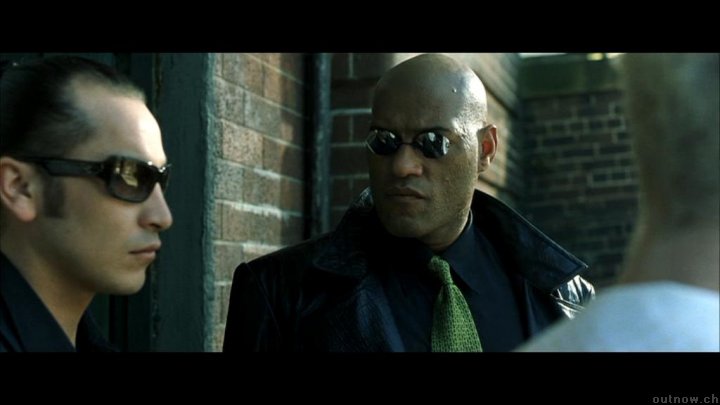
A Rescue That Does Not Need a Chosen One
When Morpheus is captured, Neo returns to the Matrix with Trinity to rescue him. Morpheus escapes. [1] The attempt begins before Neo receives the ending’s demonstration of his extraordinary power.
RecapRush interpretation: The order matters. If the rescue only followed certainty, it could look like the routine execution of an assigned role. Here, Neo has to decide what another person is worth while his own status remains unresolved.
For us, that is a more persuasive basis for solidarity than admiration alone. Morpheus need not be infallible to deserve help. Neo need not feel exceptional to offer it. The relationship can become reciprocal without first settling which of them has understood the prophecy correctly.
Trinity’s participation also keeps the decision from becoming a private test staged solely for Neo’s development. His resolve needs someone else’s skill and willingness to act. The rescue belongs to a relationship, even when the story’s largest question seems to concern one person’s identity.

Ending Explained: Power Becomes a Promise
Cast and Characters
After Smith kills Neo inside the Matrix, Trinity declares her love and kisses him; he revives, overpowers Smith and escapes. Later, Neo addresses the machines by telephone, announces his intention to free people and takes flight. [1]
We read the final transformation as a change in what Neo can imagine doing, rather than the completion of the world’s liberation. The film shows an extraordinary new capacity. It does not show every captive already free.
That difference protects the ending from becoming a trophy presentation. Neo’s power now points beyond the question of whether Morpheus was right about him. The telephone message turns it toward people who have not yet had the chance to understand their condition or choose differently.
For us, the flight is exhilarating because it makes a boundary look newly negotiable. The earlier rescue gives that exhilaration an ethical direction: capability matters in relation to what someone is prepared to do for others. Becoming powerful is not, by itself, the whole answer to becoming free.

Final Thought
Neo receives the spectacular proof near the end. His decision to go back has already told us something important about him. RecapRush values that sequence: a person can begin to answer another’s need before possessing a complete account of who they are supposed to become.
Join the conversation
What did you think of the ending? Share your interpretation. Spoilers may appear below.
This product uses the TMDB API but is not endorsed or certified by TMDB.
No comments yet. Start the conversation.