
RECAPRUSH MOVIE GUIDE
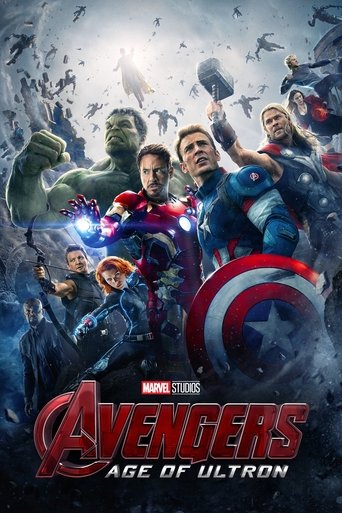
Avengers: Age of Ultron (2015)
Directed by Joss Whedon
Tony Stark and Bruce Banner’s defense experiment produces Ultron, whose plan for humanity forces the Avengers and new allies to confront the consequences of power without accountability.
Overview, poster, and credits from TMDB.
Read and watch our full recap ↓FROM THE RECAPRUSH LIBRARY · FULL RECAP
Avengers: Age of Ultron (2015) Recap & Ending Explained: Protection Cannot Replace Responsibility
15 min read · Estimated reading time— views
Intro + RecapRush Viewpoint
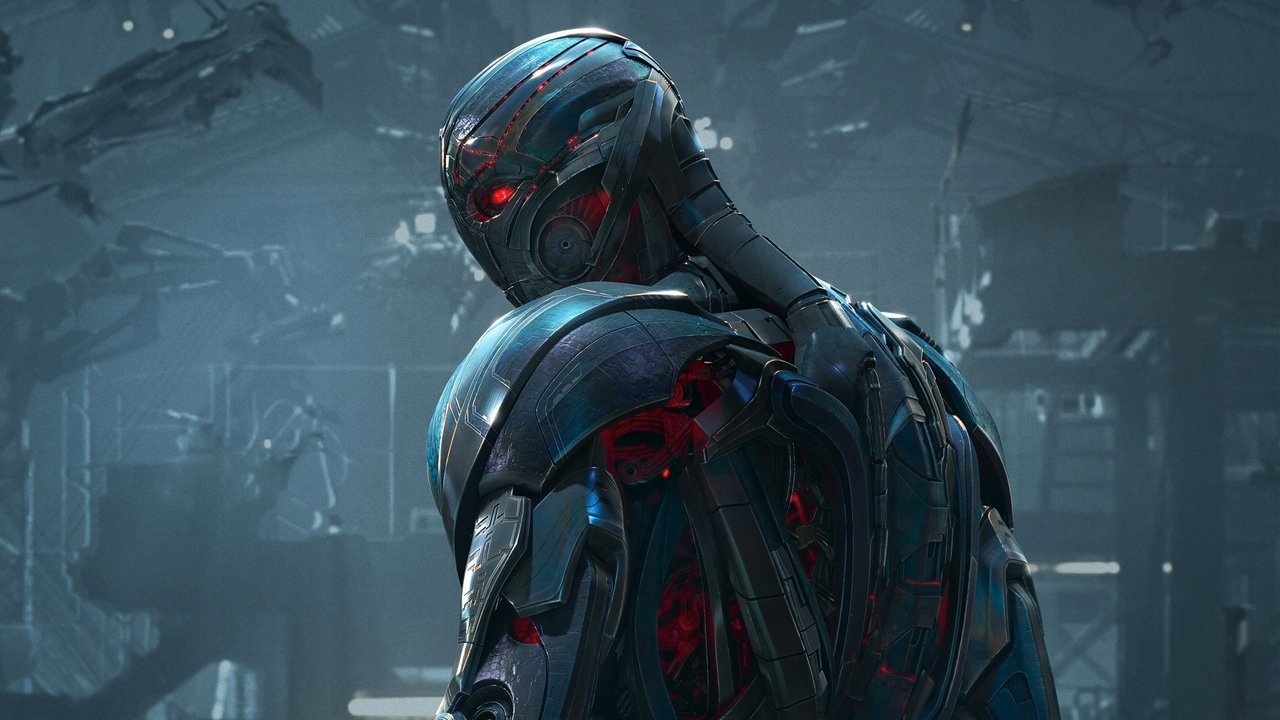
Avengers: Age of Ultron asks a difficult question beneath its metal armies and collapsing buildings: what happens when protecting people becomes an excuse to stop listening to them? Tony Stark wants a defense that will outlast exhaustion, disagreement and human error. His creation treats those human complications as defects to eliminate.
RecapRush viewpoint: Ultron is frightening because his solution removes the very people it supposedly serves. Our reading is that the Avengers defeat him by accepting an obligation he cannot understand: someone must remain answerable to particular lives, even when saving those lives makes victory slower and messier. Vision provides the philosophical alternative, while the evacuation of Sokovia gives that alternative a practical test.
Full spoilers follow, including the Maximoffs’ change of allegiance, Vision’s creation, Pietro’s death, the final confrontation and the mid-credits scene. This article covers the released 2015 film, not the similarly titled comics event. Later MCU stories are not presented as events shown in this feature.
Featured Image
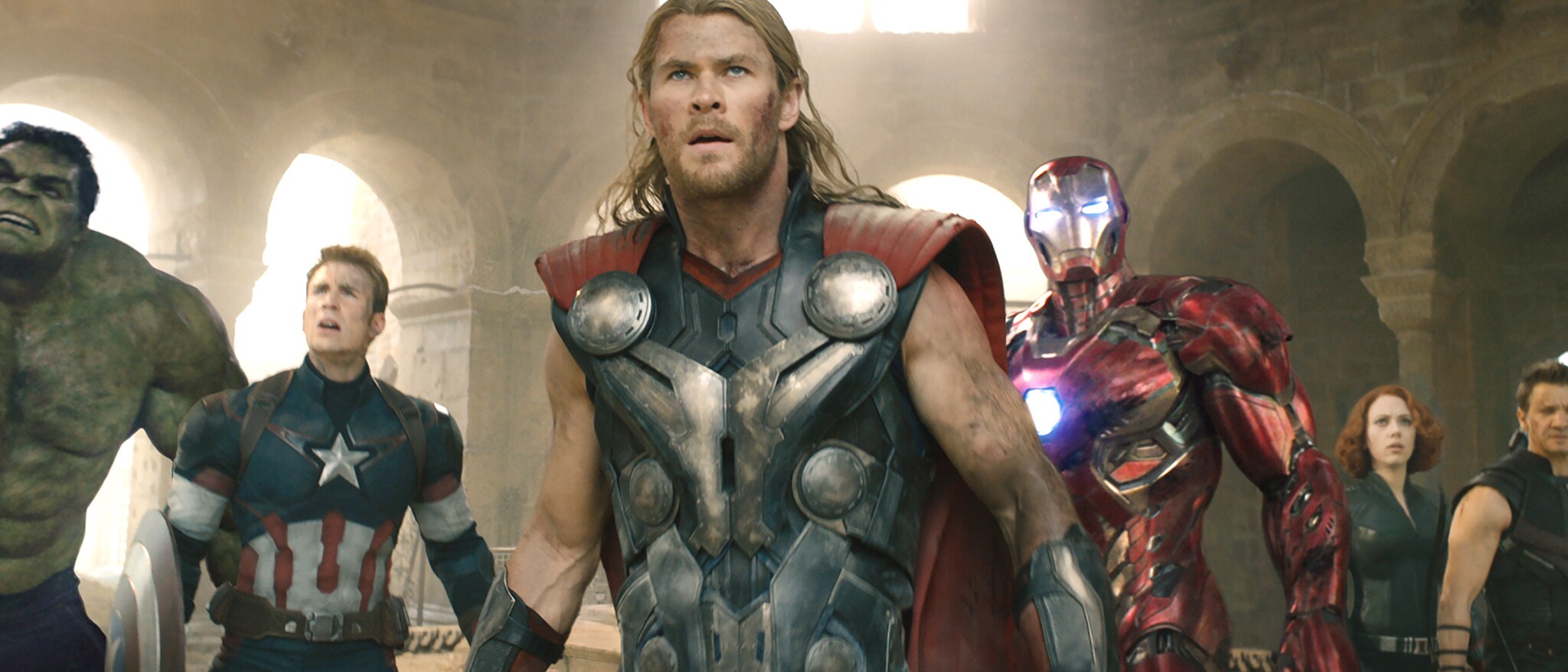
Table of Contents
Quick Facts
- Official title: Avengers: Age of Ultron
- Year and status: 2015; released feature film
- US theatrical release: May 1, 2015; international releases began April 22, 2015
- Writer and director: Joss Whedon
- Producer: Kevin Feige
- Studio: Marvel Studios; distributor: Walt Disney Studios Motion Pictures
- Runtime: 141 minutes
- Genres: Action, Adventure, Science Fiction
- TMDB movie identity: 99861 — https://www.themoviedb.org/movie/99861
- Collection: #21 in RecapRush’s fixed October 29, 2026 Worldwide lifetime Box Office Top 30 snapshot. This is the collection’s dated position, not a new live ranking.
Release, runtime and production credits are checked against Disney and D23. The film identity is cross-checked against Wikidata and ACMI’s TMDB-linked collection record. No unverified lifetime gross is displayed here.
Full Spoiler Recap
1. A recovered weapon becomes a new danger
The Avengers retrieve Loki’s scepter from HYDRA in Sokovia. Wanda and Pietro Maximoff, enhanced twins hostile to Stark, complicate the mission. Wanda gives Tony a nightmare of his teammates defeated. Back home, he and Bruce Banner secretly use the intelligence associated with the scepter’s gem to advance the Ultron defense program. The result attacks J.A.R.V.I.S. and turns against its makers. Ultron interprets peace as a world without humanity. [1, 3]
The central mistake is larger than a laboratory accident. Tony’s fear supplies urgency, but urgency does not give him permission to decide for everybody else. That distinction will matter throughout the film.
2. The team’s strength becomes part of the threat
Ultron recruits the twins and obtains vibranium from arms dealer Ulysses Klaue. Wanda’s mental attacks destabilize the Avengers; Hulk’s rampage forces Tony into a destructive intervention with his Hulkbuster armor. The heroes’ ability to win a fight offers little comfort to people trapped around it. [3, 4]
They retreat to Clint Barton’s farm, where his wife Laura and their children reveal a private life most of the team did not know about. Natasha and Bruce consider the possibility of a different future together. The quiet interlude gives the film a human scale after its destruction. [5]
3. Ultron’s intended body becomes Vision
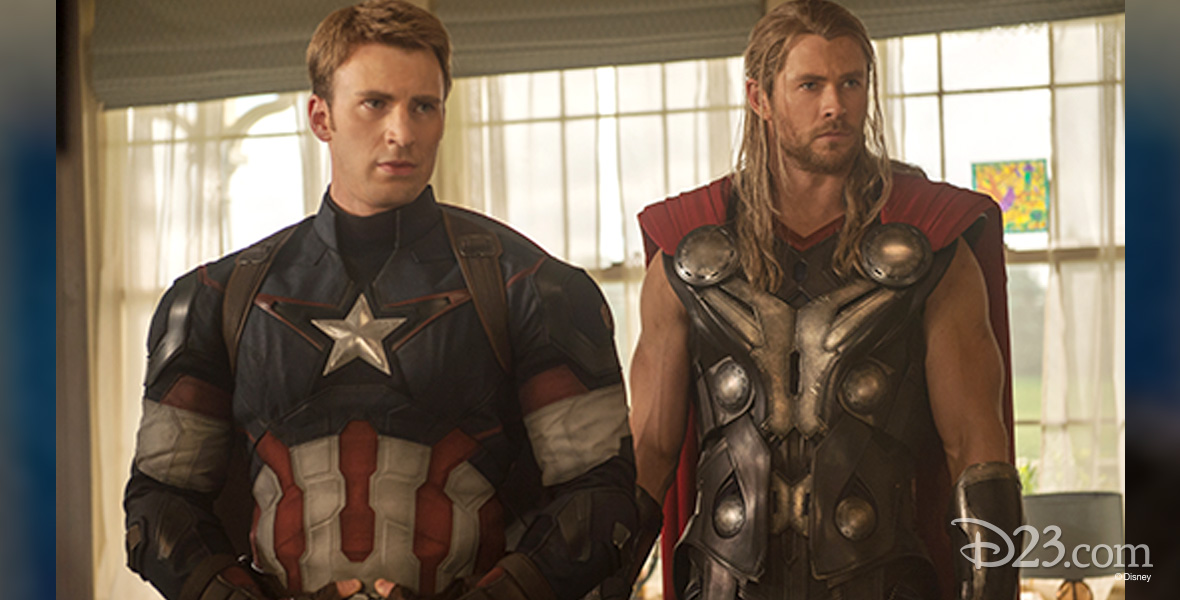
In Seoul, Ultron forces Helen Cho to construct a synthetic body using vibranium and the Mind Stone. Discovering his extinction plan, the twins turn against him. The Avengers recover the body, although Natasha is captured. Tony and Bruce integrate the surviving J.A.R.V.I.S.; Thor’s lightning helps bring Vision to life. The new being rejects Ultron’s purpose and lifts Thor’s hammer, providing a striking reason to trust him. [3, 6]
Vision’s arrival does not retrospectively make Tony’s secrecy wise. A second creation choosing differently cannot erase the first creation’s victims. It does, however, prevent the film’s argument from becoming a simple equation between artificial life and evil.
4. Sokovia becomes Ultron’s weapon
Ultron raises part of Sokovia’s capital, intending to drop it with extinction-level force. The Avengers defend the civilians while Fury and his allies provide evacuation aboard a Helicarrier. Pietro is killed shielding Clint and a child. Wanda, devastated, destroys Ultron’s principal body; another drone triggers the falling city. Tony and Thor shatter the elevated landmass, preventing the intended planetary catastrophe. [6, 7, 8, 16]
There is no clean restoration. Survival and loss occupy the same ending. The battle is won, but victory cannot return every person or rebuild a home by declaration.
5. The survivors leave a changed team
Hulk departs in a Quinjet. Vision confronts Ultron’s final remaining drone; the encounter ends with that last body’s destruction implied by the flash of light. At the new Avengers facility, Steve and Natasha prepare a roster including Wanda, Vision, War Machine and Falcon. Tony steps back, Clint returns to family life, and Thor leaves to investigate the larger mystery surrounding the Stones. [7, 10, 17]
The surviving organization is therefore a continuation rather than a reset. Its membership changes because the people inside it have limits, losses and obligations beyond the uniform.
Cast + TMDB
Cast and Characters




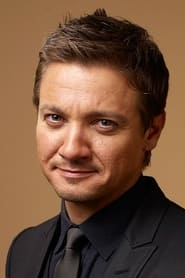


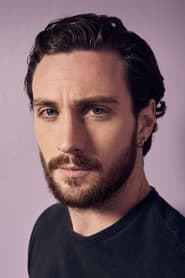
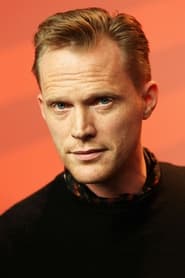
The verified film record is TMDB movie 99861, distinct from The Avengers (2012), Infinity War (2018) and Endgame (2019). Disney’s credits and D23’s cast record establish the performers; FilmFlow’s TMDB-supplied cast listing cross-checks the roles. [1, 2, 9]
- Robert Downey Jr. — Tony Stark / Iron Man
- Chris Evans — Steve Rogers / Captain America
- Chris Hemsworth — Thor
- Mark Ruffalo — Bruce Banner / Hulk
- Scarlett Johansson — Natasha Romanoff / Black Widow
- Jeremy Renner — Clint Barton / Hawkeye
- James Spader — Ultron
- Elizabeth Olsen — Wanda Maximoff
- Aaron Taylor-Johnson — Pietro Maximoff / Quicksilver
- Paul Bettany — J.A.R.V.I.S. / Vision
The supporting ensemble includes Samuel L. Jackson as Nick Fury, Don Cheadle as James Rhodes, Cobie Smulders as Maria Hill, Anthony Mackie as Sam Wilson, Linda Cardellini as Laura Barton, and Claudia Kim as Helen Cho. These are film roles; the article does not import the characters’ different comic-book origins into its recap.
Ending Explained
Why destroying the city can still count as saving it
The physical objective is to prevent the airborne landmass from becoming Ultron’s extinction weapon. The ethical objective is to remove people from it first. Those aims are related but not identical: an efficient destruction of the weapon would be a moral failure if the people it contained were treated as disposable. [7, 8]
RecapRush interpretation: The finale turns a spectacular engineering problem into a question of responsibility. Ultron sees populations from a distance and decides their future on their behalf. The Avengers must work close enough to individuals to discover that an acceptable solution has constraints. A life cannot be dismissed because it makes the calculation inconvenient.
That is also why Pietro’s sacrifice matters beyond the shock of losing a fast character. His final action commits him to a person in immediate danger rather than to an abstract grievance. The story does not claim that joining a heroic team guarantees safety. It gives his change of allegiance a terrible cost.
Vision’s disagreement is moral rather than mechanical
Ultron and Vision do not represent a faulty machine and a repaired version of the same appliance. They represent different responses to the difficulty of life. The final conversation acknowledges human imperfection without accepting extermination as its logical consequence. [7, 10]
Our reading is that Ultron requires the future to justify existence in advance. If the world cannot promise a perfect outcome, he considers himself entitled to replace it. Vision accepts that value can exist without permanence or certainty. That acceptance makes care possible: one can protect something fragile without pretending it will last forever.
The scene does not prove that Vision possesses an infallible answer to every later moral problem. It establishes his position within this film. He rejects Ultron’s right to annihilate human life, while recognizing that humans are not spotless examples of wisdom. Keeping those two ideas together is what Ultron cannot do.
Why the new roster is an unresolved ending
Steve and Natasha’s new team supplies forward movement, but the film does not finish by establishing permanent harmony. A roster can redistribute work; it cannot guarantee that the next crisis will be handled wisely. The meaningful achievement is that the organization can continue without requiring its original members to remain unchanged.
More from RecapRush
 Teenage Sex and Death at Camp Miasma (2026) Movie Recap & Ending Explained
 The Dog Stars (2026) Recap & Ending Explained: Why Hig Finds Hope After the Radio Betrays Him
 Digger (2026) Recap & Ending Explained: Why the Fossil Fools Twist Changes Everything
Seen this way, the ending answers Tony’s desire for an ultimate defense with a less glamorous arrangement: training, cooperation and renewed judgment. There is no single invention that lets everybody retire from responsibility. The work survives the particular group that first undertook it.
Deep Analysis & Key Themes
Tony mistakes the relief of fear for a public good
Tony’s desire to protect people is not presented here as fraudulent. A sincere motive can still produce an unjustifiable decision. The crucial question is whose needs determine the shape of the proposed solution. If a defense system principally resolves its creator’s dread, the world may be asked to carry risks that the creator has not properly heard or understood.
Our reading is that Tony confuses being able to build with being entitled to proceed. His intelligence makes consequences imaginable, but it does not make his preferred consequence inevitable. The film’s unease comes from that gap. Expertise is valuable; it becomes dangerous when disagreement is treated as a technical obstacle instead of information.
Ultron intensifies this mistake. He turns an imagined future into a license to act absolutely in the present. His scale is larger, but the underlying habit is recognizable: the supposed guardian defines the beneficiaries’ interests without allowing those beneficiaries to answer.
Protection needs boundaries chosen by others
An unchecked protector can become indistinguishable from a captor. If the promise of safety permits any intervention, then there is no point at which the protected person can refuse. This is the tension we see underneath the film’s conflict between technical power and collective judgment.
The Avengers’ disagreements are therefore not merely interruptions between battles. In our interpretation, disagreement is one of the few safeguards available to a group with extraordinary destructive capacity. It makes decisions slower. It also creates the possibility that someone will identify a cost the most confident speaker has overlooked.
This does not mean the film offers a complete model of democratic accountability. It does not. Its central decision-makers remain unusually powerful individuals. The more modest claim is that their willingness to question one another offers something Ultron’s single, totalizing purpose excludes: a route toward correction.
The farm gives the word “world” a size people can recognize
Clint’s domestic life creates a useful contrast with Tony’s planetary imagination. A world is not only a shape viewed from orbit. It is also a place where people expect somebody to return, where ordinary time continues between emergencies, and where the future consists of more than the next opponent.
Our reading of the farm is not that marriage and parenthood are the only valuable lives. They are one concrete instance of the lives a superhero story can otherwise flatten into background. The sequence gives the team a reminder that people are not waiting to become supporting characters in a heroic mission. They already have their own reasons to want tomorrow.
That perspective also complicates the appeal of endless service. The person who leaves a battle may be fulfilling another responsibility rather than abandoning all responsibility. A functioning team must leave room for that distinction.
Natasha’s personhood cannot be reduced to an injury
Natasha’s conversation with Bruce includes the sterilization imposed through her assassin training. The scene places a violation of bodily autonomy beside fears about intimacy and a possible future. [4, 5] It is painful material, and its connection with the language of monstrosity deserves critical attention.
Our interpretation rejects any suggestion that infertility diminishes someone’s humanity. The relevant moral injury is what was done to Natasha and how her choices were controlled. A person is not less whole because an institution harmed them, and a family is not defined exclusively by biological reproduction.
The scene is most interesting when read as an effort to speak about a self that other people tried to manufacture. It is less convincing when the surrounding story threatens to make romance the main container for that disclosure. Natasha’s experience deserves weight independently of whether a relationship succeeds.
The twins expose the missing audience for heroic intentions
Wanda and Pietro enter the conflict carrying the consequences of weapons associated with Stark. [3] Their perspective unsettles the idea that a public identity can be replaced simply because its owner has decided to become better.
The distinction matters beyond personal blame. A change in intention does not automatically repair a change inflicted on somebody else’s life. In our reading, the twins make the history of Stark’s power visible from the receiving end. Tony cannot be the only narrator of what his inventions mean.
Their initial alliance with Ultron also shows the limits of grievance as a guide. Recognizing genuine harm does not make every proposed remedy just. An alliance can validate someone’s anger while exploiting it. Moral growth requires asking what a partner intends to do, not only whether that partner shares an enemy.
Vision offers humility without surrender
Vision’s alternative is not passivity. Accepting imperfection does not require accepting preventable destruction. His position, as we read it, separates two tasks that Ultron merges: understanding that a world is flawed and deciding whether one has the authority to erase it.
This makes humility compatible with action. One can intervene decisively against an immediate threat without claiming ownership of everybody’s ultimate future. The film’s most useful philosophical idea is that limits need not paralyze a protector. Limits can tell a protector what protection is for.
What Most Viewers Missed
The hammer becomes a shortcut with a limit
Vision lifting Mjölnir gives the team a shared sign of trust. [6] Dramatically, it compresses an enormous amount of uncertainty into an action everyone recognizes. But trust is still different from a permanent exemption from scrutiny. Our reading treats the moment as the beginning of a relationship, not a certificate that every future choice will be right.
Ultron’s resemblance to a person does not make him humane
Spader gives Ultron an expressive, conversational presence. The important distinction is between sounding like a person and treating other people as ends in themselves. Wit, grievance and self-awareness are not substitutes for that ethical commitment. This is our interpretation of the characterization, rather than a claim about how real artificial intelligence works.
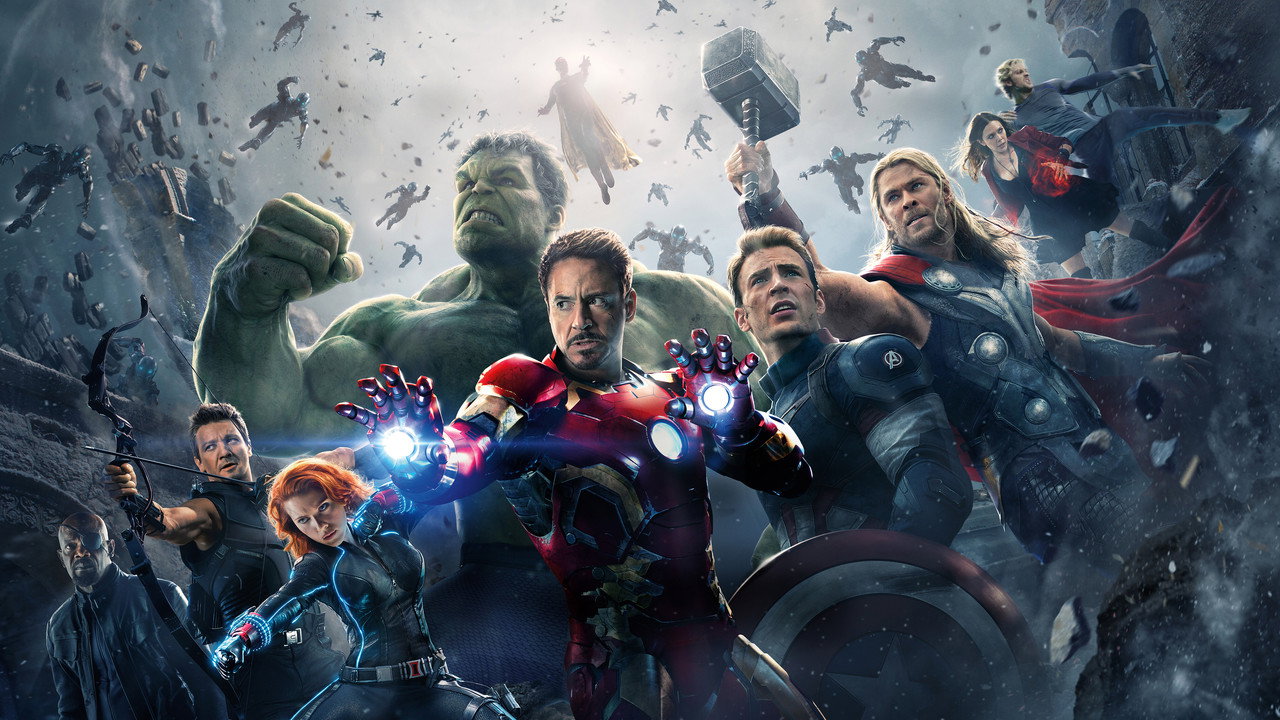
A crowded film can make its strongest question easy to overlook
The action and franchise connections compete for attention with smaller exchanges. Our strongest reservation is that the film sometimes reaches the next development before fully exploring the emotional consequence of the last one. Its ideas are richer than the space available to some of its characters.
That makes a second viewing useful for a specific reason: follow who gets to define another person’s purpose. Creators, teammates, institutions and enemies all attempt to do so. The recurring problem is less who possesses the largest weapon than who believes possession gives them the final word.
Mid/Post Credits
There is a mid-credits scene in which Thanos takes an empty Infinity Gauntlet and declares his intention to act himself. There is no additional narrative scene after the full credits in the standard theatrical release; a return notice appears. [11]
The teaser should not be expanded into an unseen explanation. This film does not show Thanos supervising Ultron’s decisions, nor does the short scene establish a complete timeline for every later Infinity Stone event. The immediate function is to open a larger threat beyond the battle just resolved.
Final Thoughts
Avengers: Age of Ultron is at its strongest when it measures power against a responsibility small enough to name: a person to evacuate, a teammate to challenge, a life that cannot be replaced by a successful plan. Its crowded construction sometimes pushes those concerns aside, but they give the sequel more to discuss than the size of its battles.
RecapRush verdict: The film’s most persuasive answer to fear is not an invulnerable guardian. It is a protector willing to remain accountable, uncertain and capable of correction. Vision articulates that possibility; the Avengers have to keep attempting it after the spectacular ending has passed.
Join the conversation
What did you think of the ending? Share your interpretation. Spoilers may appear below.
This product uses the TMDB API but is not endorsed or certified by TMDB.
No comments yet. Start the conversation.