
RECAPRUSH MOVIE GUIDE
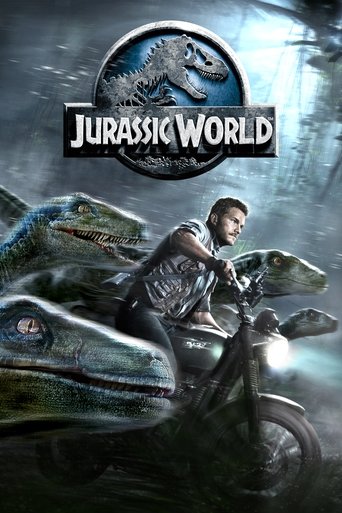
Jurassic World (2015)
Directed by Colin Trevorrow
A genetically engineered attraction escapes a working dinosaur theme park, forcing Owen Grady and Claire Dearing to protect visitors while competing schemes for controlling the animals unravel.
Overview, poster, and credits from TMDB.
Read and watch our full recap ↓FROM THE RECAPRUSH LIBRARY · FULL RECAP
Jurassic World (2015) Recap & Ending Explained: The Park Confuses Ownership with Control
14 min read · Estimated reading time— views
Intro + RecapRush Viewpoint
A dinosaur can become familiar without becoming safe. Jurassic World builds its disaster around the distance between those ideas. The park has made the extraordinary routine, giving visitors a place to shop, queue and photograph creatures that should not exist. Familiarity encourages the people running it to mistake a functioning business for a settled understanding of the animals.
The RecapRush viewpoint: this is a story about the wrong kinds of confidence. A company can own an animal, a scientist can design it and a trainer can work with it, but those relationships do not grant the same authority. The crisis becomes inevitable when the park treats each kind of access as a guarantee of obedience.
This article covers Jurassic World, the released 2015 film, including its ending. It does not import events from Fallen Kingdom, Dominion or Rebirth. The recap is sourced; sections marked as interpretation are original RecapRush analysis.
Featured Image
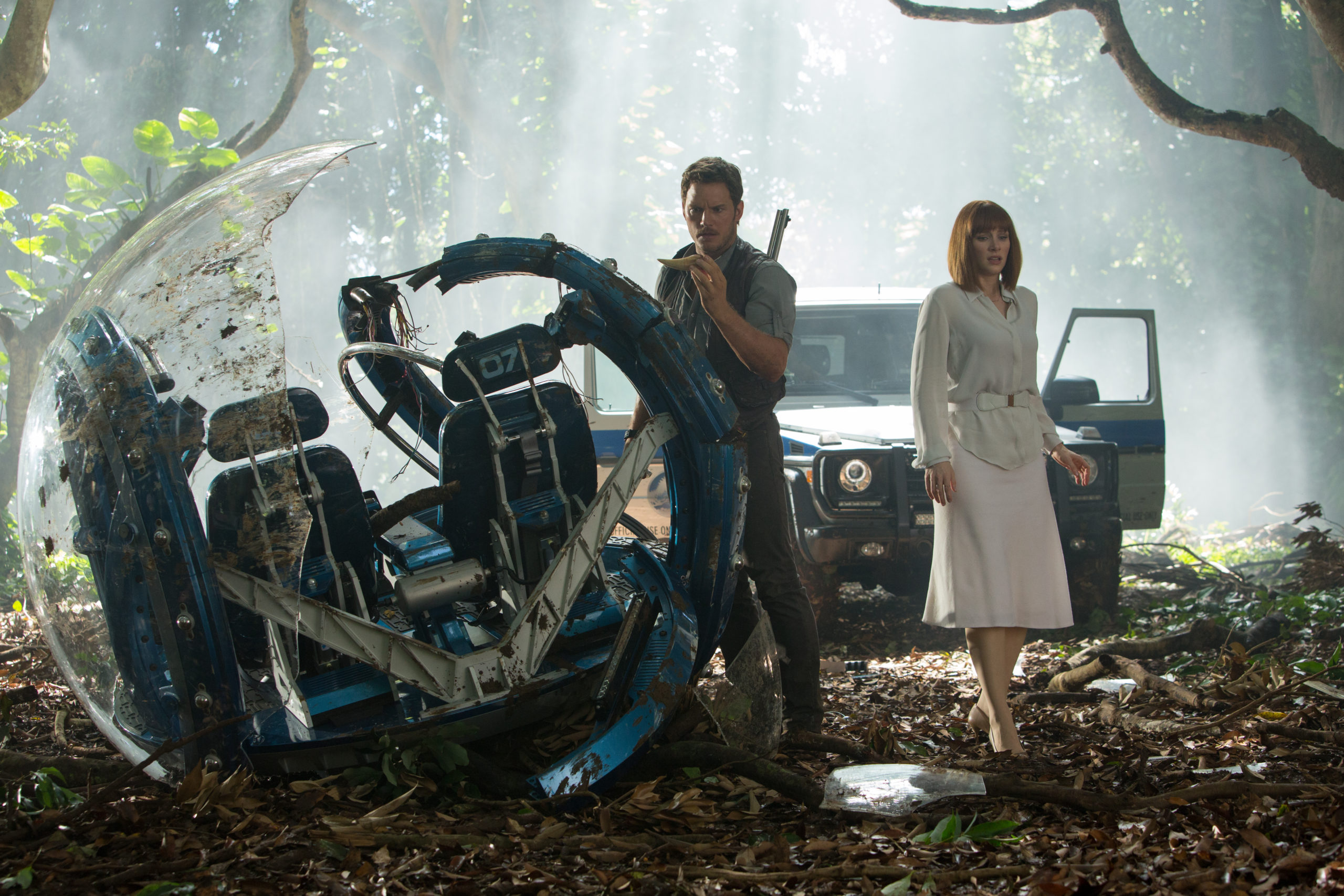
Table of Contents
Quick Facts
- Exact title / year: Jurassic World / 2015
- Director: Colin Trevorrow
- Screenplay: Rick Jaffa, Amanda Silver, Derek Connolly and Colin Trevorrow
- Story: Rick Jaffa and Amanda Silver
- Based on characters created by: Michael Crichton
- Producers: Frank Marshall and Patrick Crowley
- Original US theatrical release: June 12, 2015
- Theatrical runtime / US rating: 124 minutes / PG-13
- Genres: action, adventure, science fiction and thriller
- Collection position: #13 in RecapRush’s fixed October 29, 2026 Worldwide lifetime box-office snapshot; separate from the weekly domestic chart
Legendary verifies the original release, and Amblin lists the principal creative credits. The 124-minute theatrical duration follows the AFI catalogue; Universal’s home-entertainment page rounds its listing to 2 hours 5 minutes. Wikidata independently matches the exact film to TMDB 135397. No current gross total is displayed here. [1–5]
Full Spoiler Recap
1. Hammond’s dream becomes a working resort
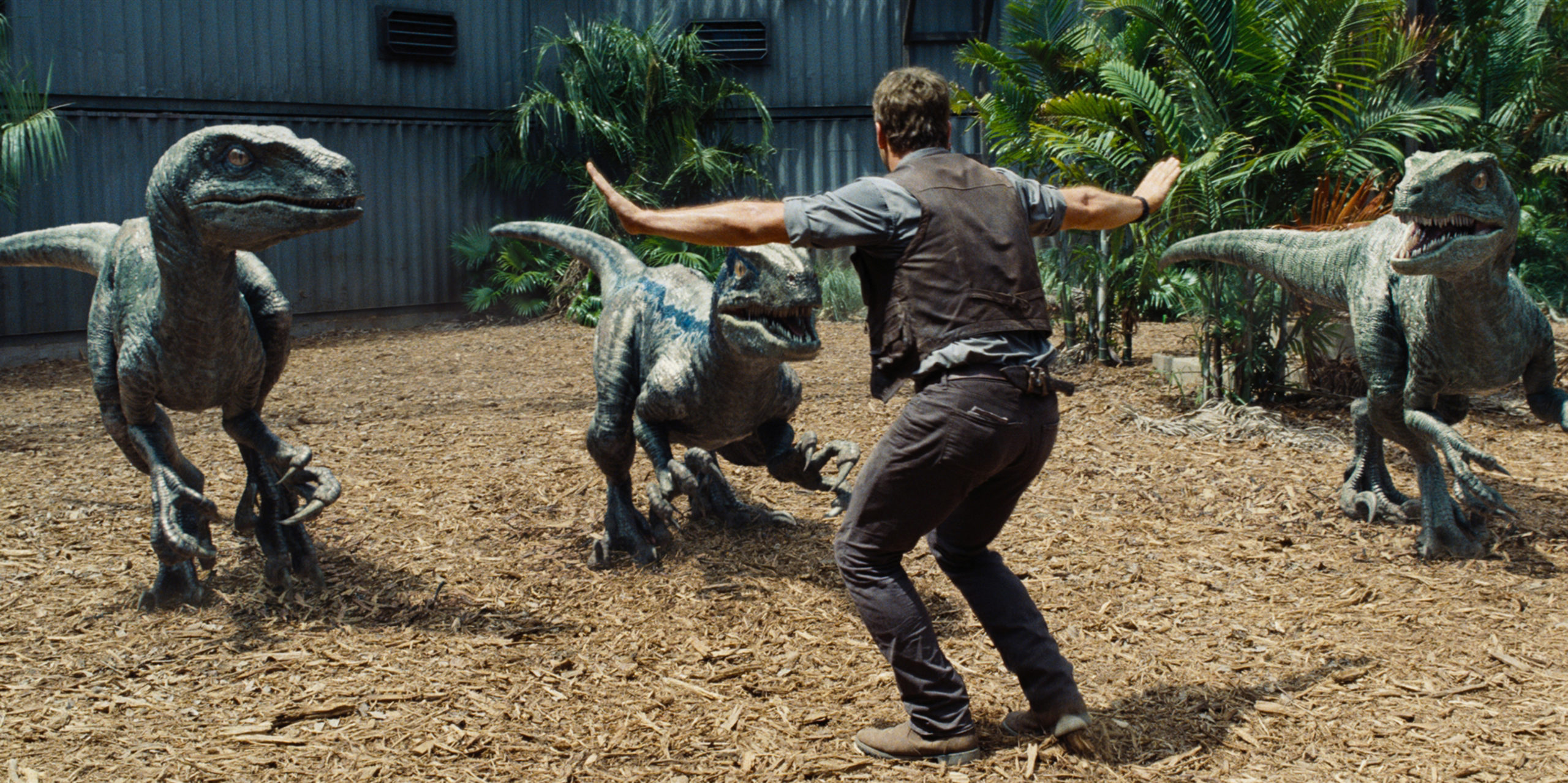
Twenty-two years after the original disaster, Jurassic World operates on Isla Nublar under Simon Masrani. Claire Dearing manages the park while her visiting nephews, Zach and Gray Mitchell, explore its attractions. Owen Grady works with a trained raptor pack. The newest attraction, the genetically engineered Indominus rex, is intended to renew excitement. Owen is asked to assess its enclosure; apparent signs of an escape draw workers into a trap, allowing the concealed animal to break out. [6]
2. The attraction becomes a predator
A containment operation fails. The Indominus has camouflage and heat-masking abilities its handlers do not adequately anticipate. Zach and Gray enter a restricted area in a gyrosphere, which the hybrid attacks. They escape into the forest, find the original visitor center and restore an old Jeep. Claire and Owen search for them. Masrani’s attempt to hunt the animal by helicopter ends in a crash after the Indominus breaches the aviary. Escaped pterosaurs attack the resort. The Mosasaurus kills Zara during that chaos. [7]
3. Hoskins turns the emergency into a demonstration
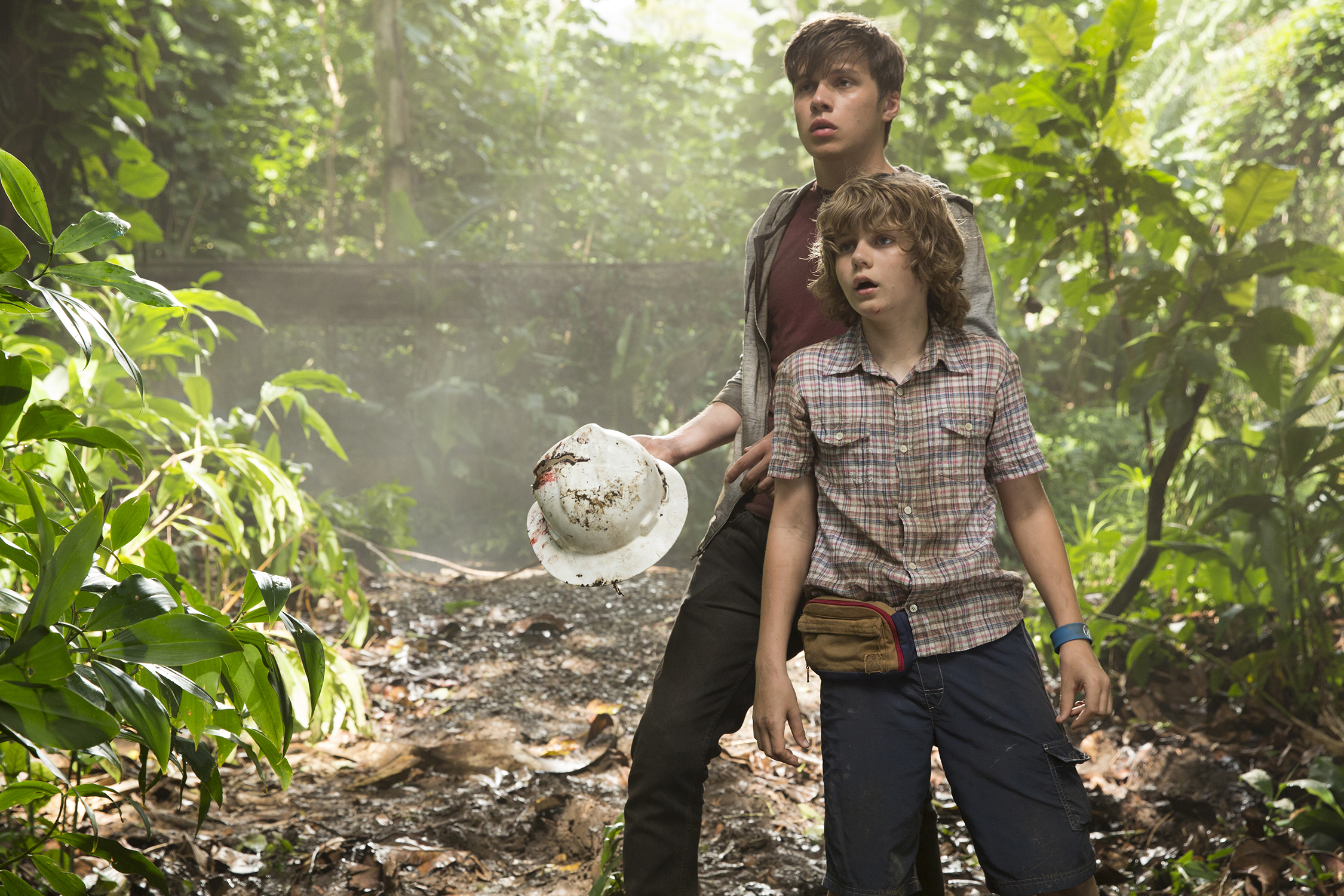
The boys reunite with Claire and Owen. InGen security chief Vic Hoskins pushes his plan to deploy the raptors against the Indominus. Owen reluctantly accompanies them, then discovers that the hybrid contains raptor DNA and can communicate with the pack. The operation turns against the humans. Wu is evacuated with embryos, preserving the research even as the park collapses. A raptor kills Hoskins. [7]
4. Claire opens another gate
Owen regains the surviving raptors’ cooperation, but the Indominus kills Delta and Echo; Blue survives. Claire releases the park’s Tyrannosaurus and draws it into the confrontation with a flare. Blue joins the fight. At the lagoon’s edge, the Mosasaurus seizes the Indominus and pulls it underwater. The tourists evacuate, the boys return to their parents, and Owen and Claire leave the immediate crisis together. The closing image gives the Tyrannosaurus the abandoned park and a final roar. [8]
Cast + TMDB
Cast and Characters









These roles belong to the exact 2015 film, not another installment in the franchise. The studio cast listings and TMDB-attributed catalogue match the principal performers. [2, 4]
TMDB movie record: https://www.themoviedb.org/movie/135397
The human roles create competing perspectives on the same place. A visitor encounters a promise, a manager an operation, a trainer an ongoing relationship, and a security executive a possible application. Our reading of the film depends on the friction between those perspectives rather than assuming that everyone sees the same park and merely disagrees about its value.
Ending Explained
What actually defeats the Indominus?
The final fight involves the Tyrannosaurus and Blue, but the decisive attack comes from the Mosasaurus. The lagoon creature drags the hybrid underwater. Claire creates the opportunity by releasing the Tyrannosaurus; the humans do not regain comprehensive command of the park. [8]
RecapRush interpretation: the distinction matters. Survival arrives through an encounter whose outcome the characters cannot fully prescribe. Claire’s decision is an improvisation made under desperate conditions, not a repeatable safety procedure. The disaster does not end by proving that the correct manager can finally make every animal behave.
The film offers the emotional satisfaction of a rescue while leaving the larger claim of mastery in ruins. Reopening the gates would require much more than pointing to the creature that happened to win the last fight.
Why Blue’s choice is not the same as domestication
RecapRush interpretation: the relationship between Owen and Blue is most interesting when it retains uncertainty. If her cooperation were mechanically guaranteed, Hoskins’s idea of a deployable weapon would become harder to distinguish from Owen’s work. The film needs that difference to remain visible.
We read Owen’s approach as a relationship requiring attention to another living thing. It may produce a useful response, but usefulness is not its entire meaning. Hoskins sees a result that might be extracted from that relationship and reproduced on demand. His mistake is to treat the visible response as though it contains the whole process that made it possible.
Blue’s survival therefore does not certify that the project is safe after all. It preserves a character and a bond while leaving the institutional attempt to turn that bond into a product discredited.
Does the ending punish everyone responsible?
Wu’s departure with embryos occurs before the evacuation is complete; the research survives the catastrophe. That is a plot fact, not a prediction based on later sequels. [6]
RecapRush interpretation: this creates a difference between personal consequence and systemic accountability. A spectacular failure can destroy a facility without destroying the incentives that produced it. Knowledge, investment and ambition can move elsewhere. The visible wreckage is not necessarily the end of the business logic behind it.
That is why the conclusion has an unsettled edge beneath its relief. Families can be reunited and an immediate threat can be stopped while the capacity to repeat the underlying mistake remains intact.
What the Tyrannosaurus’s last roar means
The final roar belongs to the main ending, not a scene hidden after the credits. [8]
RecapRush interpretation: the composition can be read as a change in who occupies the park’s central image. Earlier, the resort arranges animals for spectators. At the end, the human audience has departed and the creature occupies the space without performing for a ticketed crowd. The image restores grandeur while refusing the original premise that grandeur should remain available on a schedule.
Deep Analysis & Key Themes
1. Successful operation is not proof of a sound premise
RecapRush interpretation: repeated success can make an organization less willing to question the assumptions behind its work. Every uneventful day becomes another reason to believe the system is fundamentally correct. Warnings then sound like interruptions to a record of achievement rather than information about a limit the system has not yet reached.
More from RecapRush
 28 Years Later: The Bone Temple (2026) Recap & Ending Explained: Why Kelson's Cure Matters More Than Jim's Return
 Top Gun: Maverick (2022) Recap & Ending Explained: Trust Is the Mission He Cannot Fly Alone
 Spider-Man: Brand New Day (2026) Recap & Ending Explained: Why Peter Chooses to Be Known Again
Jurassic World gives this confidence an attractive setting. Efficiency and spectacle make the place feel knowable. Visitors know where to stand; workers know what to call things. The appearance of coordination becomes part of the promise being sold.
Our reading of the disaster asks a narrower question than whether all technology is bad. What happens when an institution treats the absence of a recent catastrophe as evidence that its most ambitious claims have been settled? The first serious contradiction then arrives as an emergency for which the language of ordinary operation is inadequate.
2. Claire’s development is a change in the scale of attention
RecapRush interpretation: a large operation requires abstraction. Managers cannot remain personally acquainted with every person or animal affected by every decision. The difficulty is deciding when an abstraction has stopped helping them understand the world and started shielding them from it.
Claire’s story becomes compelling when the visitor population ceases to be a number and acquires particular faces. That does not require us to dismiss the practical value of organization or to reduce her career to a moral defect. It requires recognizing that professional competence is incomplete if it cannot respond to a person who no longer fits the dashboard.
Her rescue role is therefore more useful to consider as redirected attention than as a simple rejection of work. The relevant question is what her decisions are for. The emergency forces a shift from maintaining an experience to protecting the people who came to have it.

3. Owen’s expertise recognizes an unfinished conversation
RecapRush interpretation: a warning can be valuable because it identifies what is unknown, not because the expert can supply an alternative plan for every eventuality. Owen’s authority works best when it preserves that distinction. Understanding more than his colleagues does not make him omniscient.
The film’s conflict between training and weaponization can be understood as a conflict about how expertise travels. An executive may want a technique that can be transferred without the person, time or circumstances that give it meaning. A trainer’s knowledge is harder to separate from the continuing encounter in which it was developed.
This makes humility a practical qualification rather than an attractive personality trait. If another creature remains capable of surprising you, uncertainty belongs inside the method. Eliminating that uncertainty from the sales pitch does not eliminate it from the animal.
4. The Indominus is the park’s promise taken too far
RecapRush interpretation: the hybrid is not only a threat arriving from outside the resort. It embodies the resort’s desire to exceed an audience’s expectations. A business devoted to amazement faces a peculiar problem: the more successfully it familiarizes people with a wonder, the more pressure it may feel to provide another.
The creature can consequently be read as the point at which attention becomes a design requirement. Its value is organized around the reaction it should produce in spectators. The failure is not simply that it turns out stronger than expected. It is that the project asks what can be made impressive before asking what kind of life is being made.
This reading also implicates the audience without pretending that watching a blockbuster is the same act as running a dangerous laboratory. We are invited to want a bigger event, and then invited to consider the cost of making escalation the default definition of improvement.
5. Familiar architecture carries an argument about memory
RecapRush interpretation: a franchise return can make an old location feel reassuring before the story tells us what condition it is in. The audience brings an emotional map that the characters may not share. Recognition creates a brief sense of orientation even in a place whose original promise failed.
In a set interview, Trevorrow described his interest in revisiting the earlier park through the feeling of walking alone through an old school. He also discussed the attraction of constructing a convincing commercial space and then breaking it apart. Those are his stated creative interests; the following connection is ours. [9]
The film’s remembered spaces offer continuity without making repetition automatically wise. A place can matter because of what happened there, including what went wrong. Nostalgia becomes a useful feeling when it deepens attention; it becomes dangerous when it edits failure out of the memory being preserved.
6. The film leaves care and possession in tension
RecapRush interpretation: ownership is a legal and organizational relationship. Care is a practice. Neither can be inferred reliably from the other. A person may possess an animal while understanding little of its needs; another may understand its behavior while remaining entangled in an institution that exploits it.
The movie does not have to resolve every contradiction in that arrangement to make the contradiction visible. Indeed, a perfectly innocent human perspective would make the conflict less interesting. The people trying to survive are also people who inhabit and benefit from the park.
That tension gives the ending its practical limit. Leaving the island can be the right immediate action without becoming a complete answer to the responsibility of having built it.
What Most Viewers Missed
These are questions for a second viewing, not assertions about secret production intentions.
- Notice the different meanings of control. Is a character describing ownership, influence, prediction or obedience? Treating those as separate claims clarifies the disagreements that drive the film.
- Watch who is allowed to name the problem. A dangerous animal, an interrupted attraction and a threatened investment invite different responses even when they describe the same event.
- Distinguish a rescue from a solution. The ending can protect the people in immediate danger while leaving the conditions for another failure unresolved.
- Consider what recognition does to the viewer. Familiar spaces and creatures can produce affection before we have decided whether the situation they belong to should be restored.
- Pay attention to the human scale inside the spectacle. The story becomes more than a contest between large animals when the audience remembers that an institution’s abstract decisions are being experienced by particular visitors and workers.
Mid/Post-Credits
Jurassic World (2015) has no post-credits scene. The Tyrannosaurus’s final appearance is part of the ending itself. Wu’s departure also happens within the film, not in a separate stinger. Do not confuse this with the credits material of later franchise installments. [6, 8, 10]
RecapRush interpretation: the lack of a stinger does not make the conclusion entirely closed. The film has already separated immediate survival from the persistence of the research. Its unresolved element is built into the story the audience has just watched.
Final Thoughts
Jurassic World works best as a confrontation between an impressive achievement and an inadequate account of what that achievement means. The park exists. Its animals are real within the story. Neither fact makes the institution’s confidence proportionate to its understanding.
The ending gives its characters a way out without giving humanity the island back as a manageable possession. In our reading, that is its strongest idea: surviving the failure of control is not evidence that control has finally been achieved.
Join the conversation
What did you think of the ending? Share your interpretation. Spoilers may appear below.
This product uses the TMDB API but is not endorsed or certified by TMDB.
No comments yet. Start the conversation.