
RECAPRUSH MOVIE GUIDE
Furious 7 (2015)
Directed by James Wan
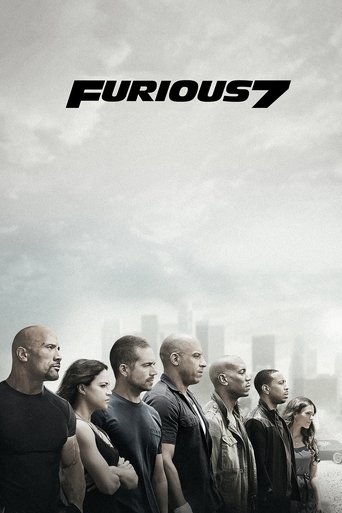
Pursued by Deckard Shaw, Dom’s crew rescues a hacker and fights to keep her surveillance program from a mercenary, while Brian considers a future with his family.
Overview, poster, and credits from TMDB.
Read and watch our full recap ↓FROM THE RECAPRUSH LIBRARY · FULL RECAP
Furious 7 (2015) Recap & Ending Explained: Family Means Letting Brian Go
13 min read · Estimated reading time— views
Intro + RecapRush Viewpoint
Furious 7 makes an unusually persuasive argument for stopping. In a series whose heroes keep answering danger with another mission, its most satisfying destination is a life that no longer needs the next chase. The action supplies the spectacle; permission to leave supplies the emotional resolution.
RecapRush viewpoint: The film tests two meanings of family. One treats loyalty as an obligation that can never be discharged. The other allows a loved person to choose a different future. Our reading is that the second meaning ultimately wins. This is an interpretation of the finished film, not a claim about an alternative screenplay or a later sequel.
Full spoilers follow. This article covers James Wan’s released 2015 film, officially titled Furious 7 in the US and also known as Fast & Furious 7. Brian O’Conner’s fictional story and the film’s real-world tribute to Paul Walker are discussed separately.
Featured Image
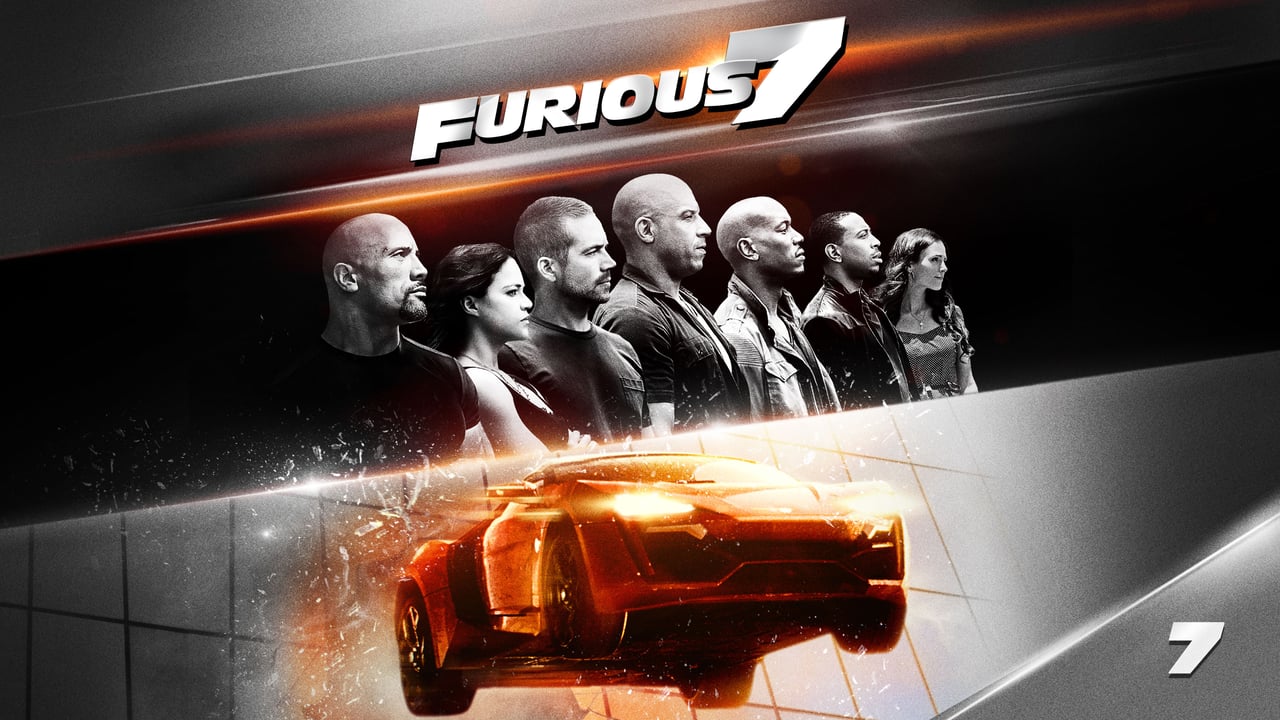
Table of Contents
Quick Facts
- Official US title: Furious 7
- Also released as: Fast & Furious 7
- Film year and status: 2015; released
- US theatrical release: April 3, 2015
- Director: James Wan
- Screenplay: Chris Morgan
- Distributor: Universal Pictures
- Theatrical runtime: approximately 137 minutes; the BBFC’s cinema classification records 137 minutes 18 seconds. Home-video editions and playback speeds have different listed durations.
- Principal genres: Action, Adventure, Crime, Thriller
- TMDB movie identity: 168259 — https://www.themoviedb.org/movie/168259
- RecapRush collection: #16 in the fixed October 29, 2026 Worldwide lifetime Box Office Top 30 snapshot. This is the collection’s dated rank, not a newly calculated ranking.
The official studio page establishes the title and premise. AFI corroborates the US release date, director and writer; BBFC supplies the cinema runtime. The TMDB identity is independently cross-checked through Wikidata and FilmFlow. Sources are linked below.
Full Spoiler Recap
1. Home is no longer a safe destination
The crew has returned to America after receiving pardons. Brian is adjusting to fatherhood, while Letty’s missing memories complicate her reunion with Dom. Deckard Shaw wants revenge for his incapacitated brother Owen. He attacks Hobbs, and a package bomb destroys the Toretto home. Han’s death in Tokyo brings Dom back into the fight. [1, 6]
The opening dilemma matters beyond the immediate threat. These people have obtained the ordinary life that earlier adventures promised, but they have not yet learned how to inhabit it. Safety and belonging are related without being interchangeable. A familiar house can offer continuity; it cannot make an unresolved relationship whole.
2. Mr. Nobody offers a dangerous exchange
A government operative called Mr. Nobody offers help locating Shaw in exchange for rescuing hacker Ramsey and retrieving God’s Eye, her powerful surveillance program. Ramsey is being held by mercenary Mose Jakande. The crew drops its cars from an aircraft and attacks the mountain convoy carrying her. [6, 7]
The bargain gives Dom an immediate objective while introducing a different kind of power. Driving skill is embodied and local: somebody has to take the risk. Surveillance promises reach without that physical exposure. As a storytelling device, God’s Eye offers an appealing shortcut to the uncertainty that makes Dom anxious.
3. Abu Dhabi turns a rescue into a retrieval mission
The search takes the team to Abu Dhabi, where God’s Eye is concealed in a Lykan HyperSport owned by a wealthy prince. Dom and Brian’s retrieval involves driving the car between towers. Later, the device leads them toward Shaw, but Shaw and Jakande ambush them; the crew loses control of God’s Eye. [6, 7]
The reversal exposes the bargain’s weakness. A tool that promises to remove uncertainty can also make its user predictable. Knowing a person’s location does not mean understanding the situation that awaits there. The action enlarges the scale of the film while the central problem remains intimate: how much control is enough to make loved people safe?
4. The fight returns to Los Angeles
Back home, the crew protects Ramsey while she works to disable God’s Eye. Brian reaches a communications relay, Hobbs destroys Jakande’s drone, and Dom confronts Shaw on a parking structure. Dom places grenades on Jakande’s helicopter; Hobbs detonates them by gunfire. Shaw survives and is imprisoned. [6]
The resolution depends on divided labor. Dom’s confrontation attracts attention, but it cannot replace Ramsey’s technical work or the others’ protection of her. The film’s attraction to the solitary hero is checked by its own practical storytelling: no individual carries every part of the solution.
5. Survival is followed by a different decision
Letty tells the unconscious Dom that her memories have returned, including their wedding; he revives. The epilogue places Brian with Mia and their son on a beach. Dom leaves quietly, Brian catches up in his white Supra, and their cars eventually take separate roads. Brian’s destination is retirement with his family. [7, 8]
The plot has closed its immediate danger before the film reaches its deepest question. Once the group no longer needs to survive this particular night, what do its members owe one another tomorrow? The answer gives affection a form other than another shared assignment.
Cast + TMDB
Cast and Characters










- Vin Diesel — Dominic Toretto: The crew’s protective center, whose instinct to hold everyone close meets the necessity of letting someone depart.
- Paul Walker — Brian O’Conner: A driver and father choosing what a fulfilled life should look like.
- Michelle Rodriguez — Letty Ortiz: A person rebuilding continuity between remembered history and present attachment.
- Jordana Brewster — Mia Toretto: Brian’s partner and Dom’s sister; the domestic future has a person and a relationship at its center.
- Dwayne Johnson — Luke Hobbs: The injured agent who returns to the immediate conflict.
- Jason Statham — Deckard Shaw: Owen’s older brother, turning kinship into a mandate for revenge.
- Tyrese Gibson — Roman Pearce: A member of the crew whose apprehension makes the danger legible beneath the bravado.
- Ludacris — Tej Parker: Technical skill within an ensemble otherwise defined by spectacular driving.
- Nathalie Emmanuel — Ramsey: God’s Eye’s creator, whose expertise becomes indispensable to resisting its misuse.
- Kurt Russell — Mr. Nobody: The government operator whose offer entangles the crew in the surveillance mission.
Djimon Hounsou plays Mose Jakande. The featured cast list above is limited to ten performers, rather than presented as the complete credits. Credits and character names are cross-checked against AFI, BBFC and FilmFlow. This article belongs to TMDB movie 168259, not another entry in the franchise. [2–5]
Ending Explained
Does Brian die?
No. Brian’s departure is retirement, not a death scene. The beach epilogue and the parting drive leave him alive with a future beyond the crew’s missions. The film then honors Paul Walker through its farewell montage and dedication. Those two levels of meaning coexist, but they are not the same event. [8]
Our interpretation is that the ending offers a rare separation without betrayal. A shared past does not require an identical future. Brian’s commitment to family can remain sincere while the shape of his daily life changes. Dom must accept that loyalty is not measured by permanent availability.
More from RecapRush
 The Only Living Pickpocket in New York (2026) Recap & Ending Explained: Harry’s Last Theft Is an Act of Care
 Dune (2021) Recap & Ending Explained: Why Paul Chooses the Desert After Killing Jamis
 The Last Sunrise (2026) Recap & Ending Explained: Why Ry’s Smile Leaves Love Unfinished
Why does the fork in the road work?
The final image resolves a problem of emotional geography. For much of the film, togetherness means occupying the same dangerous space. A fork allows two routes to remain equally real. Neither driver must become the other’s enemy to take his own direction.
There is also a useful change in the meaning of driving. Spectacle usually treats a road as something to conquer through speed, nerve or mechanical advantage. Here, movement can express recognition. The important distinction is no longer who gets ahead. It is whether two people can acknowledge one another while accepting separation.
That is why interpreting the sequence only as franchise housekeeping misses its dramatic force. It does more than explain an absence. It revises the emotional rule governing presence: a person can matter profoundly without remaining physically beside you.
What has Letty recovered?
The wedding memory gives Dom and Letty a shared point of recognition. [7] Our reading is that this closes an emotional distance rather than awarding Dom ownership of her identity. The relationship becomes persuasive when Letty can speak from her own recovered experience. His certainty about the past cannot substitute for hers.
The film’s physical rescue and its emotional reconciliation operate differently. Courage can address a threat, but intimacy also requires a response that cannot be forced. Read together with Brian’s departure, this suggests a broader limit to Dom’s power: he can act for the people he loves, but their inner lives are not his to command.
Deep Analysis & Key Themes
Family can become an excuse for possession
The word family can sound like an answer before anyone has asked what it demands. Furious 7 makes that demand worth examining. A bond becomes destructive when it authorizes endless retaliation or prevents somebody from choosing an independent life.
In our reading, the film places Dom’s devotion and Shaw’s revenge close enough to create an uncomfortable resemblance. Both attach intense moral significance to a small circle of people. The distinction cannot simply be that one man cares about relatives. It must concern what that care permits him to do to others.
Brian’s exit supplies a constructive alternative. A family capable of surviving change is stronger than one that can survive only through permanent mobilization. This gives the farewell ethical weight beyond sentiment: love has to make room for the other person’s good.
Surveillance promises certainty while relationships require trust
God’s Eye belongs to a fantasy of total access. A visible target appears easier to manage than an uncertain human situation. But information does not itself provide sound judgment. A technological advantage remains vulnerable to the purposes of whoever holds it.
Our interpretation is that the surveillance plot throws the domestic plot into relief. You cannot locate your way into being a good partner or parent. The things Brian must choose cannot be solved by making the world more searchable. Similarly, no amount of attention from Dom can manufacture Letty’s own understanding of herself.
The movie is not a detailed policy argument about surveillance. Its device works most effectively as a dramatic contrast: extraordinary access to the outside world sits beside an inability to control the lives closest to you. That tension gives an otherwise extravagant action mechanism a useful emotional function.
The ensemble distributes vulnerability
The crew’s different skills keep courage from having a single appearance. Physical strength is one resource; technical knowledge, timing and the willingness to rely on somebody else are others. A scene can make one person look invincible while the larger sequence quietly reveals how dependent that person is.
This is also why Ramsey matters beyond being an object of rescue. Expertise changes the balance of a group. Protecting a person and listening to what she knows are different acts; the latter prevents protection from becoming paternalism. Our reading values the ensemble most when it makes that distinction visible.
Spectacle creates scale; restraint creates proportion
The film keeps raising the physical stakes until ordinary measures seem inadequate. Its emotional finish benefits from doing the opposite. A quieter conclusion can reveal what the noise was protecting, and what another escalation would fail to express.
There is a risk in any action franchise that tenderness becomes merely the interval between set pieces. Here, the farewell asks the audience to remain with an emotion that cannot be converted into a practical task. No opponent needs defeating for the feeling to count. The change in pace gives the ending its authority.
What Most Viewers Missed
The emotional problem survives the action solution
Eliminating an immediate threat is not identical to choosing a future. The epilogue matters because it gives the characters a problem that victory cannot answer for them. In our reading, the film earns its last movement by allowing resolution to mean a decision rather than another successful maneuver.
A home and a family are different kinds of continuity
A building can organize memory without containing the entirety of a relationship. The opening attack makes material safety urgent, but the ending suggests that continuity also travels with people. This is a thematic connection, not a claim that the destruction was necessary or beneficial.
The promotional images are not evidence of the final farewell
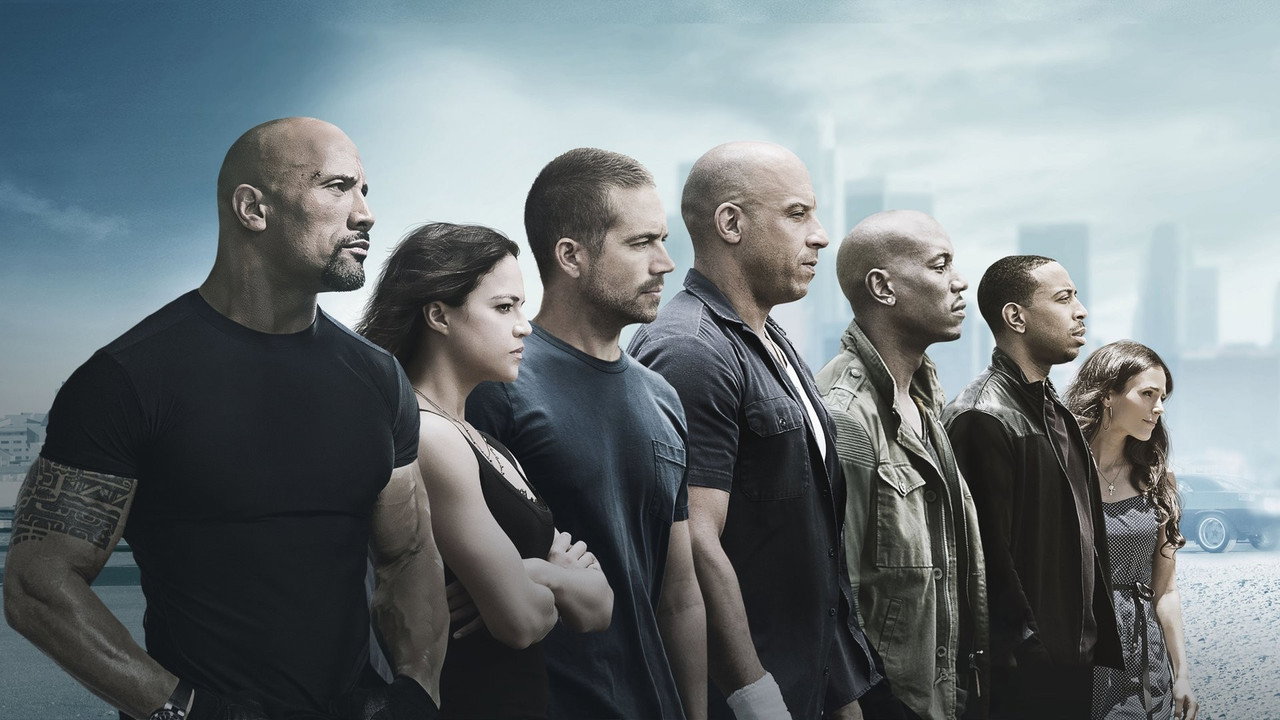
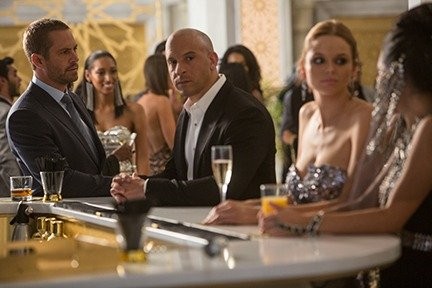
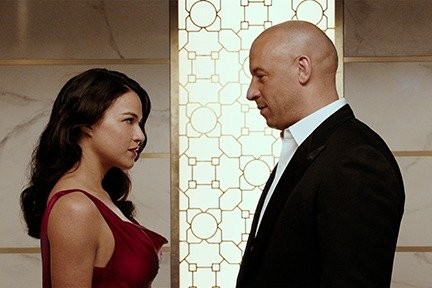
The ensemble artwork and formal-party stills used here establish the film’s people and relationships. They do not depict the closing road sequence. Keeping that distinction clear matters when a familiar publicity image can easily acquire an inaccurate caption through repetition.
Scope changes how Han’s story should be described
This recap follows what Furious 7 presents and what its characters understand at this point. Later franchise revelations should not be inserted into an account of this film as though the crew already knew them. A sequel can change a viewer’s understanding without changing the dramatic knowledge available in an earlier scene.
Mid/Post Credits
There is no additional narrative scene during or after the credits. MediaStinger identifies the Walker tribute as part of the epilogue before the credits, not a hidden stinger. The dedication belongs to the film’s farewell. [8]
You do not need to invent a sequel tease to explain why the ending lingers. Its purpose is closure through affection, even within a series that continues.
Final Thoughts
Furious 7 is most affecting when it allows family to become a permission rather than a command. Its action imagines almost unlimited physical capability, yet its conclusion finds meaning in a limit: nobody can keep every loved person on the same road forever.
RecapRush verdict: The film’s lasting achievement is making a departure feel like an affirmation of belonging. Brian does not have to lose the people he loves in order to build the life he wants. Dom’s acceptance gives that possibility an emotional cost, and therefore an emotional value.
Join the conversation
What did you think of the ending? Share your interpretation. Spoilers may appear below.
This product uses the TMDB API but is not endorsed or certified by TMDB.
No comments yet. Start the conversation.