
RECAPRUSH MOVIE GUIDE
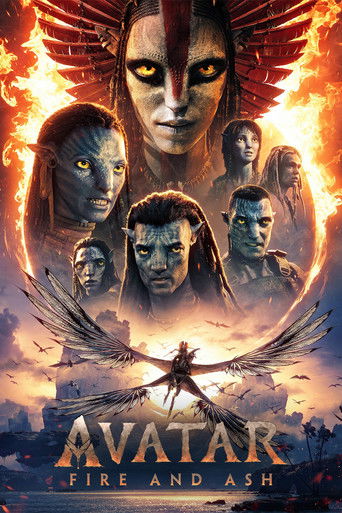
Avatar: Fire and Ash (2025)
Directed by James Cameron
Grieving Neteyam, the Sully family faces Varang’s Mangkwan and the RDA, while Spider’s adaptation to Pandora forces a painful choice about protection and belonging.
Overview, poster, and credits from TMDB.
Read and watch our full recap ↓FROM THE RECAPRUSH LIBRARY · FULL RECAP
Avatar: Fire and Ash (2025) Recap & Ending Explained: Spider Is a Person Before He Is a Threat
15 min read · Estimated reading time— views
Intro + RecapRush Viewpoint
Avatar: Fire and Ash makes belonging a harder question than choosing the right side of a war. A child can be loved and still be treated as an outsider. A family can call itself protective while deciding that one member’s existence has become too dangerous. The film’s most disturbing conflict begins where affection gives way to calculation.
RecapRush viewpoint: Spider is the moral test of the story. Our reading is that the Sullys’ resistance to colonization becomes meaningful only when they refuse to reproduce its habit of reducing a living person to a useful or threatening biological resource. Saving him is not merely a sentimental exception. It forces the family to decide what its principles mean when those principles become costly.
Full spoilers follow, including Spider’s transformation, Jake’s crisis, Ronal’s death, the battle and the final encounter with the dead. This article covers James Cameron’s released 2025 film. Interpretation is identified as interpretation; unresolved fates are not converted into confirmed deaths or promised sequel events.
Featured Image
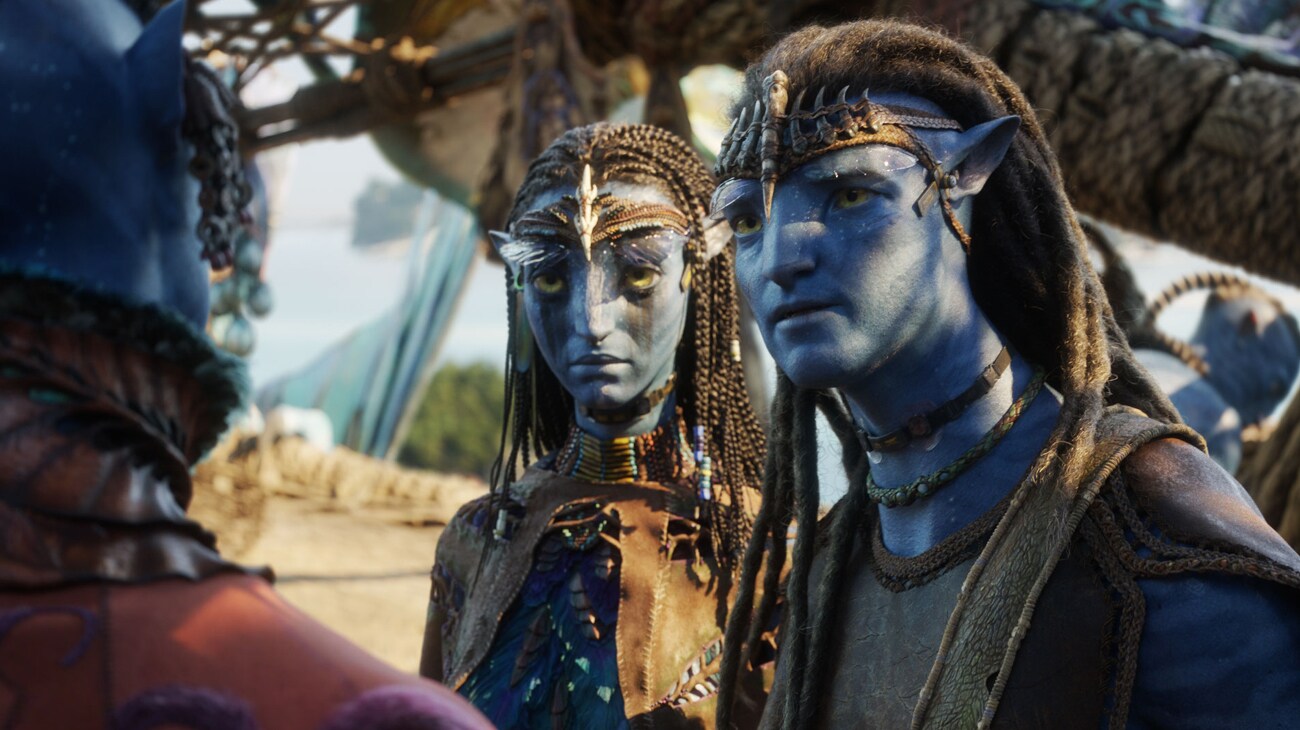
Table of Contents
Quick Facts
- Official title: Avatar: Fire and Ash
- Release year and status: 2025; released
- US theatrical release: December 19, 2025
- Director: James Cameron
- Screenplay: James Cameron, Rick Jaffa and Amanda Silver
- Story: James Cameron, Rick Jaffa, Amanda Silver, Josh Friedman and Shane Salerno
- Producers: James Cameron and Jon Landau
- Distributor: 20th Century Studios
- Classified cinema runtime: approximately 197 minutes, using the Australian Classification record; promotional and catalog pages give differing estimates
- Genres: Science Fiction, Adventure, Fantasy, Action
- TMDB movie identity: 83533 — https://www.themoviedb.org/movie/83533
- RecapRush collection: #18 in the fixed October 29, 2026 Worldwide lifetime Box Office Top 30 snapshot. This is the collection’s dated rank, not a newly calculated ranking.
The title, US date and creative credits come from Disney’s film page. The 197-minute classified version is documented separately, and the TMDB identity is independently cross-checked through Wikidata and FilmFlow. [1–3, 9]
Full Spoiler Recap
1. Grief travels with the family
The Sullys are living with the Metkayina after Neteyam’s death. Concern for Spider’s safety prompts a journey toward the human scientists’ camp, but the traveling party is attacked by Varang’s Mangkwan, also called the Ash People. The family is scattered. [4]
The setting has changed, but the emotional damage has not become history. Our reading is that the opening refuses the comforting assumption that surviving an earlier battle means recovering from it. A new danger reaches a family already struggling to decide how to live together.
2. Spider survives in a way that changes the stakes
When Spider can no longer breathe through his failing mask, Kiri saves him through her connection to Pandora’s living world. A biological change allows him to breathe the atmosphere without the mask. Quaritch subsequently forms an alliance with Varang and supplies the Mangkwan with human weapons. [5]
The RDA’s interest in Spider is now more than a means of pressuring Jake. His adaptation could potentially be studied and reproduced, removing a major obstacle to human settlement. Kiri also learns more about her fatherless origin through Grace Augustine’s avatar, although her wider relationship with Eywa remains mysterious. [6]
In our interpretation, the transformation turns an apparently simple rescue into an ethical trap. Spider has been saved, but other people immediately begin asking what his survival might make possible. His body becomes an argument before he has been allowed to become a person in the conversation.

3. Captivity exposes two ways of treating a life as a resource
Jake surrenders when the alliance threatens the Metkayina. He and Spider are taken to the RDA base. Neytiri infiltrates the compound, Spider escapes his confinement, and the scientist Ian Garvin helps free Jake. [5, 6]
After their escape, Jake considers killing Spider to prevent the RDA from exploiting his new biology. He cannot carry it through and embraces him instead; Neytiri, too, accepts the boy. [6]
This is the film’s decisive moral turn in our reading. The danger is real within the story, so the refusal cannot be dismissed as a choice made without consequences. But accepting a possible danger is different from accepting the right to kill someone for what an enemy might someday do with him.
4. The threat to the Tulkun becomes a shared fight
The RDA prepares to attack a gathering of Tulkun. Lo’ak and Payakan help persuade the Tulkun to resist, and Jake again rides Toruk to unite Na’vi forces. The confrontation becomes a battle involving the RDA, the Mangkwan, the Na’vi clans and the Tulkun. [5, 7]
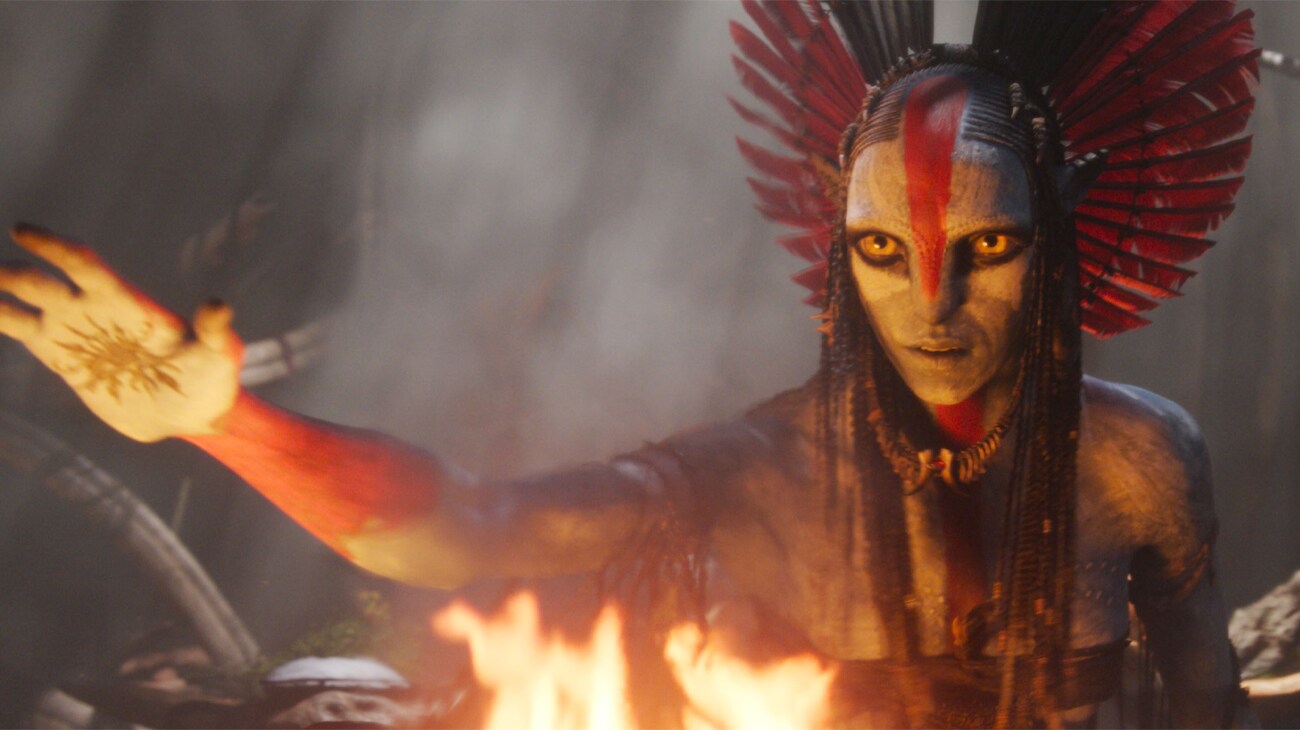
During the fighting, Ronal is fatally wounded. Neytiri helps deliver her daughter before Ronal dies. Kiri, with Spider and Tuk, reaches Eywa, and Pandora’s creatures intervene against the RDA forces. Kiri repels Varang, who escapes. [7, 8]
Our interpretation distinguishes participation from invulnerability. A larger alliance changes what the defenders can attempt, but it cannot make the cost disappear. The film’s new life and its loss occur together rather than being arranged into separate emotional compartments.
5. The last confrontation leaves an important uncertainty
Jake and Quaritch fight, but both act to save Spider when he is endangered. Jake then prevents his family from killing Quaritch. Quaritch jumps away from the floating rock; the film does not confirm his death. [8]
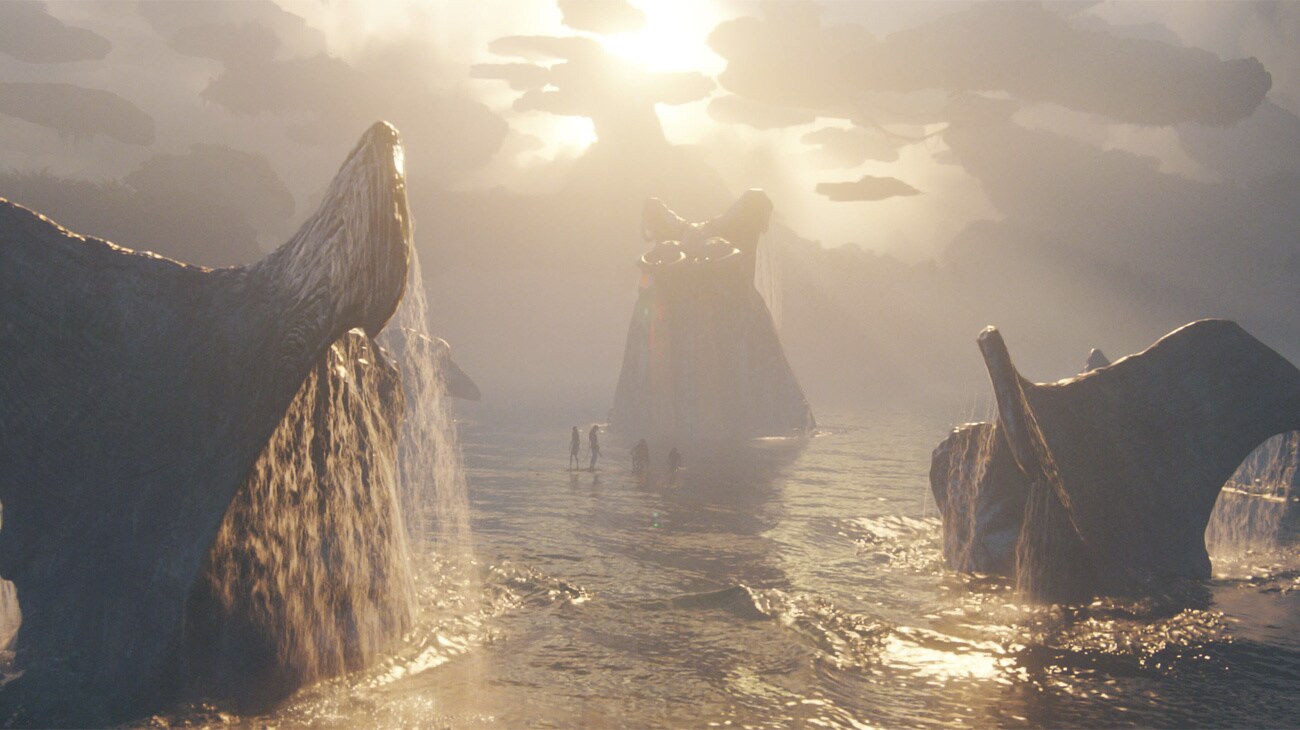
The closing movement takes Spider, with Kiri, into the spirit world. He encounters Grace and Neteyam, and his acceptance into the Na’vi community gives the ending a different emphasis from the military victory. [8]
The plot has moved from asking where Spider can safely be placed to recognizing that he belongs. Our reading is that the answer arrives through relationship rather than a verdict about the usefulness of his altered body.
Cast + TMDB
Cast and Characters







- Sam Worthington — Jake Sully: A father and leader whose protective reasoning reaches a terrible limit.
- Zoe Saldaña — Neytiri: A grieving mother confronting what her anger toward humanity means for the human child in her care.
- Sigourney Weaver — Kiri: A young Na’vi whose unusual connection to Pandora becomes essential to Spider’s survival and the battle.
- Stephen Lang — Colonel Miles Quaritch: The recombinant antagonist whose pursuit of Jake intersects with his attachment to Spider.
- Oona Chaplin — Varang: Leader of the Mangkwan, bringing a different history of loss and hostility into the conflict.
- Jack Champion — Miles “Spider” Socorro: The human teenager whose adaptation makes his personhood the story’s ethical test.
- Kate Winslet — Ronal: The Metkayina spiritual leader whose death makes the battle’s cost immediate.
- Cliff Curtis — Tonowari: Leader of the Metkayina and a central figure in the community sheltering the Sullys.
- Britain Dalton — Lo’ak: Jake and Neytiri’s son, whose bond with Payakan matters to the Tulkun’s response.
- Trinity Jo-Li Bliss — Tuk: The youngest Sully child, participating alongside Kiri and Spider in the appeal to Eywa.
The featured cast is limited to ten performers, not presented as the complete credits. Jemaine Clement plays Ian Garvin, Brendan Cowell plays Scoresby and Edie Falco plays General Ardmore. Exact-film credits are checked against Disney, D23 and FilmFlow. This article belongs to TMDB movie 83533, not another Avatar installment. [1, 3, 4, 9]
Ending Explained
Why does Jake spare Spider?
The verified event is that Jake stops short of killing him and embraces him. [6] Our interpretation is that the act rejects a devastating category error: the possibility that Spider can be exploited does not make Spider the exploiter.
That distinction matters because the film does not make the danger imaginary. An enemy’s interest can be real while the proposed response remains wrong. Treating a person as a future security breach substitutes prediction for moral responsibility. It gives the threatened community a language in which an innocent life can begin to look like a hostile object.
The embrace reverses that reduction. Spider is not required to become biologically ordinary again before he can be loved. Nor does he have to prove that every possible consequence of his survival will be harmless. Belonging becomes an obligation to stand with a person through uncertainty rather than permission granted after uncertainty has been removed.
Is Quaritch dead?
His death is not confirmed. The jump is shown; a definitive outcome is not. Coverage of the released ending accordingly treats his fate as unresolved. [8]
More from RecapRush
 Paths of Glory (1957) Recap & Ending Explained: Why Dax Cannot Save the Men
 Dune: Part Two (2024) Recap & Ending Explained: Why Paul Wins by Becoming the Future He Feared
 Mare of Easttown (2021) Recap & Ending Explained: Why Solving the Murder Cannot Save Mare’s Friend
Our reading is that the uncertainty preserves the difference between one cooperative act and a completed moral transformation. Helping save Spider is significant, but it does not erase Quaritch’s choices or establish a permanent change of allegiance. A moment can reveal a limit to someone’s cruelty without proving that the person has become trustworthy.
Jake’s restraint also remains his own decision. It should not be judged only by whether Quaritch later rewards it. Otherwise mercy becomes another transaction in which an enemy must supply a favorable future before the choice can count as meaningful.
What happens to Varang?
Varang survives and leaves the confrontation after Kiri intervenes. [8] Claims that she is definitively killed or that a specific future film will complete her story go beyond the released ending.
Our interpretation is that her survival leaves the film’s treatment of pain deliberately incomplete. Defeating a leader in a battle does not resolve the history through which she has justified violence. At the same time, understanding the existence of that history need not excuse the harm she inflicts.
Does the final scene bring the dead back to life?
The final scene is a spiritual encounter, not a physical resurrection of Neteyam or Grace. [8] In our reading, the film gives memory a place in the living community without pretending that loss has been undone.
Spider’s presence matters because the scene expands the idea of who may participate in that continuity. The emotional resolution is not that everyone becomes identical. It is that a person once treated as an outsider is allowed a relationship with the community’s remembered dead.
This also keeps the ending from functioning as a simple exchange of one child for another. Accepting Spider does not replace Neteyam. A family can make room for the living without demanding that the dead surrender their place in its memory.
Deep Analysis & Key Themes
Grief becomes dangerous when it claims authority over someone else’s life
Grief is not itself a moral failure. The problem begins when suffering is used as a complete explanation for what others must endure. Our reading of the film is that its characters repeatedly face the temptation to transform pain into permission.
That temptation is emotionally understandable. A person who has suffered a devastating loss may want a rule that prevents its repetition. But the desire for such a rule can make difference look like danger and uncertainty look like betrayal. The survivor begins trying to control the future through the people still within reach.
The film’s ethical challenge is therefore more difficult than an instruction to feel less anger. It asks whether a character can acknowledge the force of anger without giving it final authority. Refusing to harm Spider does not require the parents to stop being frightened. It requires them to stop treating fear as a sufficient justification.
The body is not a title deed
Colonial possession can begin with an apparently neutral question: what can this organism provide? The question becomes destructive when every other relationship to the organism is made subordinate to the answer. A living being is then valued through extraction, replication or removal.
Our interpretation places Spider at the center of this logic. His transformation exposes how quickly wonder can become a plan for use. Something that saves one child can be reimagined as infrastructure for a much larger project. The change in scale risks erasing the person whose survival made the possibility visible.
The family’s own temptation to eliminate him is a disturbing counterpart, not an equivalent political system. The motives and power are different. Yet both approaches can arrive at the same reduction: his life becomes secondary to what others think his body means.
Spiritual connection does not erase the need for human choices
Kiri’s extraordinary connection offers the film a form of aid beyond military calculation. But our reading does not treat that aid as an explanation that cancels the ethical work done elsewhere. The decision to accept Spider cannot be delegated to a spectacular intervention.
This is important to the ending’s emotional credibility. A community that welcomes someone only after an unmistakable display of supernatural approval has avoided part of the challenge. The parents’ refusal to kill Spider matters because they must act while the risk is still present.
The film can therefore hold two ideas together: connection may reveal a larger world of meaning, while responsibility remains an immediate relationship between particular people. Wonder is most useful here when it deepens attention, rather than replacing judgment.
A coalition changes what solidarity asks
The battle brings different communities into a common effort. Our reading is that solidarity becomes interesting when it requires more than agreeing that an enemy is bad. Different histories, customs and vulnerabilities have to enter a shared decision without becoming interchangeable.
The Tulkun’s participation is especially useful to that question. Refusing violence and refusing abandonment are both serious ethical concerns. A story about collective defense cannot solve the tension merely by declaring one instinct foolish. It has to make the threatened lives visible enough for the decision to have weight.
This does not make the film a universal policy manual for conflict. Its imaginary world gives it dramatic possibilities that real situations do not possess. The value of the sequence lies in the question it organizes: what does a community owe those who will bear the consequences of its principles?
Acceptance is stronger than assimilation
The ending would be less interesting if belonging required Spider to become a replacement Na’vi in every respect. Our interpretation is that his acceptance works because the story has made difference impossible to ignore. He arrives with a human history, new biological possibilities and relationships that do not fit a simple division between peoples.
To accept him is to accept that a community’s future may not reproduce its past perfectly. That is a demanding idea for a family already frightened by change. The film’s hope comes from allowing continuity to include an unfamiliar person rather than protecting continuity through exclusion.
What Most Viewers Missed
A rescue can create a second vulnerability
Saving a life does not guarantee that the saved person will be treated as a person. Our reading of Spider’s arc follows this uncomfortable sequence: survival opens a future, while other people immediately try to define that future through usefulness and risk. The ethical conflict begins after the biological emergency has been addressed.
Restraint does not require a prediction of redemption
Jake’s decision at the end can matter without supplying proof of Quaritch’s future behavior. Making every merciful act depend on a successful outcome would reduce ethics to forecasting. The film leaves room for a choice whose meaning belongs to the person making it.
The spiritual ending and the physical battle answer different questions
Military survival asks whether the defenders can resist a particular assault. Spiritual acceptance asks who belongs to the community that survives. Our interpretation is that the latter question prevents the ending from measuring success only through destroyed enemy equipment.
The screenplay leaves some mechanisms and futures open
Kiri’s larger abilities, the full consequences of Spider’s adaptation and Quaritch’s ultimate fate are not exhaustively settled by this film. A recap should preserve those limits. A plausible sequel theory remains a theory, even when it fits an emotionally satisfying pattern.
Mid/Post Credits
There is no additional narrative mid-credits or post-credits scene. Environmental imagery appears during the credits, but it is not a hidden continuation of the plot or a confirmed preview of the next film. MediaStinger distinguishes that footage from a stinger. [10]
Final Thoughts
Avatar: Fire and Ash is most challenging when its family drama becomes an argument about personhood. It asks whether love can remain love after a child’s survival begins to look politically inconvenient. The answer requires more than a declaration of affection: it requires refusing the reasoning that would make an innocent person disposable.
RecapRush verdict: The strongest resolution is Spider’s acceptance. In our reading, the film’s hope lies in a community deciding that a life cannot be reduced to the danger someone else might make of it. The battle may defend a place, but that decision helps define what the place is for.
Join the conversation
What did you think of the ending? Share your interpretation. Spoilers may appear below.
This product uses the TMDB API but is not endorsed or certified by TMDB.
No comments yet. Start the conversation.