
RECAPRUSH MOVIE GUIDE
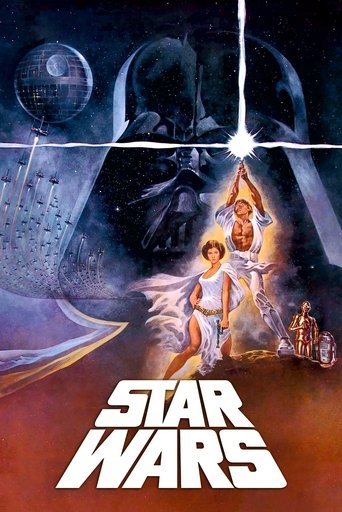
Star Wars (1977)
Directed by George Lucas
RecapRush examines Han’s voluntary return, Luke’s trust and why the Death Star climax depends on mutual assistance.
Overview, poster, and credits from TMDB.
Read and watch our analysis ↓FROM THE RECAPRUSH LIBRARY · ANALYSIS
Star Wars (1977): Hope Begins When Han Comes Back
5 min read · Estimated reading time— views
RecapRush viewpoint · Spoilers for the 1977 film and its ending.
Luke’s final shot gives Star Wars its spectacular victory. Han’s return makes that victory emotionally convincing. Our reading of the film is that hope becomes possible when people stop treating survival as a private achievement. Luke must accept help he cannot fully explain; Han must give help he is no longer being paid to provide. Their decisions meet in the same narrow window.
Quick facts
- Identity: Star Wars (1977), later titled Star Wars: Episode IV — A New Hope. The original release had neither an episode number nor the subtitle.
- Writer and director: George Lucas. US release: May 25, 1977.
- Runtime: 121 minutes in the current official StarWars.com listing; editions vary.
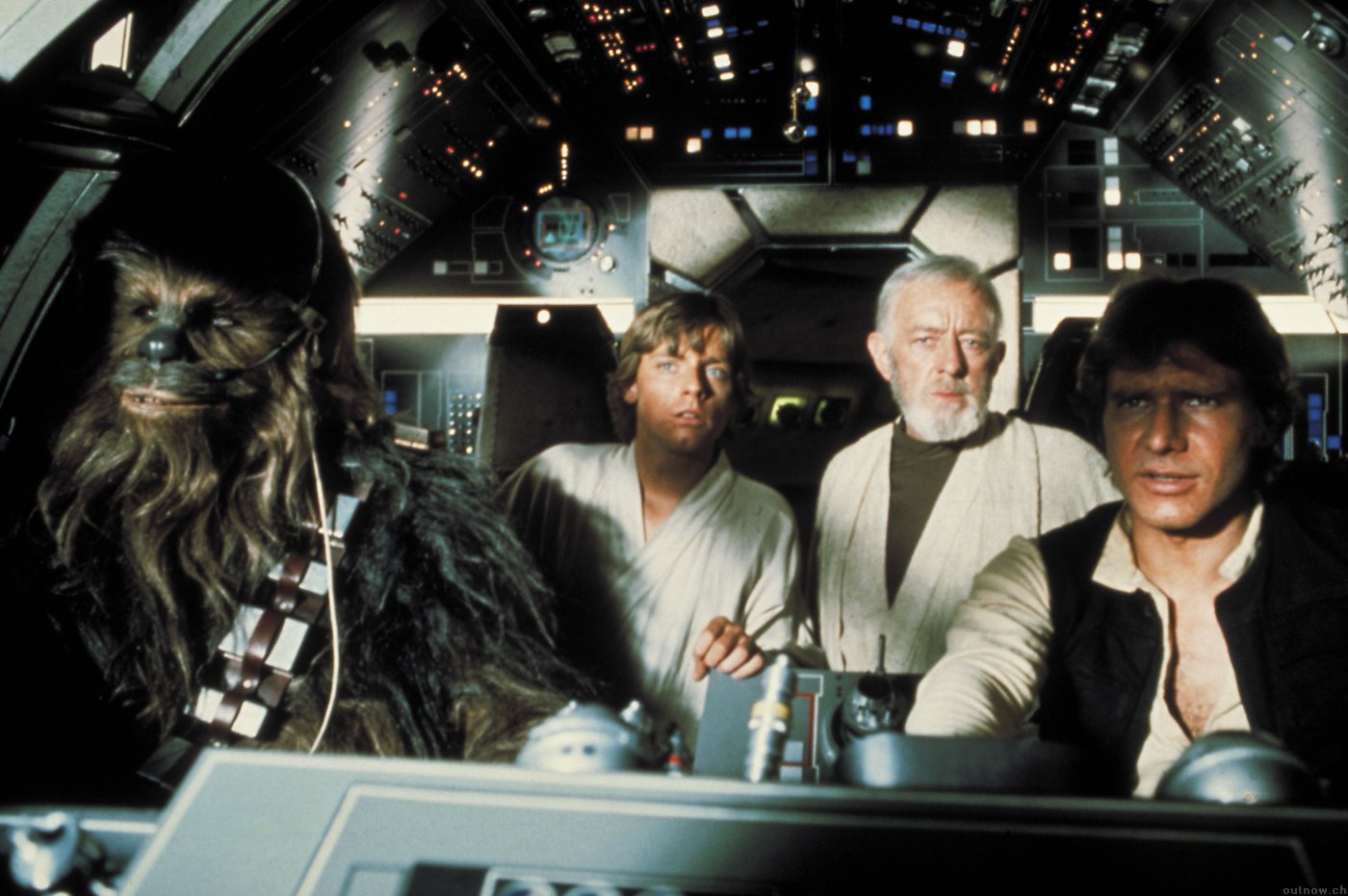
- Principal cast: Mark Hamill — Luke Skywalker; Harrison Ford — Han Solo; Carrie Fisher — Princess Leia; Alec Guinness — Obi-Wan Kenobi; Peter Mayhew — Chewbacca.
- Verified IDs: IMDb tt0076759 · TMDB movie 11.
- Scope: This film’s central story, without later revelations, prequel explanations or edition-specific additions.
A rescue does not settle what anyone owes
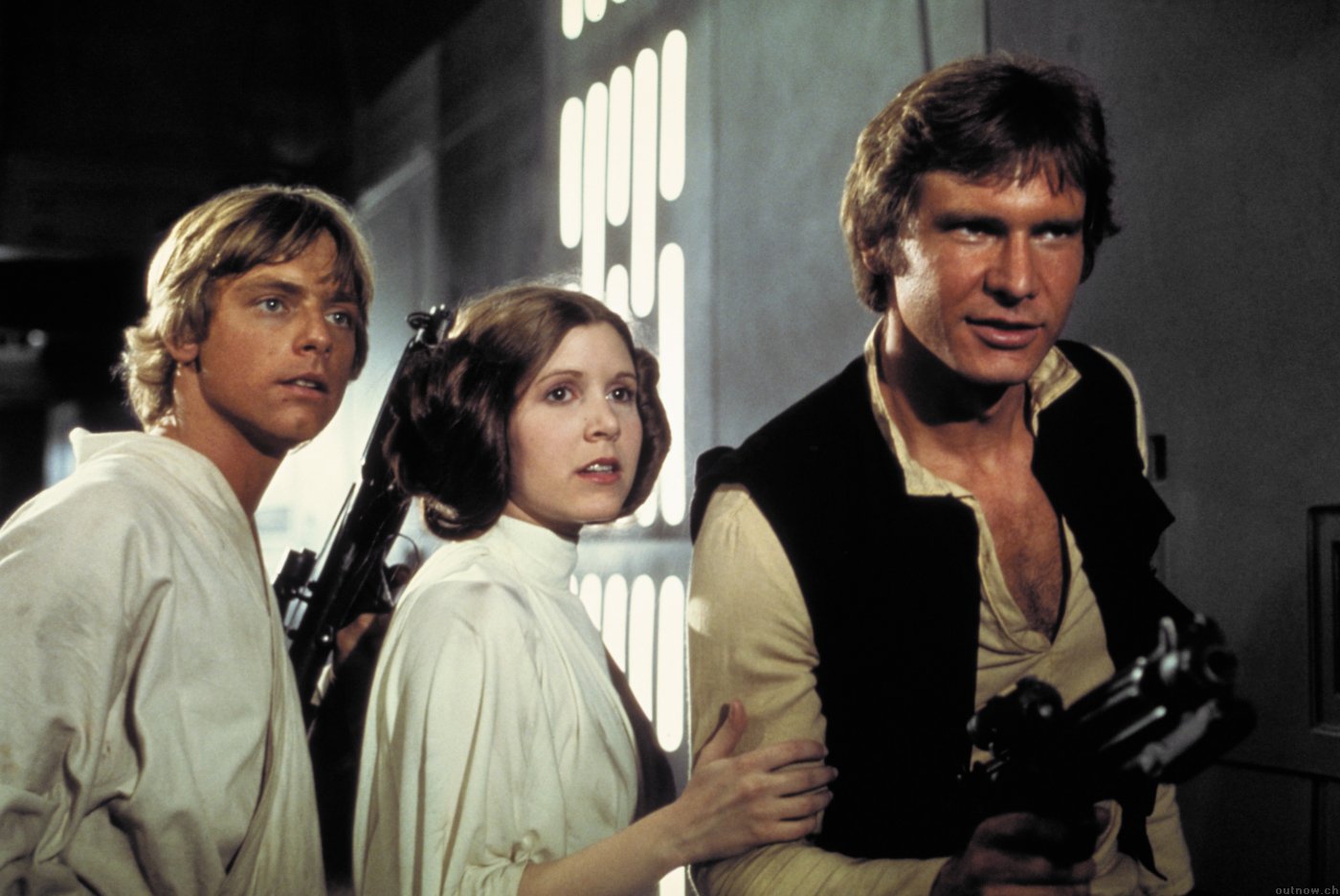
Luke persuades Han to help rescue Leia by promising a reward. Leia then directs their escape into a garbage chute when the rescue comes under fire.
For us, this exchange makes the group more interesting than a collection of ready-made heroes. Luke’s urgency, Han’s calculation and Leia’s practical initiative do not initially form a harmonious moral program. They have to work together while understanding the situation differently.
Leia’s response also prevents rescue from making her merely an object of somebody else’s bravery. Being in danger does not erase her ability to decide. The growing alliance is convincing because dependence moves in more than one direction. Anyone can need saving; being saved does not mean having nothing to contribute.
Luke’s trust is not a rejection of skill
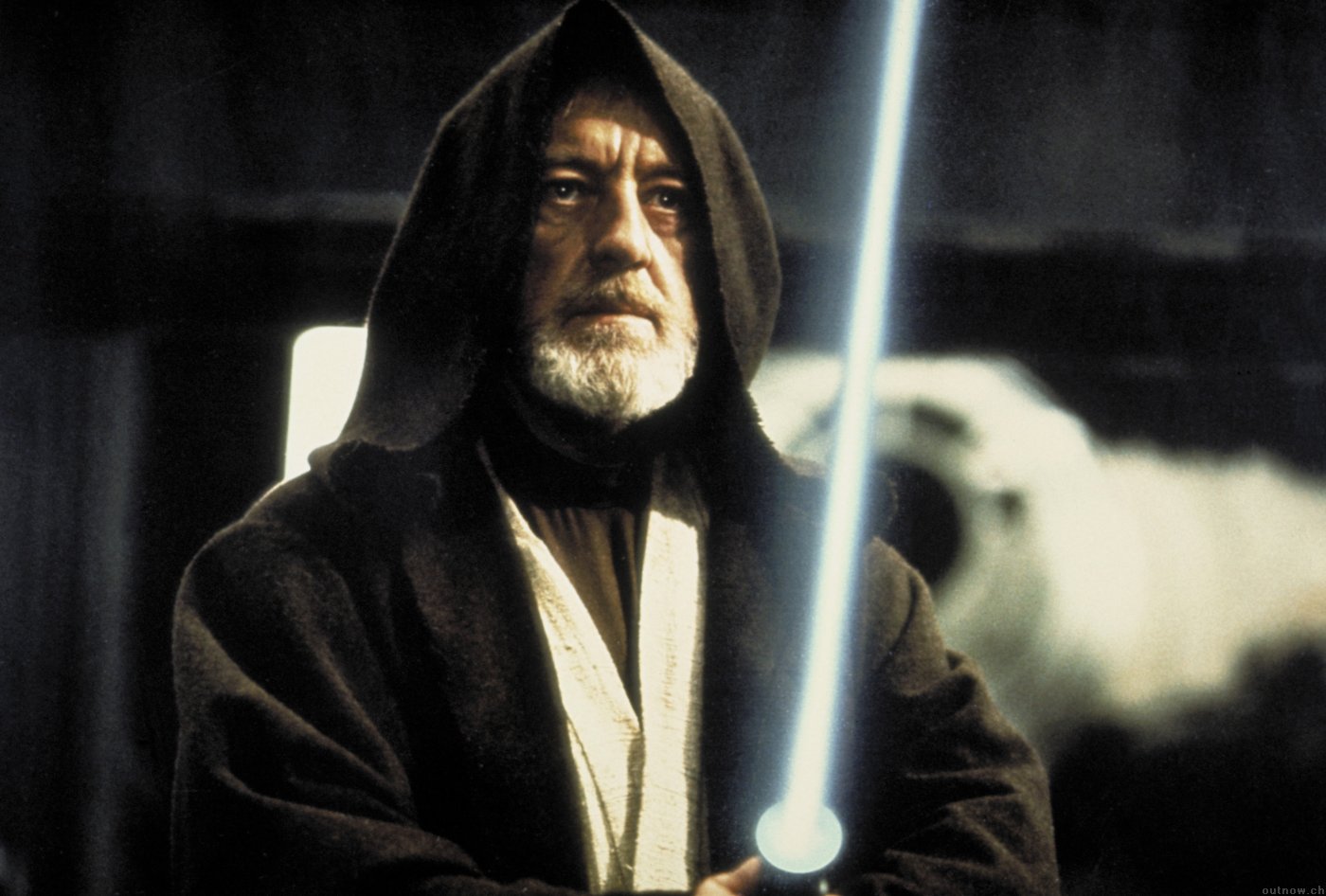
During the attack on the Death Star, Luke hears Obi-Wan’s encouragement and switches off his targeting computer. He trusts the Force.
Our interpretation: this is a change in Luke’s relationship to uncertainty. He cannot obtain a guarantee before acting. His decision gives the mentor’s influence a form that survives physical separation: guidance becomes something he can carry into a moment the teacher cannot manage for him.
More from RecapRush
 Coraline (2009) Recap & Ending Explained: Why the Other Mother Can Offer Everything Except Love
 Swapped (2026) Recap & Ending Explained: Why Boogle Changes Shape but Never Changes His Mind
 The Last Samurai (2003) Recap & Ending Explained: Why Algren Must Live After Katsumoto Dies
That does not make the climax a general argument against tools or preparation. Luke is still flying a fighter within a coordinated attack. The computer’s silence changes where he places his confidence; it does not make the surrounding work irrelevant. Reading the shot as pure individual destiny would flatten the network of assistance that lets him attempt it.
Ending explained: Han chooses involvement
Cast and Characters
Han initially leaves with his reward. He returns in the Millennium Falcon when Vader threatens Luke, disrupting the pursuit. Luke destroys the Death Star.
The important shift, in our view, is that Han returns after he has acquired a reason to stay away. Payment has given him an exit. Coming back makes his involvement a choice rather than the completion of the original bargain.
The film does not require us to believe that caution is foolish. Its danger must be credible for Han’s return to matter. His decision shows that being sensible about risk and being answerable to other people can pull in different directions. He accepts the second claim when the first would justify leaving.
Luke and Han therefore complete different parts of the ending’s argument. Luke accepts dependence on guidance; Han accepts responsibility for someone beyond himself. Neither decision alone produces the victory we see. The final success makes their relationship consequential rather than decorative.

Hope needs someone to answer
We do not need later family revelations or a larger prophecy to make this first film meaningful. Its ethical movement is already present in the distance between hiring assistance and freely returning it.
The hope we find in Star Wars is not certainty that everything will work out. It is the possibility that another person will answer when withdrawal would be easier. Luke’s shot ends the immediate threat. Han’s return gives that shot a human meaning: you may have to act without certainty, but you do not necessarily have to act alone.
Join the conversation
What did you think of the ending? Share your interpretation. Spoilers may appear below.
This product uses the TMDB API but is not endorsed or certified by TMDB.
No comments yet. Start the conversation.