
RECAPRUSH MOVIE GUIDE
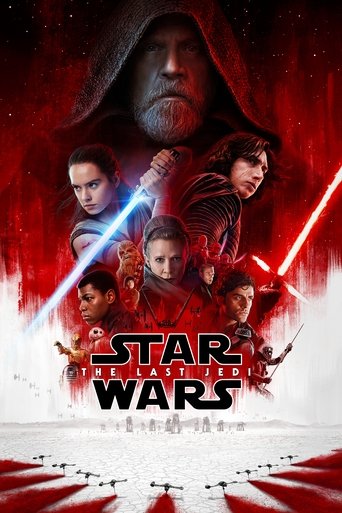
Star Wars: Episode VIII - The Last Jedi (2017)
Directed by Rian Johnson
Rey seeks a reluctant Luke Skywalker while the Resistance flees a relentless First Order pursuit. Failed plans and a dangerous connection with Kylo Ren bring the survivors to Crait, where Luke must decide what his legend can still give them.
Overview, poster, and credits from TMDB.
Read and watch our full recap ↓FROM THE RECAPRUSH LIBRARY · FULL RECAP
Star Wars: The Last Jedi (2017) Recap & Ending Explained: What Survives the Legend
15 min read · Estimated reading time— views
Intro + RecapRush Viewpoint
Star Wars: The Last Jedi begins with people who think they know what a hero should do. Rey expects a legendary teacher. Poe expects a decisive attack. Kylo Ren expects freedom to arrive when he destroys the people who have defined him. Rian Johnson gives each of them a situation in which that expectation becomes a dangerous shortcut.
RecapRush viewpoint: This is a film about the difference between protecting a heroic identity and accepting responsibility for other people. Its most meaningful victories are not clean triumphs. They are decisions that leave someone else a future: a teacher admitting failure, a pilot accepting retreat, a young woman refusing a relationship that requires her surrender.
Full spoilers follow, including Snoke’s death, the failed infiltration, Luke’s final appearance and the stable boy. This article covers the released 2017 Episode VIII. Later films’ explanations of characters’ backgrounds are outside its scope. Statements made by characters are identified as such, rather than treated as an omniscient account of the whole saga.
Featured Image
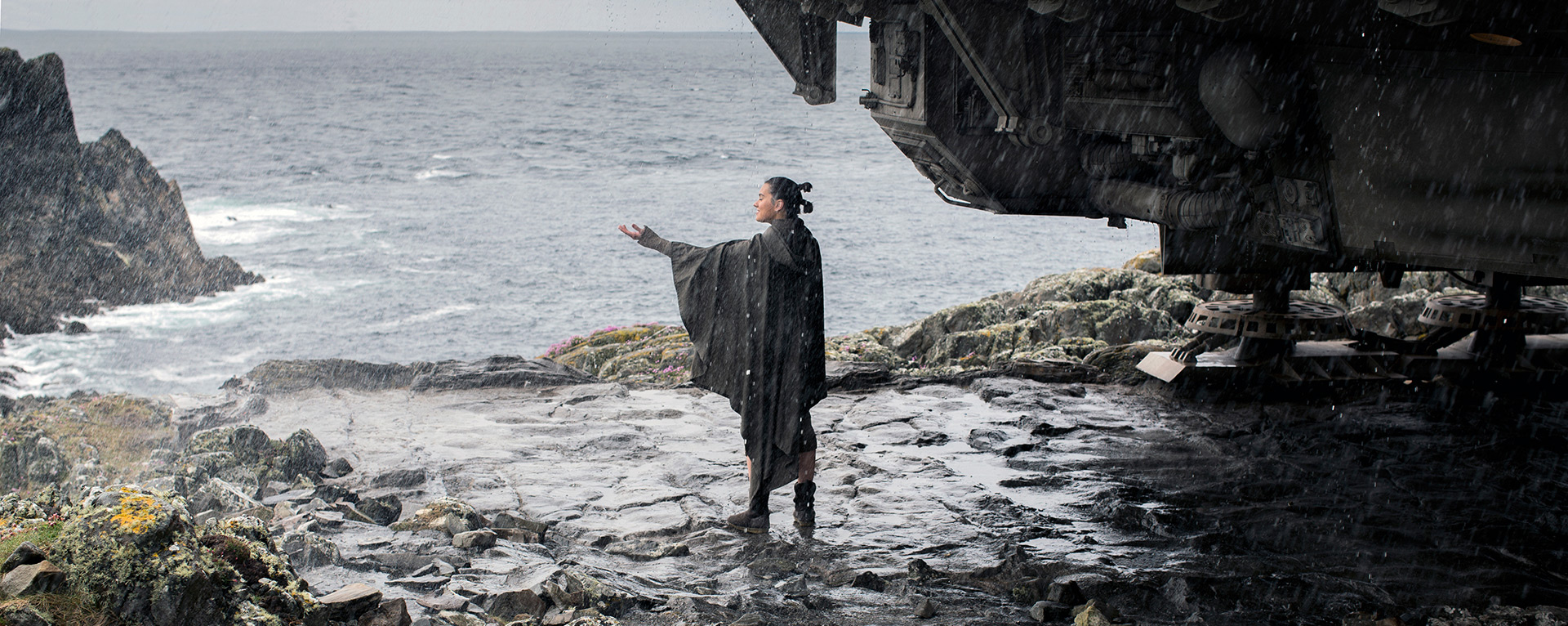
Table of Contents
Quick Facts
- Official title: Star Wars: The Last Jedi
- Saga and collection title: Star Wars: Episode VIII - The Last Jedi
- Year and status: 2017; released theatrical feature
- US theatrical release: December 15, 2017
- Earlier territorial release: December 13, 2017 in Belgium and France
- Writer and director: Rian Johnson
- Producers: Kathleen Kennedy and Ram Bergman
- Production company: Lucasfilm
- Runtime: 152 minutes
- Genres: Action, Adventure, Science Fiction
- Composer: John Williams
- TMDB movie identity: 181808 — https://www.themoviedb.org/movie/181808
- Collection: #26 in RecapRush’s fixed October 29, 2026 Worldwide lifetime Box Office Top 30 snapshot. The collection preserves its dated order; it is not a continuously updated chart.
Lucasfilm’s title announcement and Disney’s D23 entry establish the official title, creative credits, runtime and territorial dates. Wikidata independently cross-references this exact 2017 feature with TMDB 181808. The collection’s longer Episode VIII title refers to the same film. No unverified gross figure is displayed. [1, 2, 3, 4, 5]
Full Spoiler Recap
An escape that becomes a siege
As the Resistance evacuates D’Qar, Poe Dameron persists with an attack on a First Order dreadnought despite Leia’s order to withdraw. The warship is destroyed, but the bomber force suffers catastrophic losses, including Paige Tico. The surviving fleet jumps away, only to discover that the enemy can track it through hyperspace. Leia survives being blown into space by drawing herself back with the Force; her injuries leave Vice Admiral Holdo in command. With fuel dwindling, the Resistance is trapped in a pursuit. [6, 7]
Rey finds a teacher who has stopped believing in himself
On Ahch-To, Luke rejects Rey’s invitation to return. He eventually begins teaching her, but his disappointment with the Jedi shadows their lessons. Rey’s mysterious conversations with Kylo Ren offer the intimacy Luke withholds. Different accounts of Ben Solo’s fall lead Luke to admit a brief impulse to kill his sleeping nephew; the impulse passed, but Ben saw the ignited weapon. Rey leaves, convinced she can reach Kylo. Yoda’s spirit later challenges Luke’s despair. [8, 9, 10]
Finn and Rose take the wrong route to a real discovery
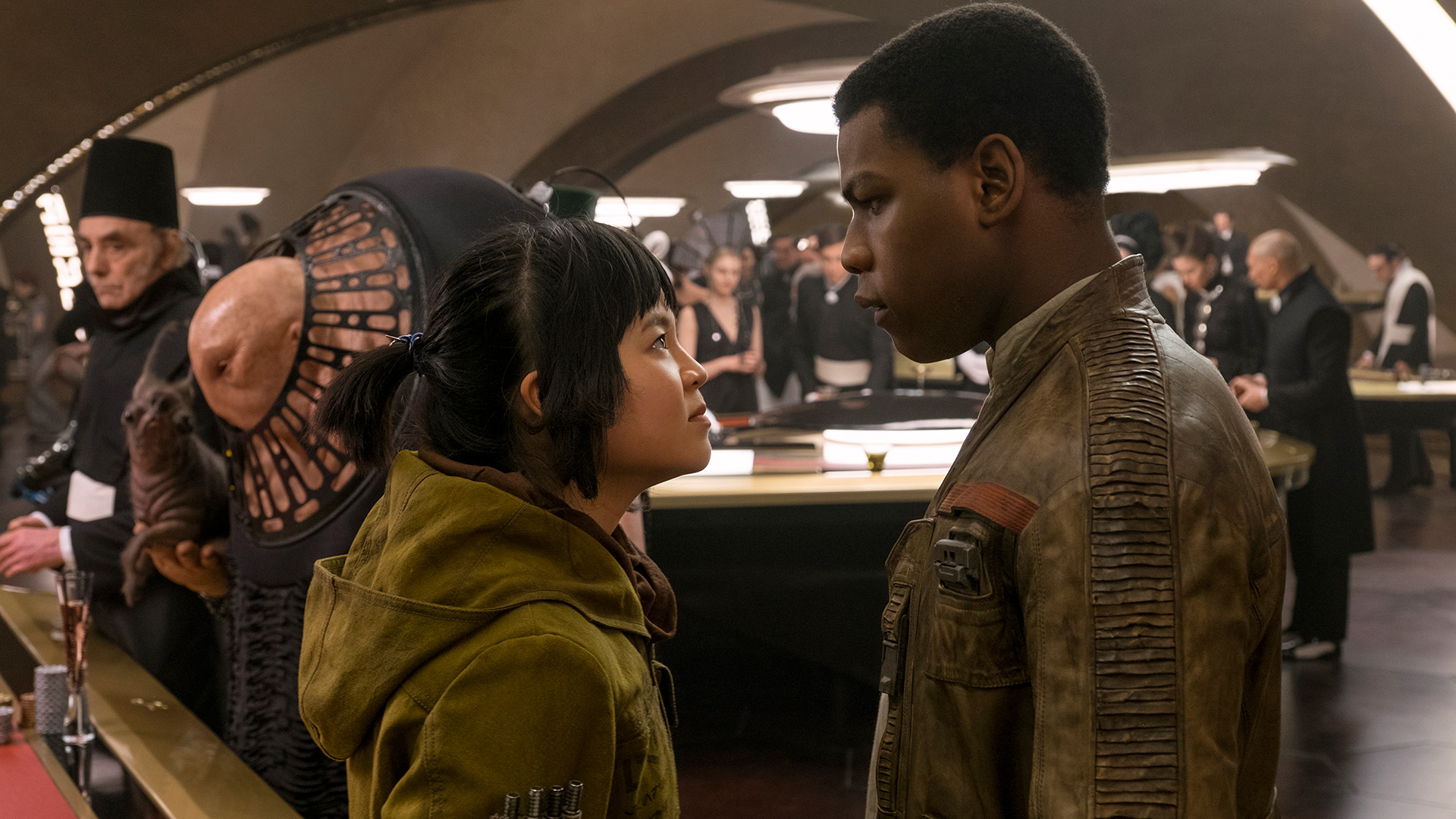
Poe supports a secret effort to disable the tracker. Finn, Rose and BB-8 travel to Canto Bight seeking a codebreaker, but meet DJ instead. They escape the resort with help from stable children and the racing animals called fathiers. DJ gets them aboard the enemy flagship, where their operation fails. He trades information about the Resistance’s evacuation for his freedom. Meanwhile, Poe’s mutiny against Holdo ends when a recovered Leia stuns him. Holdo’s actual plan is to move the survivors to Crait in small transports. [7, 11, 12, 13]
Killing Snoke does not bring Ben home
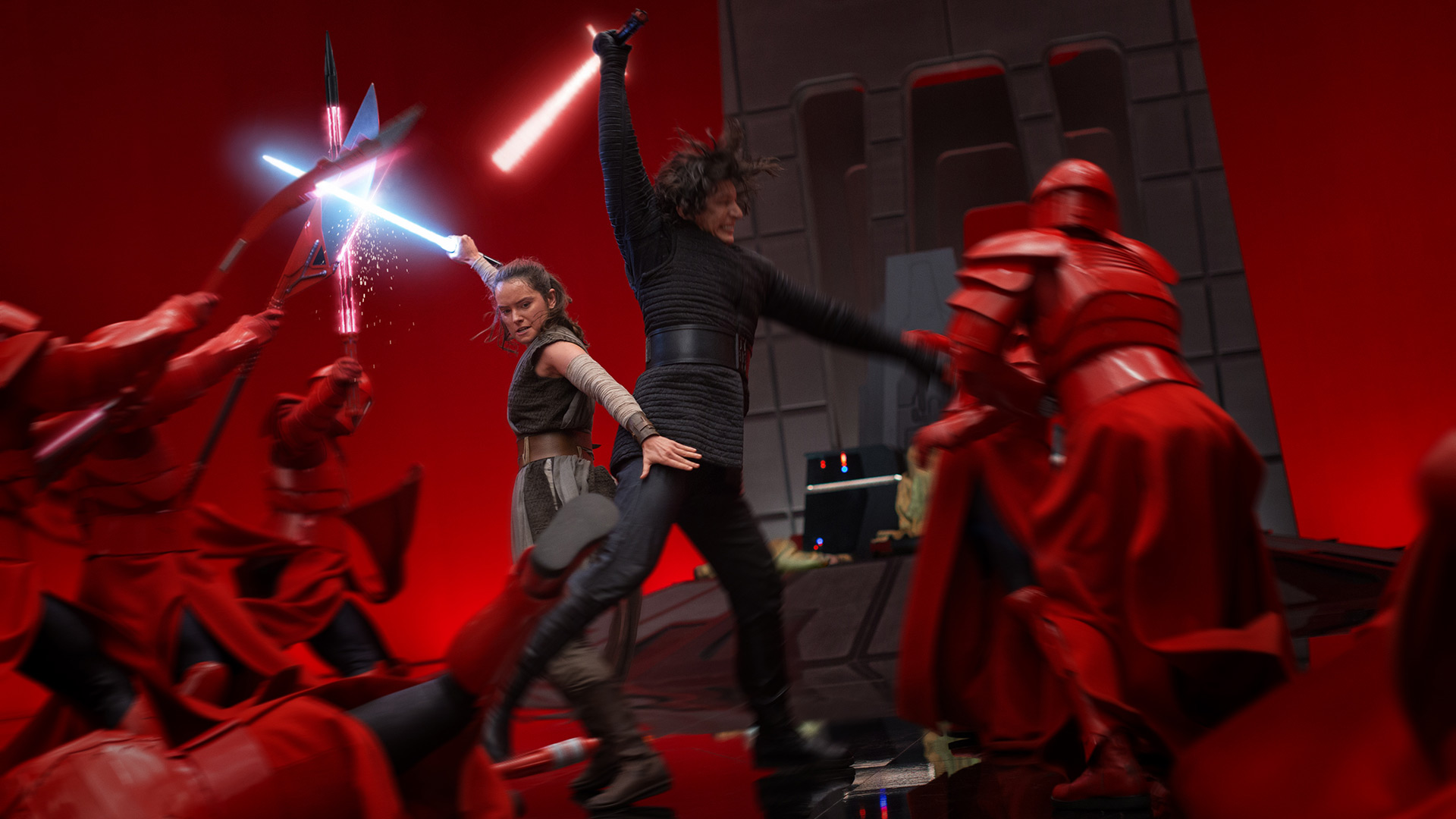
Kylo delivers Rey to Snoke. Ordered to kill her, he instead uses the Skywalker lightsaber to kill his master. Rey and Kylo fight the Praetorian Guards together, but their alliance ends when he asks her to rule beside him. She refuses. Their struggle over the lightsaber breaks it. As the exposed transports come under attack, Holdo turns the Raddus toward the First Order fleet and jumps to hyperspace, tearing through the flagship. Finn and Rose escape its wreckage after Finn’s confrontation with Phasma. Kylo takes Snoke’s place. [11, 12, 14, 15]
Crait buys a future, not a final victory
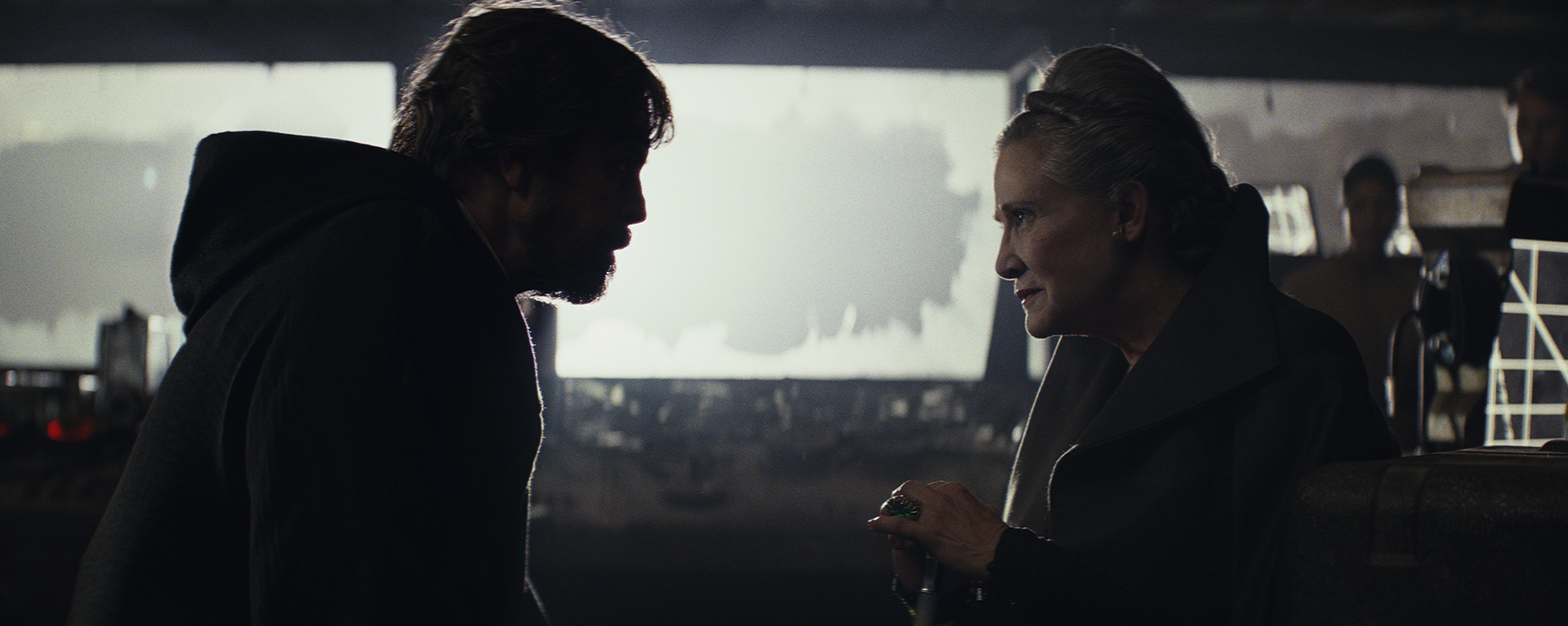
The survivors make their stand at an old base on Crait. Poe calls off a hopeless speeder attack; Rose prevents Finn from driving into the enemy’s cannon. Luke appears, meets Leia and confronts Kylo, drawing his attention away from the trapped Resistance. He is a Force projection: his body is still on Ahch-To. Rey clears the blocked escape route and the survivors leave aboard the Falcon. Luke’s effort ends in his peaceful death. Back at Canto Bight, a stable boy draws a broom to his hand with the Force and looks toward the stars. [7, 9, 11, 15, 16]
Cast + TMDB
Cast and Characters
The following ten performers anchor the main character threads. D23’s film record and the film’s published cast listing support the identities; the TMDB link identifies the movie rather than a television entry. [3, 4, 17]
- Mark Hamill — Luke Skywalker: a teacher whose account of his own failure has become a reason to stop teaching.
- Carrie Fisher — General Leia Organa: the leader measuring success in lives carried forward.
- Daisy Ridley — Rey: an aspiring Jedi looking for guidance without surrendering her own judgment.
- Adam Driver — Kylo Ren / Ben Solo: a man who wants release from the past while repeating its hunger for control.
- John Boyega — Finn: a former stormtrooper learning what commitment to a cause demands.
- Oscar Isaac — Poe Dameron: a gifted pilot forced to reconsider the relationship between bravery and command.
- Kelly Marie Tran — Rose Tico: a maintenance worker whose convictions connect military resistance to ordinary people.
- Laura Dern — Vice Admiral Amilyn Holdo: a commander whose guarded evacuation strategy collides with Poe’s assumptions.
- Andy Serkis — Supreme Leader Snoke: the ruler whose confidence in his apprentice’s submission proves fatal.
- Benicio del Toro — DJ: a skilled slicer who treats allegiance as a price to be negotiated.
TMDB: https://www.themoviedb.org/movie/181808
Ending Explained
How does Luke survive the barrage and the duel?
Luke has not physically traveled to Crait. The man Kylo confronts is an image projected through the Force from Ahch-To. Artillery cannot kill that image, and Kylo’s blade cannot cut a body that is elsewhere. The confrontation occupies him long enough for the Resistance to get out. Luke then releases the projection and passes into the Force. The official Databank confirms both the diversion and his death; contemporary reporting connects the extraordinary exertion with that death. [9, 18]
RecapRush interpretation: Luke finally finds a use for his reputation that does not require pretending he has never failed. The legend becomes a protective distraction. He cannot undo the damage between himself and Ben, but he can prevent their private wound from deciding everyone else’s fate. His last act matters because it opens a route for people who are still alive.
That is also why the apparent duel has a different moral shape from revenge. Luke does not need Kylo to admit defeat or forgive him. The escape can succeed while Kylo remains furious. Luke’s agency returns when he stops making the repair of his own self-image a condition for helping.
Why is Kylo still the villain after saving Rey?
The throne-room reversal distinguishes opposing a master from rejecting domination. Kylo removes Snoke, but offers Rey a partnership organized around their power over others. Her refusal exposes the distance between the rescue she hoped for and the rule he proposes. His promotion changes the person in charge rather than ending the regime. [14, 15]
Our reading is that the scene asks Rey to distinguish emotional recognition from ethical agreement. Someone can understand her loneliness and still offer her a destructive future. The film allows their connection to feel real without making acceptance of his terms her obligation.
More from RecapRush
 Matchbox The Movie (2026) Recap & Ending Explained: Why Sean Needs His Old Friends to Stop Helen
 Barbie (2023) Recap & Ending Explained: Becoming a Person Means Leaving the Perfect Role
 Practical Magic 2 (2026) Recap & Ending Explained: Why Franny Has to Die
Has the Resistance won?
It has survived. Crait does not conclude the war or restore the fleet that has been lost. The escape leaves Leia with a small living community from which resistance might continue. In that sense, the conclusion is deliberately modest: its hope depends on what survivors do next, not on a declaration that everything has already been fixed. [7, 15]
The final movement to the stables enlarges that idea. Temiri Blagg’s small use of the Force is not a new villain reveal or a promise that he must become the next protagonist. The shot gives a worker far from the famous family a place in the film’s imagination of possibility. His future is unwritten. [16, 19]
Deep Analysis & Key Themes
The following is RecapRush’s editorial interpretation of the verified events, rather than a claim that the filmmakers have prescribed a single meaning.
Failure becomes dangerous when it becomes an identity
A failure can prompt a person to change a decision. It can also become an explanation for why no future decision is worth making. Luke has settled into the second position. His withdrawal makes emotional sense as shame, yet it also protects him from the possibility of being responsible again.
The film’s challenge to him is harder than an instruction to regain confidence. Confidence alone could reproduce the same certainty that once made him afraid of Ben’s future. The more useful alternative is a form of responsibility that can coexist with doubt. A teacher who admits limits may give a student something a flawless icon cannot: room to become different.
For us, that makes the ending moving without requiring every earlier choice to become admirable. Luke’s final generosity does not erase the wound that helped shape Kylo. It prevents that wound from being the only thing he leaves behind. Redemption here is an action with consequences for others, not a retroactive acquittal.
Leadership means letting other people remain subjects
Poe’s arc poses a practical question: when does initiative become an insistence that everyone participate in one person’s preferred definition of courage? A spectacular operation is easy to imagine. The quieter work of keeping a group alive is harder to celebrate, especially from a cockpit.
His conflict with Holdo also has a real communication problem. Recognizing that her plan exists does not make every exchange between them ideal. An interpretation can acknowledge her responsibility and her secrecy at the same time. That friction makes the episode more useful than a simple lesson that rank always confers wisdom.
What changes for Poe is the measure of achievement. Other people’s survival becomes an end rather than evidence that his daring was justified. Withdrawal can then become a deliberate choice, not an admission that courage has run out. The story asks him to exercise judgment before loss turns into spectacle.
Canto Bight gives the war an economy
The casino interrupts the chase with comfort, money and service work. Its narrative value is the contrast between the elegance available to guests and the lives supporting it. Rose sees an arrangement of power where Finn initially sees an impressive destination.
DJ offers a cynical response to compromised systems: if the world is transactional, sell your skill and avoid commitment. Rose offers a more demanding one. The existence of corruption does not remove the need to choose what to protect. Neither wealth nor disgust with wealth automatically supplies a conscience.
The infiltration’s failure therefore does not make the journey morally empty. It prevents an easy equation between a good intention and a successful operation. Finn can learn something important and still help make a disastrous tactical mistake. The film keeps personal growth and collective consequences in uncomfortable proximity.
Rey’s independence is a refusal to be assigned a place
Rey is repeatedly offered ways to understand herself through somebody else’s story. A master can tell her what a Jedi should be. A family history might explain why she matters. A powerful companion can offer belonging if she accepts his vision.
Our reading is that her developing independence consists in withholding that final permission. A relationship may matter without being allowed to define every obligation. Compassion does not require endorsing the choices of the person receiving it.
This gives the film’s concern with inheritance an ethical dimension. What one receives is not identical to what one must repeat. Tradition can contain wisdom and damage; intimacy can contain tenderness and coercion. Rey has to make judgments about both rather than treating either as a ready-made answer.
A useful legend leaves space for someone else
The title sounds exclusive, as if a tradition can survive only inside one exceptional individual. The film gradually tests the usefulness of that exclusivity. When a heroic name absorbs every possibility, the people waiting for its return can stop seeing what they themselves might do.
Luke’s final intervention is meaningful precisely because it does not occupy the whole future. It gives others time, then leaves the work with them. The movement from a famous Jedi to a child with an ordinary tool makes that transfer visible.
There is a tension here rather than a rejection of stories. Legends can overwhelm ordinary action, but they can also make action imaginable. The distinction lies in whether a story asks its listeners to wait for salvation or helps them recognize their own capacity to respond.
What Most Viewers Missed
The books survive the burning tree
Yoda burns the old library, but the Jedi texts are already safe aboard the Falcon because Rey has taken them. The film is not showing the destruction of every surviving piece of Jedi knowledge. That distinction lets us read the scene as a challenge to Luke’s relationship with tradition rather than a command to erase it. [20]
The three accounts of Ben’s fall are not interchangeable
Luke’s initial account, Kylo’s accusation and Luke’s admission do different dramatic work. The final account includes both the momentary threat and Luke’s immediate shame. Keeping both parts prevents the scene from becoming either a sustained murder plan or a harmless misunderstanding. The moral weight lies partly in how quickly a fleeting impulse can produce a lasting consequence. [10]
Kylo’s account of Rey’s parents belongs to this confrontation
Kylo tells Rey that her parents were insignificant people who abandoned her. Here, the important distinction is between what he says and what accepting his offer would mean. This recap does not import a later film’s genealogy into the scene, nor present a character’s account as a complete, permanent answer for the franchise. [6]
The mission fails without making Rose’s convictions false
The tracker remains a problem and the infiltration does not save the transports. Those outcomes do not establish DJ’s outlook as the film’s moral verdict. The story can show that a person with principles makes a mistake without concluding that principles themselves are foolish. [11, 12, 13]
The last image is part of the story, not a credits surprise
The stable boy appears before the closing credits. His gesture follows the survival of the Resistance rather than announcing another battle to be won immediately. The scale becomes intimate at the point when a blockbuster might usually become louder. [16, 21]
Mid/Post Credits
There is no additional narrative mid-credits or post-credits scene. The stable-boy ending is the last scene of the feature itself. The credits include a dedication to Carrie Fisher; that tribute is separate from a fictional sequel tease. Contemporary credits reporting confirms the absence of a stinger. [21, 22]
Final Thoughts
The Last Jedi is most compelling when it makes a familiar heroic response insufficient. Skill does not guarantee judgment. Understanding someone does not guarantee agreement. A failure does not disappear because the person responsible finds one last courageous act.
RecapRush’s reading of its ending is hopeful because it accepts those limits. The survivors have losses they cannot reverse, yet they have one another and time in which to act. Luke’s final gift is not a completed victory. It is the chance for the story to continue without requiring him to control its next chapter.
Join the conversation
What did you think of the ending? Share your interpretation. Spoilers may appear below.
This product uses the TMDB API but is not endorsed or certified by TMDB.
No comments yet. Start the conversation.