

RECAPRUSH MOVIE GUIDE
Barbie (2023)
Directed by Greta Gerwig
A disruption to Barbie’s perfect routine takes her and Ken into the real world, where their discoveries transform Barbie Land and leave her facing a choice about becoming human.
Overview, poster, and credits from TMDB.
Read and watch our full recap ↓FROM THE RECAPRUSH LIBRARY · FULL RECAP
Barbie (2023) Recap & Ending Explained: Becoming a Person Means Leaving the Perfect Role
15 min read · Estimated reading time— views
Intro + RecapRush Viewpoint
Barbie begins in a world where being an image seems easier than being a person. Every day confirms a recognizable identity, and the surrounding scenery offers reassurance that nothing essential has changed. The trouble starts when a feeling appears that the image cannot comfortably contain.
RecapRush viewpoint: The film’s most interesting movement is from being an example to having an experience. Our reading is that Barbie does not need a better slogan about what she represents. She needs permission to become someone whose future cannot be summarized in advance. Ken faces a related problem, although his attempt to solve it first makes everybody else’s life smaller.
Full spoilers follow, including Gloria’s connection to Barbie, the takeover of Barbie Land, Ruth’s conversation and the final appointment. This article covers Greta Gerwig’s released 2023 live-action film. Its fictional company and characters are discussed as part of a satire, not treated as documentary evidence about real executives or current corporate policy.
Featured Image

Table of Contents
Quick Facts
- Official title: Barbie
- Year and release status: 2023; released
- US theatrical release: July 21, 2023
- Director: Greta Gerwig
- Screenplay: Greta Gerwig and Noah Baumbach
- Based on: Barbie by Mattel
- Producers: David Heyman, Margot Robbie, Tom Ackerley and Robbie Brenner
- Distributor: Warner Bros. Pictures
- Standard feature runtime: approximately 114 minutes
- Genres: Comedy, Adventure, Fantasy
- TMDB movie identity: 346698 — https://www.themoviedb.org/movie/346698
- RecapRush collection: #20 in the fixed October 29, 2026 Worldwide lifetime Box Office Top 30 snapshot; this is the collection’s dated rank, not a live recalculation
Warner Bros.’ release material and BFI’s production credits establish the film’s identity and creative team. The New Zealand Classification Office records the 114-minute runtime, while Wikidata independently corroborates TMDB movie 346698. [1–4]
Full Spoiler Recap
1. Perfection develops a fault
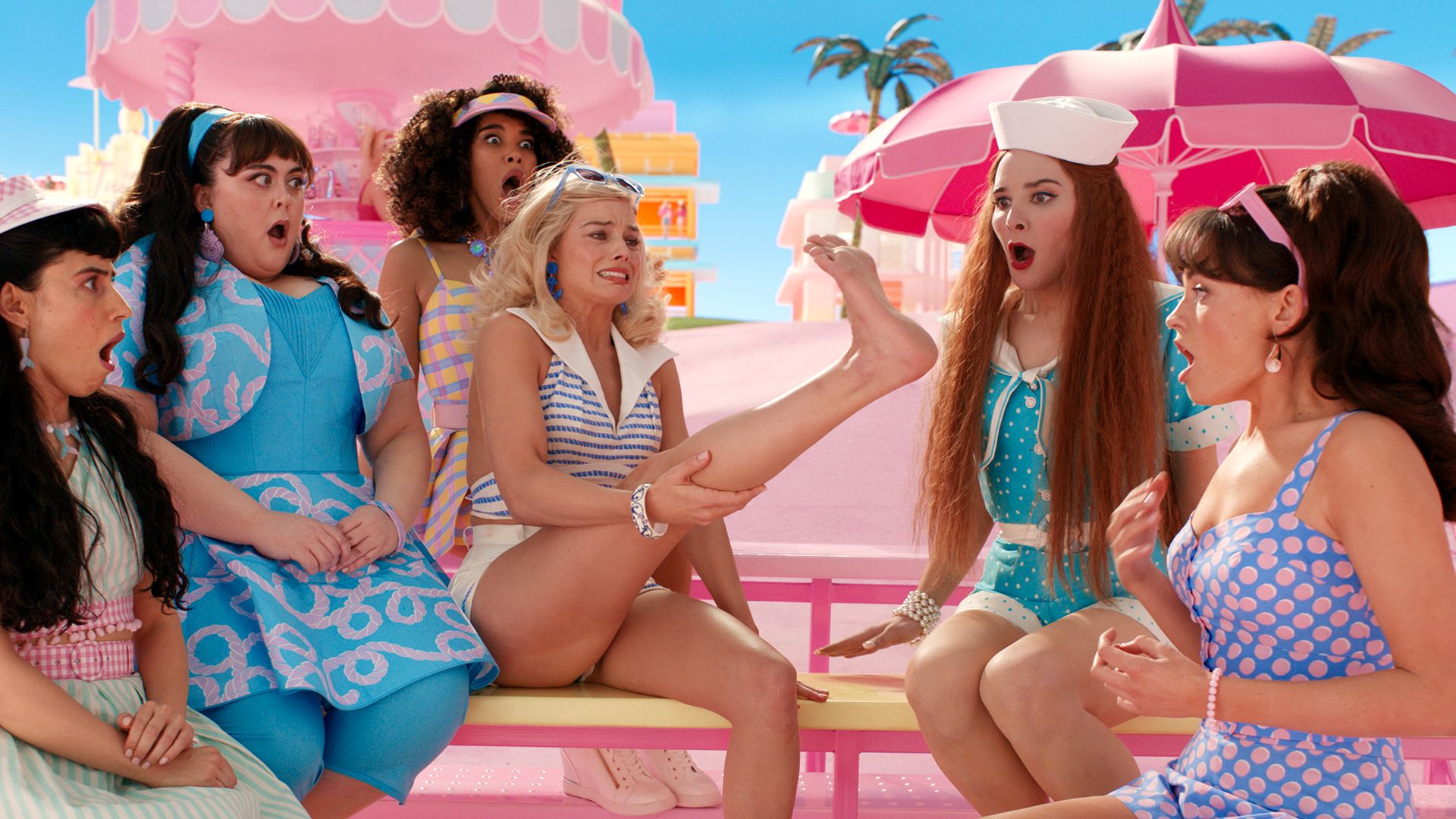
Stereotypical Barbie enjoys the orderly routine of Barbie Land, where the Barbies hold the prominent jobs and the Kens organize much of their lives around them. Thoughts about death, flat feet and other unwanted changes interrupt her apparent perfection. Weird Barbie tells her to find the human connected to her in the real world. Ken accompanies her. [5]
The disturbance is comic, but our reading is that its emotional logic is serious. A role that can accommodate only happiness has no language for an ordinary unhappy thought. The first crisis is therefore not simply a malfunctioning body. It is the discovery that a supposedly complete identity has left out part of experience.
2. The real world refuses the expected welcome
In Los Angeles, Barbie discovers that people do not automatically regard her as an uncomplicated source of inspiration. Sasha criticizes what the doll represents. Ken, meanwhile, discovers patriarchy and interprets male authority as an answer to his own lack of recognition. [5]
Mattel’s fictional executives try to put Barbie back in a box. Gloria, an employee and Sasha’s mother, helps her escape. Barbie learns that Gloria’s troubled feelings and drawings, connected to playing with her daughter’s old doll, have affected her. Gloria and Sasha travel back with her. [6]
Our interpretation places the mother-daughter connection at the center of this reversal. The person who needs imaginative room is not only a child choosing a possible future. An adult can also need a way to acknowledge feelings that do not fit the life she is expected to perform.
3. Ken replaces exclusion with domination
Ken returns first and persuades the other Kens to reshape Barbie Land around male authority. The Barbies have been pushed into deferential roles. Stereotypical Barbie cannot reverse the takeover and becomes despondent. Gloria’s account of contradictory expectations helps her recover perspective, and the group begins freeing the other Barbies from the new arrangement. [6]
Ken’s initial hurt is intelligible without making his response defensible. In our reading, he mistakes control over other people for an independent identity. A world that gives him more status still cannot tell him who he is when nobody is applauding.
4. The Barbies regain political control
The Barbies encourage rivalries among the Kens, distracting them from changing the constitution. The Barbies regain control of the government. Barbie and Ken then confront the dependence and hurt within their relationship; she encourages him to find an identity beyond being her boyfriend. [5, 7]
The resolution should not be mistaken for an entirely equal new society. Our interpretation recognizes the deliberately incomplete repair: the film satirizes the distance between celebrating inclusion and distributing actual power. Winning back a government is a different achievement from making every resident an equal participant in it.
5. Ruth offers a choice rather than a new assignment
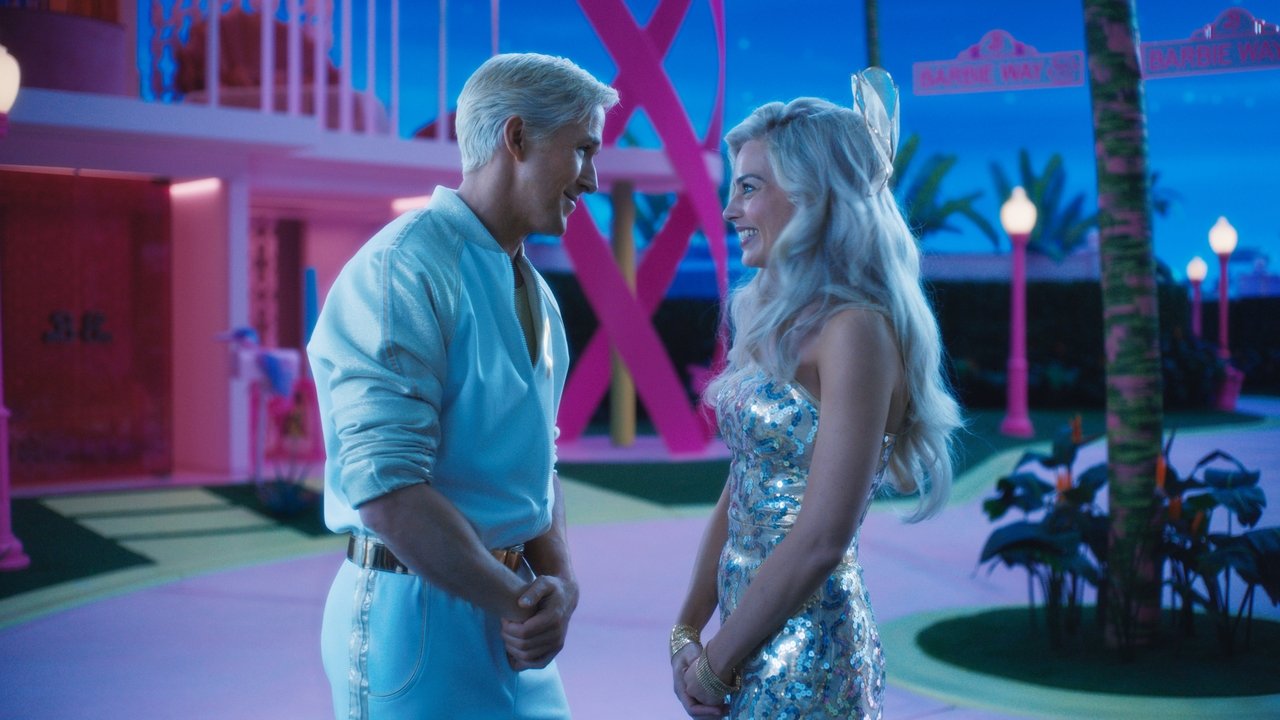
Still uncertain about her future, Barbie speaks with the spirit of Ruth Handler. She chooses to become human after encountering the range of feeling involved in human life. In the real world, she uses the name Barbara Handler; Gloria’s family takes her to an appointment, and the final reveal is that she is visiting her gynecologist. [7, 8]
The final joke works through a change of scale. After the elaborate conflict over what Barbie represents, the film places her at the beginning of ordinary embodied life. Our reading is that the appointment matters because it is hers, not because it is a spectacular achievement for someone else to admire.
Cast + TMDB
Cast and Characters





- Margot Robbie — Barbie / Barbara Handler: The central doll, commonly identified as Stereotypical Barbie, whose search becomes a choice about personhood.
- Ryan Gosling — Ken: The companion who tries to solve a crisis of recognition through borrowed authority.
- America Ferrera — Gloria: The Mattel employee and mother whose difficult feelings connect the two worlds.
- Ariana Greenblatt — Sasha: Gloria’s daughter, initially skeptical of Barbie and later an ally.
- Kate McKinnon — Weird Barbie: The outsider who understands the limits of Barbie Land’s apparent perfection.
- Issa Rae — President Barbie: A political leader within the doll world.
- Rhea Perlman — Ruth Handler: The film’s version of Barbie’s creator, appearing as a spirit within its fictional story.
- Will Ferrell — Mattel CEO: The unnamed satirical executive seeking to contain the disruption.
- Michael Cera — Allan: A resident who does not fit the multiplication of Barbie-and-Ken roles.
- Helen Mirren — Narrator: The voice whose commentary repeatedly exposes the artifice of the story.
The list features ten performers rather than the full ensemble. BFI’s production notes and the exact-film cast record verify the identities. TMDB 346698 belongs to this 2023 film, not one of the animated Barbie productions. [2, 4, 9]
Ending Explained
Why does Barbie become human?
The verified outcome is that she chooses human life rather than returning permanently to her old doll identity. [7, 8] Our interpretation is that she accepts a future she cannot pre-package. She gives up the reassurance of a role whose meaning seems settled before each day begins.
This is not simply a decision to become less attractive or less successful. Those would still make appearance and achievement the measures of her transformation. A person can experience a day that produces no exemplary result and still possess a life worth living.
The ending therefore changes the question from what Barbie is for to what she can experience and choose. That shift makes her uncertainty productive. Not knowing the answer is no longer proof that she has failed at being herself.
What does the final appointment mean?
The final destination is a gynecologist’s office, not a job interview or a glamorous public appearance. [8] Our reading is that the joke reconnects the film’s abstract language of empowerment with an ordinary body requiring attention and care.
Earlier discomfort about bodily change appeared to threaten Barbie’s identity. At the end, having a body is not treated as an embarrassing flaw to hide. It becomes part of a life she can approach with agency. The comedy depends on surprise, while the emotional resolution depends on her willingness to arrive.
The scene is about this character’s transition into human experience. It should not be turned into a universal definition of womanhood or a claim that one appointment determines anyone’s identity. The film’s scale is personal even when its joke reaches a broad audience.
More from RecapRush
 Plastic Beauty (2026) Series Recap & Ending Explained – What Happens to Fumi and Rin?
 Matchbox The Movie (2026) Recap & Ending Explained: Why Sean Needs His Old Friends to Stop Helen
 Titanic (1997) Recap & Ending Explained: The Life Rose Chooses to Keep
Is Ruth granting permission?
Our interpretation distinguishes a creator’s care from a creator’s ownership. The conversation is most moving when Ruth makes room for a decision rather than supplying another purpose Barbie must fulfill. A manufactured object comes with a function; a person’s future cannot be completely assigned by its maker.
The film uses a fictional spirit to stage that distinction. Ruth’s screen presence is not a claim that the historical person had this conversation or endorsed every idea expressed in the finished film. The scene belongs to the movie’s imaginative framework.
Do Barbie and Ken become a couple?
The resolution does not reward Ken’s distress with a romance. Barbie encourages a separate identity, and the pair acknowledge what has gone wrong between them. [7] Our reading is that the boundary is essential to the film’s treatment of care.
Recognizing somebody’s pain does not create an obligation to enter the relationship he wants. Conversely, rejecting romance does not require denying that his earlier exclusion hurt. The story can make space for sympathy and maintain a limit at the same time.
Ken’s new task is not to find a more reliable audience for the same performance. It is to discover interests and commitments that remain meaningful when Barbie is not there to confirm them. The ending opens that task without pretending he has already completed it.
Is Barbie Land fixed?
Our answer is deliberately narrower than a declaration of equality. The takeover is reversed, and its injustice becomes visible to people who had not previously faced it. But the restoration also preserves an imbalance. [5, 7]
The film’s joke about limited institutional progress makes the conclusion less comfortable than a simple victory celebration. Our interpretation is that an audience should notice the difference between a promise to do better and the actual distribution of authority. The movie offers recognition and a beginning, not a completed blueprint for justice.
Deep Analysis & Key Themes
An ideal can become another demand
An empowering image can open possibilities. It can also become an instruction about how well someone must perform those possibilities. Our reading is that Barbie explores the moment when the invitation to be anything begins to sound like the requirement to be impressive at everything.
Gloria matters because she brings an adult’s unfinished experience into the fantasy. The difficulty is not simply a lack of inspiring examples. A person can have examples everywhere and still feel unable to admit exhaustion, uncertainty or dissatisfaction.
The film’s most useful response is not another perfected model. It makes room for an ordinary person who does not have to solve every contradiction in order to deserve recognition. That is a more modest promise than total empowerment, but it is also more livable.
Recognition is different from rank
Ken wants to matter. A hierarchy seems to offer a fast answer because it can make others visibly defer to him. Our interpretation is that his mistake exposes the difference between being above someone and being secure in oneself.
A new rank can change the behavior of an audience without repairing the dependence on that audience. This helps explain why the film can make his spectacle both funny and sad. The scale of the performance advertises the size of the reassurance it is trying to obtain.
The same distinction also limits the comfort of the Barbies’ restoration. If the only solution to humiliation is to make someone else occupy the lower position, the world has changed its beneficiaries without changing its governing habit. The satire keeps that problem available rather than resolving it through one character’s apology.
The outsider possesses inconvenient knowledge
Weird Barbie understands something that the central community initially treats as abnormality. Our reading is that her value does not depend on eventually becoming indistinguishable from everyone else. Her difference is connected to what she has experienced and learned.
Allan supplies another challenge to the available categories. A society organized through repeated roles has difficulty describing someone who does not repeat. The comic oddity makes a serious point: a system can look comprehensive while overlooking people who do not fit its most familiar names.
These characters keep the film from presenting its central heroine’s discomfort as an entirely unprecedented event. Other residents have already lived outside the definition of perfection. Listening to them changes what counts as expertise.
Gloria and Sasha give imagination a second direction
The doll is not simply transmitting ideals to a passive human audience. Gloria’s emotions travel back into the fantasy. Our interpretation sees this as a useful reversal of the usual account of representation: people do not only absorb images; they also revise them through use, memory and dissatisfaction.
That reversal makes the mother-daughter relationship important beyond the logistics of a rescue. Their different reactions to the same object can coexist without either person being reduced to a mistaken consumer. A childhood image may remain emotionally useful to an adult even after a teenager has learned to criticize it.
The possibility of connection lies in allowing those reactions to become a conversation. Affection does not require Sasha to abandon every criticism, nor does criticism require Gloria to discard everything she once found meaningful.
A corporate satire cannot stand outside commerce
The film criticizes forms of control while using an enormously recognizable commercial identity. Our reading does not try to remove that tension by declaring the movie either wholly subversive or merely an advertisement.
Its jokes can have critical force and still increase the attraction of the property they question. The important analytical task is to keep both facts visible. Awareness of a contradiction is not the same as escaping it, but neither does commercial participation make every critical observation empty.
This is where the fictional executives are most useful as satire. Their wish to restore order can be funny because it turns uncertainty into a packaging problem. Barbie’s personal conclusion then offers a scale of value that cannot be fully measured by whether a new version would sell.
What Most Viewers Missed
The box is a proposed solution to complexity
The attempt to contain Barbie is also a visual argument about manageable identity. Our reading is that packaging promises a return to legibility: once the object is back where it belongs, the difficult questions can be treated as a temporary disruption. The heroine’s refusal keeps those questions open.
A sympathetic explanation is not a justification
Ken’s loneliness helps explain his attraction to power. It does not make the takeover harmless. The film asks an audience to understand an emotion without endorsing every action produced by it. That distinction is more useful than deciding whether a character deserves only sympathy or only ridicule.
The ending chooses a beginning
The last scene does not show Barbara winning at human life. It shows her entering it. Our interpretation is that the absence of an impressive achievement is the point: she no longer needs an exceptional result to justify having a future.
The photographs illustrate different moments
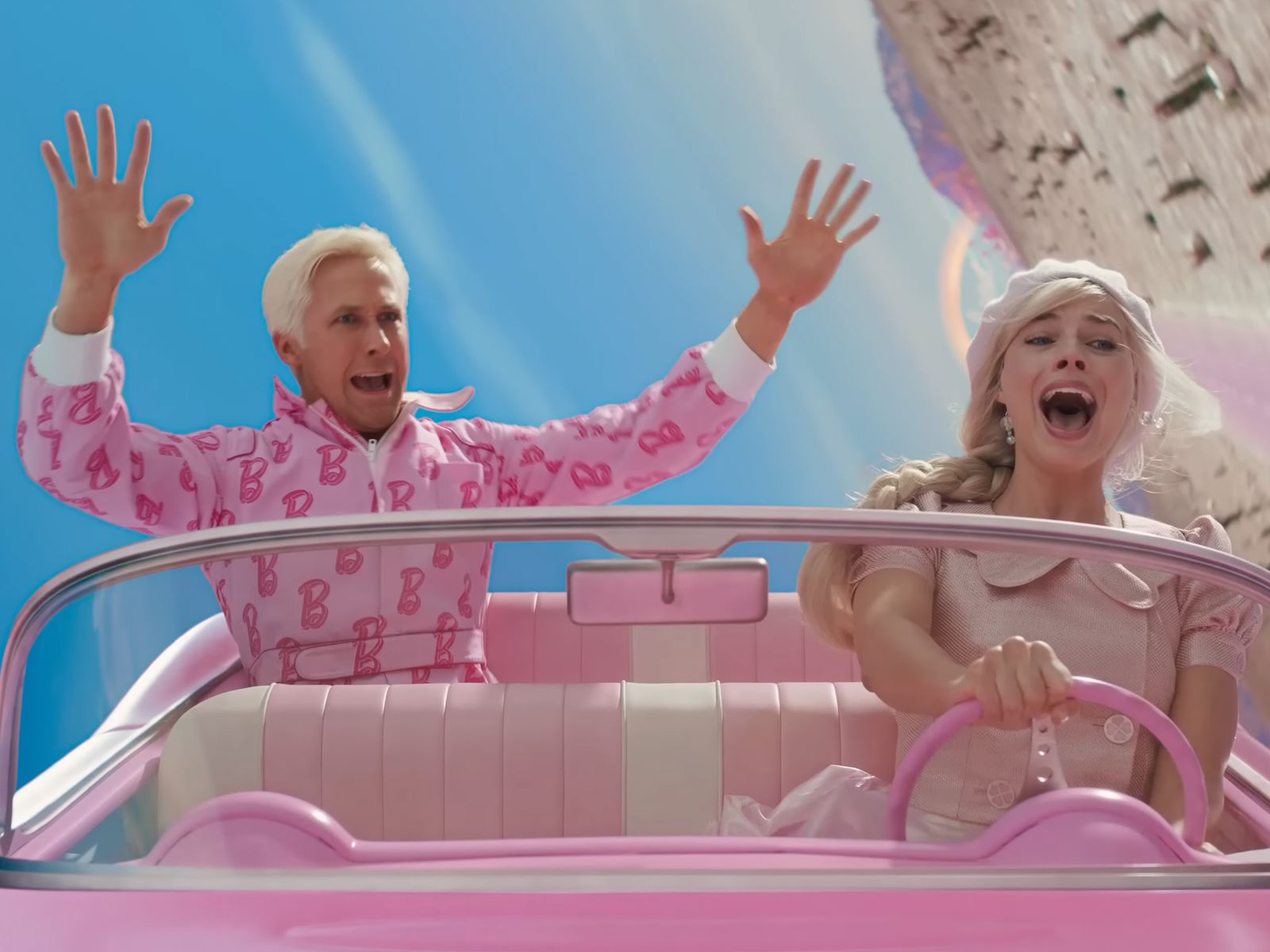
The barefoot reaction and the nighttime Dreamhouse conversation belong to the film’s earlier disruptions and relationships. They are not labeled as its final transformation or reconciliation. Keeping the captions precise prevents a familiar publicity image from quietly becoming invented evidence about the ending.
Mid/Post Credits
The standard theatrical version has no additional narrative mid-credits or post-credits scene. Images of historical Barbie and Ken dolls appear during part of the credits. AfterCredits documents those images separately from a stinger. This article does not treat later promotional bonus presentations as part of the original feature’s plot. [10]
Song titles are discussed as part of the film’s musical presentation, but no lyrics or extended dialogue are reproduced here.
Final Thoughts
Barbie gives its central character a conclusion that refuses to function as another perfect image. Barbara’s future is valuable because it can contain feelings and choices that have not already been approved as exemplary. Ken’s open-ended future makes a parallel demand: he must find a life that is more than an audience’s reaction.
RecapRush verdict: The most persuasive idea is that a person does not need a finished purpose to deserve an unfinished life. The ending turns uncertainty from evidence of a defect into the condition that makes choosing possible.
Join the conversation
What did you think of the ending? Share your interpretation. Spoilers may appear below.
This product uses the TMDB API but is not endorsed or certified by TMDB.
No comments yet. Start the conversation.