

RECAPRUSH MOVIE GUIDE
Frozen II (2019)
Directed by Chris Buck, Jennifer Lee
A mysterious call draws Elsa and Anna north, where a hidden wrong in Arendelle’s history demands both a revelation about Elsa’s magic and a difficult choice about the kingdom’s future.
Overview, poster, and credits from TMDB.
Read and watch our full recap ↓FROM THE RECAPRUSH LIBRARY · FULL RECAP
Frozen II (2019) Recap & Ending Explained: Anna Must Change What Elsa Reveals
15 min read · Estimated reading time— views
Intro + RecapRush Viewpoint
Frozen II asks its sisters to do more than understand themselves. A discovery about their family creates an obligation to people their kingdom has harmed. Elsa can recover a truth that Arendelle’s history has hidden, but information alone cannot put things right. Anna has to make a decision that changes the world outside the memory.
RecapRush viewpoint: The film’s most compelling division of labor is between revelation and repair. Our reading is that neither sister completes the story alone. Elsa’s gift makes the past accessible; Anna’s judgment makes that knowledge consequential. The ending values the person who acts without magical certainty as much as the person who can see extraordinary things.
Full spoilers follow, including the truth about the dam, Iduna’s identity, Elsa’s freezing, Olaf’s restoration and Anna’s accession. This is the released 2019 sequel, officially marketed as Frozen 2 and stylized as Frozen II, not the original 2013 film or a future sequel.
Featured Image
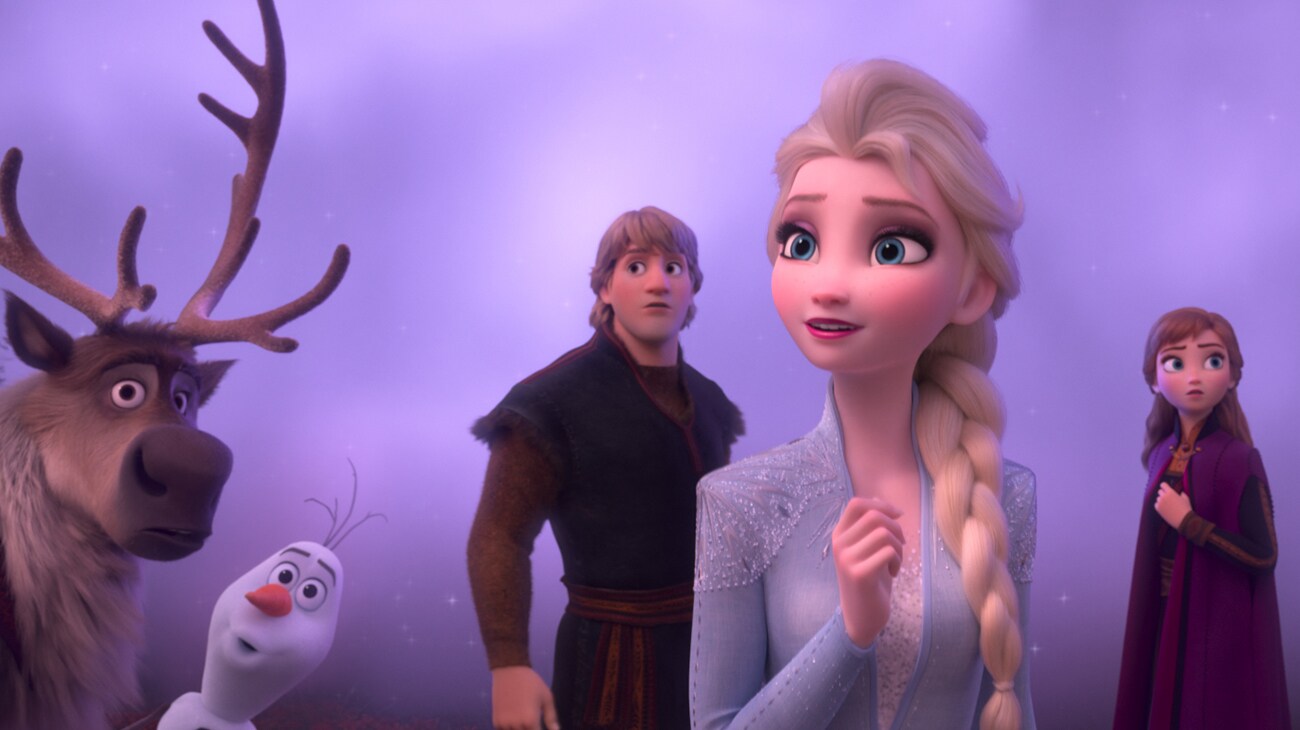
Table of Contents
Quick Facts
- Title: Frozen II; also officially marketed as Frozen 2
- Year and release status: 2019; released
- US theatrical release: November 22, 2019
- Directors: Chris Buck and Jennifer Lee
- Screenplay: Jennifer Lee
- Producer: Peter Del Vecho
- Songs: Kristen Anderson-Lopez and Robert Lopez
- Original score: Christophe Beck
- Classified cinema runtime: 103 minutes
- Genres: Animation, Adventure, Family, Fantasy, Comedy
- TMDB movie identity: 330457 — https://www.themoviedb.org/movie/330457
- RecapRush collection: #19 in the fixed October 29, 2026 Worldwide lifetime Box Office Top 30 snapshot, rather than a newly calculated rank
Disney Animation and D23 establish the exact sequel and US date. Australian Classification records its 103-minute public-exhibition version; some catalog pages round the duration differently. Wikidata independently corroborates TMDB movie 330457. [1–4]
Full Spoiler Recap
1. The bedtime story is incomplete
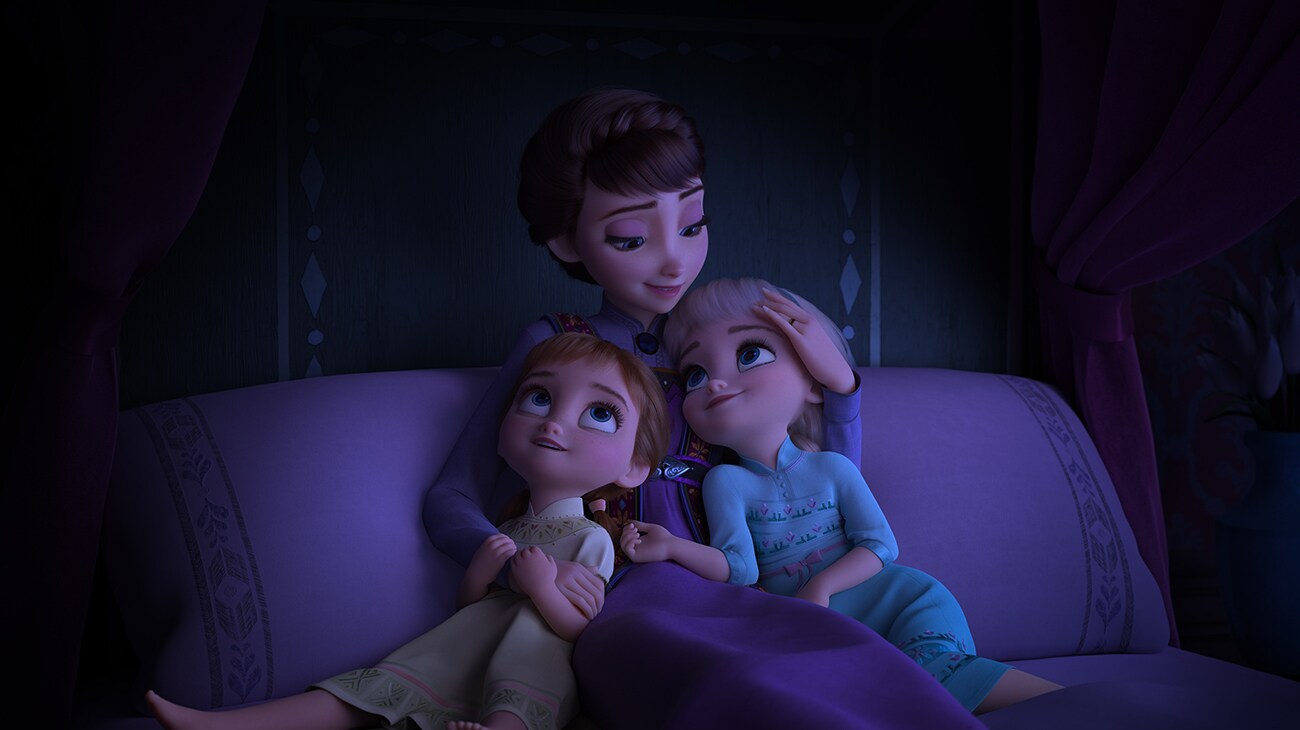
Agnarr tells young Anna and Elsa about the Enchanted Forest, the Northuldra and a battle that trapped people behind magical mist. Years later, Elsa hears a voice nobody else hears. Her response awakens the elemental spirits, forcing Arendelle’s residents to evacuate. The sisters and their friends head north to discover what happened. [5]
Our reading of the opening depends on the difference between an account and a lie. Agnarr’s childhood experience is not the whole history, even when it is sincerely remembered. The film establishes a problem that cannot be solved merely by asking whether the speaker is a loving parent. A beloved person can pass on an incomplete explanation.
2. The forest complicates the family’s inheritance
Inside the mist, the travelers encounter the spirits, the Northuldra and Arendellian soldiers still trapped in the forest. Elsa befriends the fire spirit, Bruni. The sisters learn that their mother Iduna was Northuldran and saved the young Agnarr. A fifth spirit is said to connect people and nature’s magic. [5]
The discovery does not make the sisters responsible for having chosen their ancestry. It does, however, make a simple division between their kingdom and the people beyond it impossible. In our interpretation, their identity becomes a reason to listen more carefully, not a shortcut that gives them ownership of the Northuldra’s experience.
3. Elsa follows the voice beyond the shipwreck
The sisters find their parents’ wrecked ship and evidence that Agnarr and Iduna were seeking answers about Elsa’s powers. Elsa sends Anna and Olaf away, crosses the Dark Sea and tames the horse-shaped water spirit, the Nokk. At Ahtohallan, she recognizes the call through the memory of Iduna and discovers her own identity as the fifth spirit. [6, 7]

Her growing power does not remove the need for caution. Our reading is that self-recognition and reliable judgment remain separate achievements. A person can discover where she belongs while still making a dangerous choice about how far to go alone.
4. The dam was a weapon disguised as a gift
Elsa discovers that Runeard built the dam to weaken the Northuldra and murdered their unarmed leader, provoking the conflict. She sends the truth to Anna before freezing in Ahtohallan. Olaf then disappears as Elsa’s magic fails, leaving Anna alone with the message. [6]
The important revelation is not simply that a royal ancestor was cruel. It is that an apparently benevolent structure has continued to do the work of that cruelty. Our interpretation focuses on the difference between disapproving of a dead ruler and deciding what to do about the arrangement that outlives him.
5. Anna acts without knowing that everything will be saved
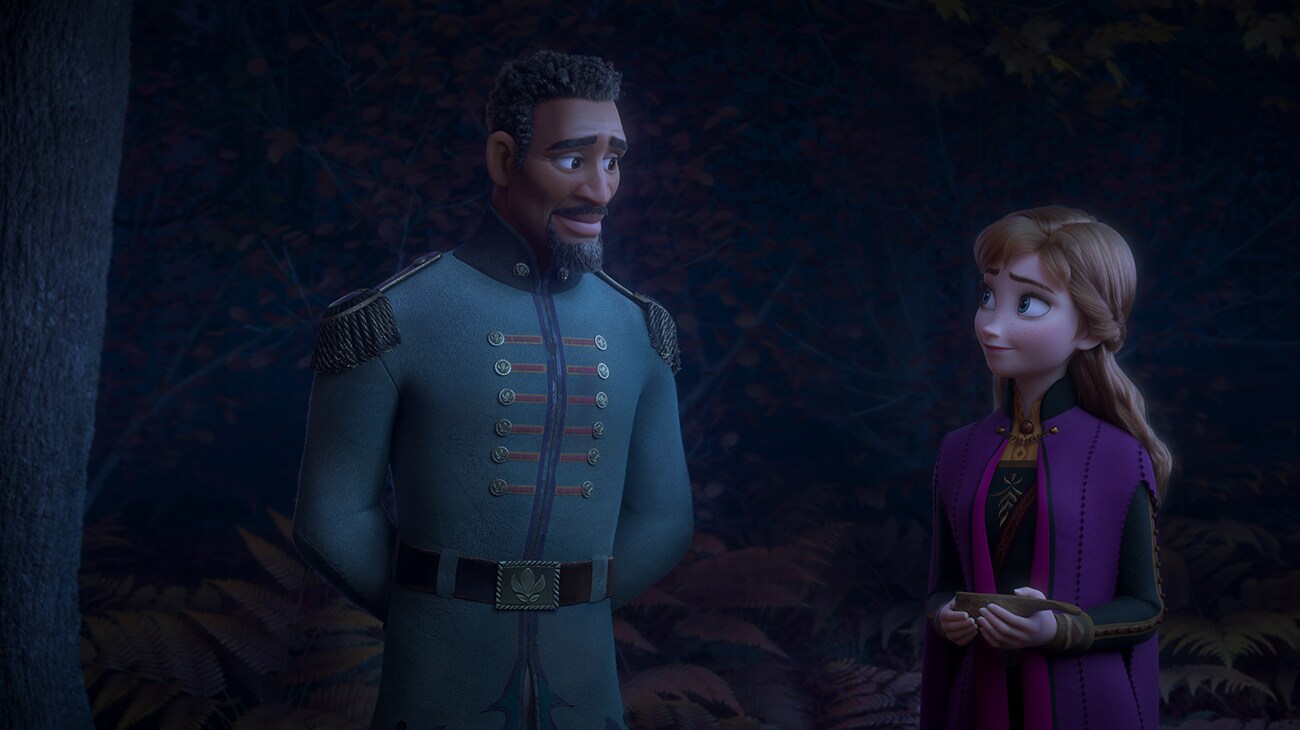
Anna concludes that the dam must fall. Believing that the resulting flood may destroy Arendelle, she draws the Earth Giants toward it; Mattias helps after hearing the truth. Their boulders break the dam. Elsa thaws, rides the Nokk to Arendelle and stops the flood before it reaches the city. The forest’s mist lifts. [6, 7]
The rescue does not erase the moral risk of Anna’s decision. She cannot know in advance that Elsa will return. In our reading, that uncertainty is what makes her action a choice rather than a convenient final step in someone else’s plan.
6. The sisters choose different responsibilities
Elsa reunites with Anna and restores Olaf. Kristoff proposes, and Anna accepts. Anna becomes queen of Arendelle, while Elsa remains connected to the forest as its protector. The sisters continue to visit and stay in touch. [5, 7]
The resolution separates daily roles without treating separation as a failure of affection. The first film made reunion essential; our reading is that the sequel lets the relationship survive a different arrangement. Neither sister must live an unsuitable life to prove that the bond still matters.
Cast + TMDB
Cast and Characters









- Kristen Bell — Anna: The sister whose practical decision turns recovered knowledge into action.
- Idina Menzel — Elsa: The queen drawn north by a mysterious call and toward a new understanding of her magic.
- Josh Gad — Olaf: The snowman whose curiosity and vulnerability keep the journey connected to ordinary fears about change.
- Jonathan Groff — Kristoff: Anna’s partner, trying to express commitment while the adventure repeatedly interrupts his plans.
- Evan Rachel Wood — Queen Iduna: Anna and Elsa’s mother, whose history connects the royal family to the Northuldra.
- Sterling K. Brown — Lieutenant Mattias: An Arendellian soldier whose loyalty must respond to newly revealed evidence.
- Alfred Molina — King Agnarr: The sisters’ father and the source of the childhood account of the forest.
- Martha Plimpton — Yelena: A leader among the Northuldra.
- Rachel Matthews — Honeymaren: A Northuldran who helps Elsa understand the fifth spirit.
- Jason Ritter — Ryder: Honeymaren’s brother, who befriends Kristoff through their shared ease with reindeer.
These are ten featured voice performers, not the complete credits. Jeremy Sisto voices King Runeard, and Ciarán Hinds voices Pabbie. Cast identities are checked against Disney’s D23 record and the exact-film metadata. TMDB 330457 identifies this 2019 sequel; the 2013 Frozen has a different identity. [2, 4, 8]
Ending Explained
What is the fifth spirit?
Elsa is revealed as the fifth spirit, linking the magical elements with the human world. The sisters’ mother saved Agnarr across the boundary between their peoples, and Elsa’s gift is connected to that act. [7]
Our interpretation is that this makes Elsa’s difference relational rather than merely exceptional. Her power is not valuable only because it places her above ordinary limits. It has a purpose that involves connection between people who have been divided.
Anna’s place in that connection matters just as much. She does not need a corresponding magical ability to make the bridge work. Knowledge has to pass between the sisters, and each must trust the other with a task she cannot complete herself. Calling Elsa the fifth spirit should not make Anna disappear from the resolution.
Why must the dam be destroyed?
The dam is not an innocent structure with an unfortunate origin. In the story, it was built to weaken the Northuldra, and its destruction is necessary to free the forest. [6, 7] The practical task is therefore more demanding than exposing Runeard’s personal wrongdoing.
Our reading is that the film distinguishes inherited guilt from present responsibility. Anna did not commission the dam or murder anyone. But once she knows what the structure does, protecting it becomes a decision she is making now. Innocence about the past cannot by itself justify preserving its effects.
More from RecapRush
 Beware Boiúna (2026) Recap & Ending Explained: Why Lena Survives Without Killing the Serpent
 Backrooms (2026) Recap & Ending Explained: Did the Real Mary Escape?
 Freefall: A Reckoning for Boeing (2026) Explained: What Accountability Means After the Warnings
That distinction gives the story a useful political scale without requiring a child viewer to understand a political vocabulary. The question is concrete: if something helps your home by hurting someone else’s, what do you do when you finally find out?
Why does Elsa freeze, and does Olaf really die?
Elsa goes too far into Ahtohallan and freezes; Olaf fades when her magic is lost. Breaking the dam frees Elsa, and she later brings Olaf back. [7] These are temporary losses in the released ending, not permanent deaths concealed by a happier interpretation.
Their reversal should not make Anna’s experience seem trivial. From her position inside the story, she does not possess the reassurance the audience will eventually receive. Our reading values the scene because it makes action possible without demanding that grief first become manageable.
Anna reduces the scale of what she can face. She cannot repair every loss in a single thought. She can identify an immediate action that remains possible. This is an interpretation of her dramatic movement, not a quotation from the song or a claim that a fictional sequence offers universal advice for real bereavement.
Why does Anna become queen?
The final arrangement places Anna in Arendelle and Elsa in the forest. [5, 7] Our reading is that the division recognizes different forms of attention. Elsa is drawn toward the magical world; Anna repeatedly attends to people, coordination and the consequences of a decision.
Leadership here does not arrive as a consolation prize for the sister without powers. Anna has already demonstrated it before receiving a crown. The title makes an existing responsibility visible rather than suddenly supplying the ability to fulfill it.
Elsa’s departure is similarly not a rejection of her family. A relationship need not require both people to occupy the same role or place. The ending imagines a mature bond that can sustain distance, different obligations and regular return.
Deep Analysis & Key Themes
An archive becomes useful when someone can act on it
Ahtohallan gives Frozen II a striking image of the past as something accessible but dangerous. Yet a memory is not a completed repair. Our interpretation is that the film’s most important movement occurs after evidence leaves the place where Elsa discovers it.
This keeps revelation from becoming a form of private achievement. If learning the truth only made Elsa feel more complete, the story could end with self-discovery while leaving everyone else in the old arrangement. Instead, information changes another person’s obligations in another place.
There is a useful limit to magical knowledge in that structure. Elsa can make something visible that others could not see, but she cannot perform every consequence of knowing it. The film needs trust, transmission and practical judgment alongside extraordinary access.
Loyalty is tested by evidence, not protected from it
Mattias makes the question of loyalty more specific than a clash between good sisters and a bad ancestor. A soldier’s identity is tied to service. New evidence can therefore threaten not only an opinion but the story through which he understands his life.
Our reading is that the response to this threat defines a stronger form of loyalty. Defending every act associated with a kingdom would make loyalty indistinguishable from refusing to learn. Serving a community well may require helping it stop doing something that its own official story has praised.
This does not mean that every inherited commitment is false. It means a commitment needs enough resilience to encounter facts it did not anticipate. The film lets allegiance change its expression without becoming meaningless.
Repair has a cost before it has a reward
Anna’s decision is emotionally powerful because she cannot make it conditional on the safety of everything familiar. Our interpretation separates her risk from the eventual rescue. Elsa’s success gives the film its happy ending; it is not the information that makes Anna choose.
That separation prevents the lesson from collapsing into an easy bargain: do the right thing because it will preserve all your advantages. The dramatic choice instead asks what a person owes others when the answer may require losing something she loves.
There is a limit worth acknowledging. The story ultimately spares Arendelle, giving its moral decision a gentler material outcome than it initially threatens. That does not invalidate Anna’s courage, but it makes the ending a reassuring fantasy rather than an exhaustive account of what repair requires.
Self-discovery should enlarge responsibility
Elsa’s search gives the film its momentum. It also risks making other people supporting figures in a journey toward her own fulfillment. Our reading finds the more interesting version of self-discovery in what her new identity asks her to do for a divided world.
Understanding where you belong is not only permission to leave an unsuitable position. It can also be recognition of a responsibility you are now able to carry. Elsa’s ending works best when both parts remain visible: a life that fits her and a purpose beyond the satisfaction of fitting.
Anna’s parallel journey makes that idea less dependent on exceptional birth. The sisters reach different destinations through different capacities. The film can celebrate an extraordinary gift without treating everyone else as less capable of moral consequence.
Love can support without taking over
Kristoff’s place in the ending offers a quieter alternative to heroic replacement. Our interpretation is that a supportive relationship makes space for Anna’s urgent task instead of converting it into an argument about whether she has paid enough attention to him.
That does not make his feelings unimportant. It locates them within a larger situation. A person can want reassurance and still recognize when another person needs practical support more immediately than an explanation.
The result is a romance that does not have to displace the sisters’ central bond or Anna’s public responsibility. Commitment becomes compatible with her agency. It is one part of the life she chooses, not the answer that makes her choices unnecessary.
What Most Viewers Missed
The original account is a perspective, not a neutral camera
The childhood story is meaningful because it belongs to someone who survived events without understanding their full cause. Our reading is that the film asks viewers to distinguish emotional sincerity from completeness. A loving account may deserve attention without becoming immune to correction.
Anna makes the consequential choice without a new power
Her role is easy to undervalue beside Elsa’s visual transformation. Yet the resolution requires judgment under uncertainty, not another magical upgrade. The film’s division of tasks gives ordinary agency a scale comparable to spectacle.
A family connection does not settle another people’s story
The Iduna revelation complicates the sisters’ inheritance, but it does not make the Northuldra merely a missing piece of royal identity. Our interpretation keeps the difference visible: discovering a connection is a beginning of responsibility, not an entitlement to speak for everyone connected through it.
Separate homes do not mean a broken bond
The ending changes the geography of the sisters’ lives. It does not undo their affection. Our reading is that the promise of continued contact matters because it makes reunion a practice rather than a demand for permanent proximity.
Mid/Post Credits
Yes, there is a short post-credits scene. Olaf performs a condensed retelling of the adventure for Marshmallow and the Snowgies at Elsa’s ice palace. It is a comic callback, not a confirmed plot outline for a later sequel. TheWrap verifies the scene and distinguishes it from the cover versions heard during the credits. [9]
No song lyrics are reproduced in this article. The named songs are discussed through their dramatic function rather than quoted.
Final Thoughts
Frozen II gives its sisters different kinds of courage. Elsa confronts a past that changes what her family means. Anna decides that loving her home cannot require preserving everything done in its name. Their relationship matters because it lets truth become action without making either task look sufficient on its own.
RecapRush verdict: The most valuable idea is the connection between knowing and doing. A revelation becomes more than an answer to a personal mystery when someone accepts responsibility for what must change afterward. Anna’s choice gives Elsa’s discovery that consequence.
Join the conversation
What did you think of the ending? Share your interpretation. Spoilers may appear below.
This product uses the TMDB API but is not endorsed or certified by TMDB.
No comments yet. Start the conversation.