
RECAPRUSH MOVIE GUIDE
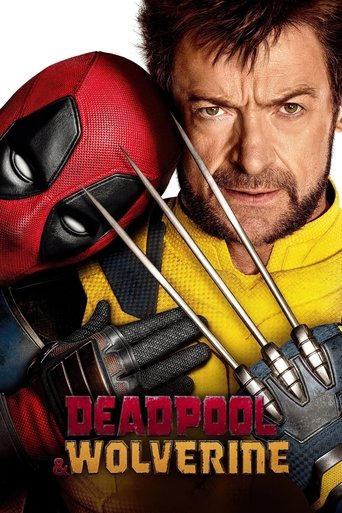
Deadpool & Wolverine (2024)
Directed by Shawn Levy
Wade Wilson recruits a different Wolverine to save his own reality from Paradox’s Time Ripper. Their hostile partnership takes them through the Void, where Cassandra Nova and forgotten heroes complicate the route home.
Overview, poster, and credits from TMDB.
Read and watch our full recap ↓FROM THE RECAPRUSH LIBRARY · FULL RECAP
Deadpool & Wolverine (2024) Recap & Ending Explained: Belonging Is More Than Being Chosen
16 min read · Estimated reading time— views
Intro + RecapRush Viewpoint
Deadpool & Wolverine gives Wade Wilson a dream opportunity with a terrible condition attached. He can become important somewhere else, provided he accepts that the people who already matter to him will disappear. Its multiverse is a machine for producing cameos, but it also gives that bargain an emotional shape: admission to the prestigious club is not the same thing as a reason to belong.
RecapRush viewpoint: The most rewarding part of the film is the movement from wanting to be selected to choosing whom to stand beside. Wade wants confirmation that he matters; Logan believes his failures have made him unworthy of it. Our reading is that neither receives a useful answer until they stop treating recognition as something another institution can award them.
Full spoilers follow, including Cassandra Nova, the legacy-character appearances, the Time Ripper, the final gathering and the post-credits scene. This article covers the released 2024 film. The Wolverine who becomes Wade’s partner is a different version from the one whose death is shown in Logan (2017).
Featured Image
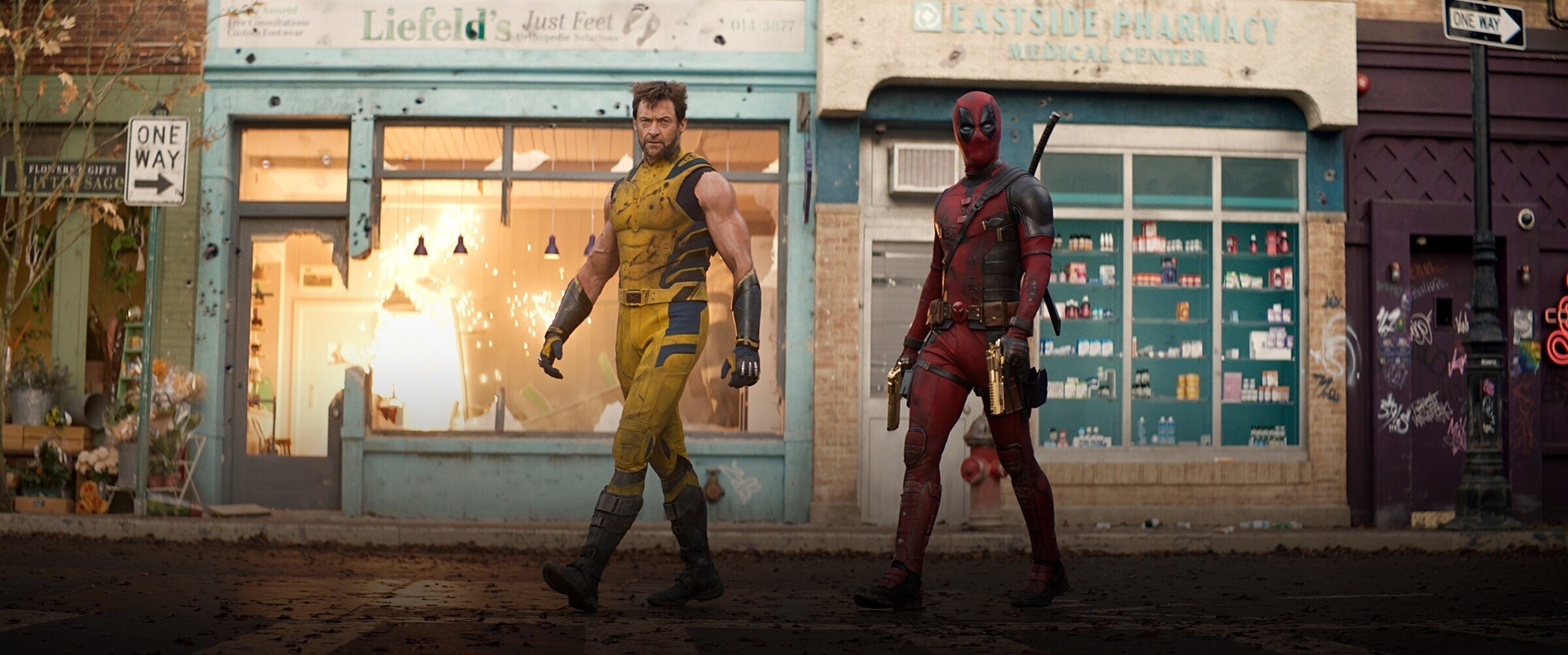
Table of Contents
Quick Facts
- Official title: Deadpool & Wolverine
- Year and status: 2024; released feature film
- US and Canadian theatrical release: July 26, 2024
- UK theatrical release: July 25, 2024
- Director: Shawn Levy
- Writers: Ryan Reynolds, Rhett Reese, Paul Wernick, Zeb Wells and Shawn Levy
- Producers: Kevin Feige, Ryan Reynolds, Shawn Levy and Lauren Shuler Donner
- Studio: Marvel Studios
- Runtime: approximately 128 minutes, verified against the Australian Classification record
- Genres: Action, Adventure, Comedy, Science Fiction
- TMDB movie identity: 533535 — https://www.themoviedb.org/movie/533535
- Collection: #25 in RecapRush’s fixed October 29, 2026 Worldwide lifetime Box Office Top 30 snapshot. This dated collection position is not a new live ranking.
Disney’s announcements establish the territorial release dates and creative credits. Wikidata independently cross-references the exact 2024 film with TMDB movie 533535. No unverified lifetime gross is displayed. [1, 2, 3, 4]
Full Spoiler Recap
1. Wade receives an offer to abandon his own world
After an unsuccessful attempt to join the Avengers, Wade retires from being Deadpool and works selling cars. His relationship with Vanessa has broken down. The TVA takes him to Mr. Paradox, who offers him a place on the Sacred Timeline while revealing a plan to accelerate the destruction of Wade’s home reality. Paradox says it is deteriorating because its “anchor being,” Logan, has died. [5]
Wade refuses to accept the loss of his friends. His attempt to recover the dead Logan fails; the grave contains remains, not a hero waiting to get up. He searches other realities and recruits a different, embittered Wolverine. [6]
The offer is therefore attractive for exactly the wrong reason. It would let Wade feel chosen while surrendering the relationships that gave being chosen any meaning.
2. The replacement plan fails, and the Void becomes their prison
Paradox rejects Wade’s attempted solution and banishes the pair to the Void. There they encounter Johnny Storm, played by Chris Evans as the Human Torch rather than Captain America. Cassandra Nova, Charles Xavier’s powerful twin, rules this wasteland. After Wade repeats Johnny’s alleged insults, Cassandra kills Johnny. Wade and Logan escape the immediate danger, but their partnership remains hostile. [5, 7]
Logan carries guilt over the death of his fellow X-Men. Wade encourages him with the possibility that the TVA could repair his past, although Wade cannot guarantee that promise. Their quarrel exposes the weakness in a partnership built on someone else’s desperation. [7]
3. Forgotten heroes help them find a way out
Laura, Elektra, Blade and Gambit form the resistance that helps the pair confront Cassandra. Laura encourages Logan to act despite his shame. The attack supplies access to Juggernaut’s helmet, which can suppress Cassandra’s powers. Pyro, acting for Paradox, shoots her. Logan persuades Wade to remove the helmet rather than leave her to die; she recovers and opens a portal for their return. [7, 8]
Cassandra then learns of Paradox’s Time Ripper and decides to use it for something worse than his original plan: the destruction of the timelines, leaving only the Void. [8]
Her decision prevents the escape from functioning as a complete resolution. Saving themselves has not yet saved the people they are trying to reach.
4. The final obstacle requires cooperation rather than another winning fight
Back in Wade’s reality, the heroes face an army of Deadpool variants. Peter distracts them, allowing Wade and Logan to reach the Time Ripper. Paradox explains that disrupting its matter-and-antimatter power flow would destroy the machine but kill the person who bridges it. [8, 9]
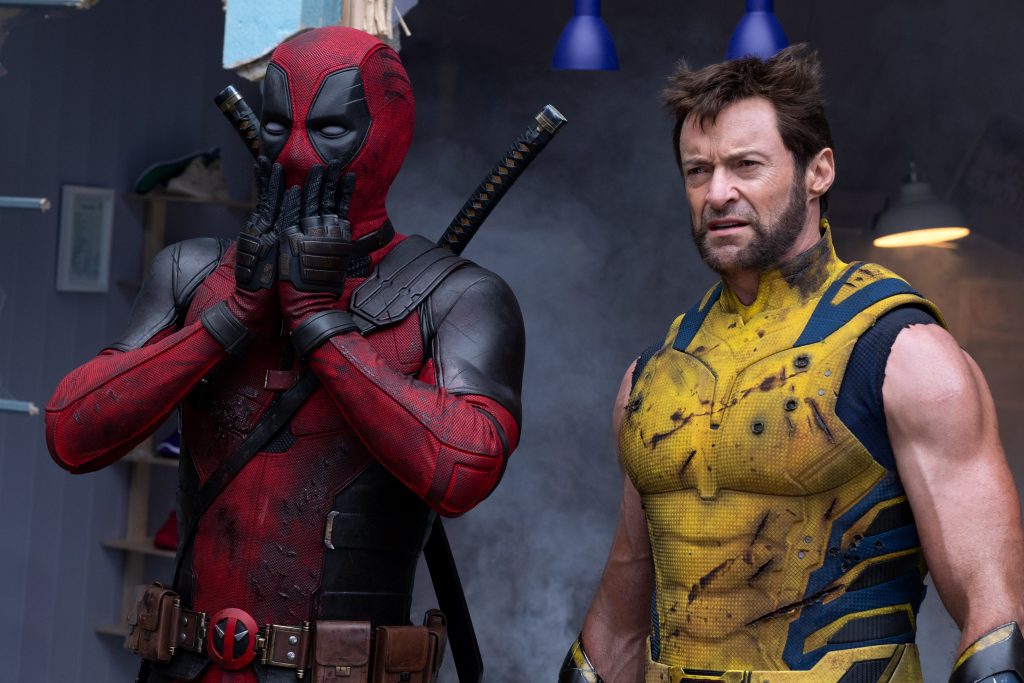
Wade locks Logan out and attempts the sacrifice himself. Logan breaks through, takes his hand and completes the connection. The overload destroys the Time Ripper and Cassandra, while both heroes survive. Hunter B-15 arrests Paradox and confirms that their actions have stopped Wade’s universe from deteriorating. [9, 10]
5. The ending brings Logan into a life, not just another assignment
Wade asks for help for the resistance and for Logan’s past. The ending does not erase that past. Logan remains in Wade’s reality, and the final gathering includes Wade’s friends and Laura. He encourages Wade to reconnect with Vanessa. [9, 10]
This closes the central emotional movement without announcing that every future has been repaired. The characters have somewhere to go after saving the world. For these two, that is a substantial change.
Cast + TMDB
Cast and Characters
The exact film is TMDB movie 533535. The studio’s credited ensemble and film-specific cast records establish the performers below. The multiverse roles should not be confused with every other character an actor has played. [1, 2, 4, 7]
- Ryan Reynolds — Wade Wilson / Deadpool; also Nicepool
- Hugh Jackman — Logan / Wolverine
- Emma Corrin — Cassandra Nova
- Matthew Macfadyen — Mr. Paradox
- Dafne Keen — Laura / X-23
- Morena Baccarin — Vanessa
- Rob Delaney — Peter
- Leslie Uggams — Blind Al
- Karan Soni — Dopinder
- Aaron Stanford — John Allerdyce / Pyro
Important returning and guest roles include Chris Evans as Johnny Storm, Jennifer Garner as Elektra, Wesley Snipes as Blade, Channing Tatum as Gambit, Jon Favreau as Happy Hogan, and Wunmi Mosaku as Hunter B-15. Their presence does not by itself establish a permanent new Avengers or X-Men roster. [7, 8, 11]
Ending Explained
What actually happens to the Time Ripper
Cassandra uses the machine to threaten more than Wade’s home. Wade and Logan interrupt its energy flow together. The resulting overload destroys the device and Cassandra, and the two emerge alive. That sequence is the film’s resolution to the immediate danger. [8, 9]
The scene communicates shared endurance more clearly than it explains its fictional physics. The film gives both characters extraordinary healing abilities, but Paradox has warned that the intervention is supposed to be fatal. Their survival is presented through their combined action; it should not be rewritten into a precise scientific calculation that the movie never supplies. [10]
RecapRush interpretation: The important reversal is relational. Both initially frame the problem as deciding which one should be expendable. The solution makes the other person a participant rather than an audience for a lonely final gesture. The image of joined hands answers the partnership’s earlier habit of turning vulnerability into a weapon.
This does not make the mechanical explanation especially rigorous. It makes the dramatic explanation legible: they succeed in the moment when cooperation ceases to mean merely attacking the same opponent.
Does Logan become the new anchor being?
Hunter B-15 confirms that Wade’s reality has stabilized. The film does not explicitly name a replacement anchor being or explain a new set of universal rules for creating one. Saying that Logan has been officially installed in that position would go beyond what is established on screen. [7, 9]
Our reading is that the uncertainty helps keep the emotional conclusion separate from an administrative appointment. Logan is valuable to the ending because he acts and then accepts a place among other people. He does not need a cosmic job title for that change to count.
The TVA’s access to different points in time also means the story should not be treated as a single ordinary calendar in which every character knows only the present. Paradox’s reference to the death in Logan is part of that outside-time premise, not proof that the partner Wolverine has been resurrected.
Does the film undo Logan (2017)?
The dead Logan remains dead. Wade’s principal partner is another Wolverine, with a different personal history. The opening makes the distinction blunt; the subsequent multiverse search provides the story’s mechanism for bringing Jackman back in a different version of the role. [6]
Our interpretation: This distinction preserves one ending while allowing a new story to ask a different question. The earlier hero’s completed sacrifice is not the partner Wolverine’s achievement. The new Logan has to choose what to do now, rather than receive moral credit for the actions of a version whom audiences already admire.
That is the potential strength of a variant story. Familiarity can make a face emotionally available to the audience, but the character still needs a particular responsibility inside the present film. Here, regret supplies that difference.
More from RecapRush
 The Drop: A Snowfall Saga (2026): How Wanda Turns Survival Into a West Coast Rap Dream
 Beauty and the Beast (2017) Recap & Ending Explained: Why the Last Petal Is Not the End
 Other Mommy (2026) Review & Ending Explained: Why Bela’s Monster Wears Ursula’s Face
Where are they when the film ends?
The final gathering is in Wade’s world, Earth-10005. Logan and Laura are part of that immediate ending. Wade’s involvement in an MCU film is a production and franchise fact; it is not the same statement as saying the final dinner takes place on Earth-616. [7, 10]
The film leaves the wider resistance’s future less explicit than Laura’s presence at the table. A request for help is not a complete on-screen account of everybody’s subsequent life. This article therefore does not invent new homes, missions or confirmed future films for Blade, Elektra or Gambit.
Deep Analysis & Key Themes
Wade mistakes being wanted by an institution for having a purpose
Wade’s hunger for recognition is understandable. A powerful institution can offer an attractive story about who someone is: useful, exceptional, finally worth admitting. The danger begins when that story becomes more important than the people whose lives gave the desire its original urgency.
RecapRush reading: Wade initially looks for a verdict on himself rather than a task that needs doing. A verdict would settle the uncomfortable question of whether he matters. But a useful moral identity cannot remain a certificate issued elsewhere. It has to survive contact with inconvenient responsibilities.
The film’s bargain exposes that problem efficiently. If becoming important requires treating one’s existing community as disposable, the prize has quietly changed its meaning. Wade’s better decision is not to demand a more flattering version of the offer. It is to refuse its terms.
Logan needs a future that does not require an innocent past
Shame can make every possible future feel like an unauthorized escape. Someone who believes he has failed beyond repair may come to regard continued suffering as the only honest form of memory.
Our reading of this Logan is that he confuses remembering with remaining unavailable to life. An action in the present cannot bring back the people he failed. It can still matter to someone who is here now. The difficulty lies in accepting that these two truths do not cancel one another.
That is why a promise to rewrite his past is so tempting and so inadequate. It offers innocence as the condition for beginning again. A more demanding possibility is to act without innocence, carrying responsibility rather than waiting for the record to disappear.
The ending works when it grants him participation rather than absolution. He is not required to become a different person with a spotless history before he can stand beside someone else.
Paradox turns abandonment into professional procedure
Paradox’s language makes destruction sound like efficient management. A complicated, deteriorating reality becomes a problem to close rather than a community to hear. His offer to preserve one useful person does not contradict that attitude; it reveals how selective his concern is.
Our interpretation is that the villainy rests partly in the distance between scale and attention. Paradox can describe an entire timeline while showing little interest in the ordinary lives contained within it. The larger his frame becomes, the easier it is for him to regard the people inside it as a negligible detail.
Wade’s friends resist that abstraction simply by existing as particular people. Their importance does not depend on whether a cosmic manager can turn them into an impressive diagram. A small social world can be worth protecting even when it is not the center of someone else’s narrative.
Cassandra makes intimacy a form of possession
Cassandra’s mental invasions turn access to another person into an assertion of control. Our reading is that the film offers a disturbing counterfeit of understanding: she can reach private pain without accepting any responsibility toward the person experiencing it.
That distinction matters to the partnership as well. Knowing where someone is wounded does not necessarily make an interaction compassionate. The information can be used to recruit, manipulate or humiliate. Actual care involves a restraint that mere access does not provide.
This makes the contrast with the final shared action sharper. One form of contact treats another body and mind as territory. The other depends on someone joining without surrendering his personhood. The film’s crude comic register sometimes obscures the distinction, but the images give it shape.
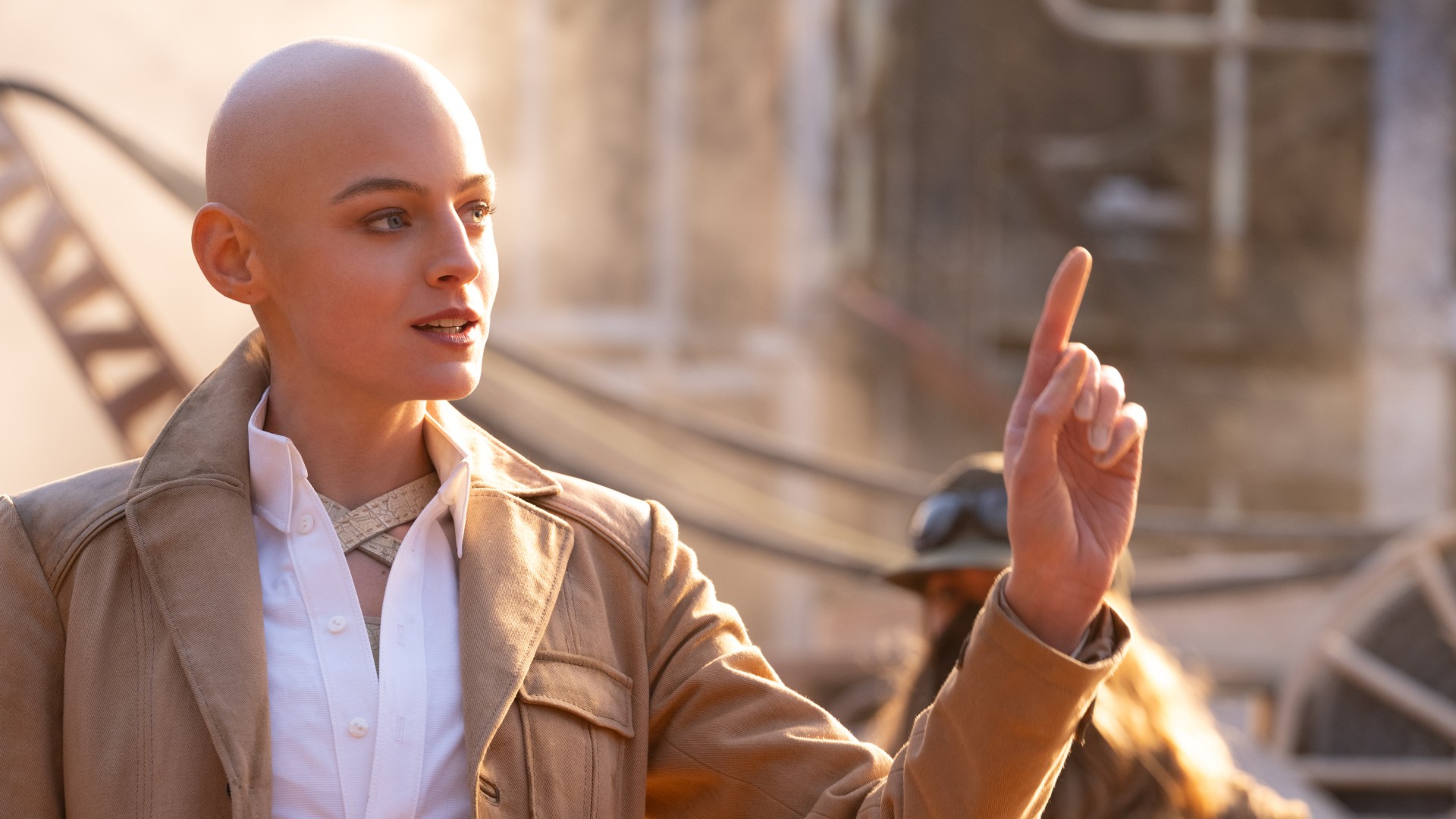
The Void asks who gets to call a story finished
The returning characters supply the pleasure of recognition, but recognition is not the only possible use for them. Our reading of the Void is that it literalizes a fear of being left outside the story that continues without you.
The resistance’s contribution matters when it becomes action rather than an exhibition of familiar names. A character can be remembered affectionately and still be denied anything consequential to do. Participation gives the return a purpose within this film, even when the available space remains uneven.
There is also a limitation here. A viewer without the relevant history may experience some of the appearances primarily as pauses waiting for someone else’s applause. The movie’s emotional appeal depends partly on memories it does not have time to build for every audience member.
Our strongest reservation is that the film can confuse acknowledging this problem with solving it. A joke about franchise machinery does not automatically give every returning character a complete arc. Its better answer is the smaller relationship between the two leads, which has to work in the present tense.
The last gathering changes the scale of success
After a threat to the timelines, a table of friends can look modest. That modesty is precisely the point of our reading. The story begins with a desire for a grander setting in which to matter, then returns to a setting where people already know one another’s names.
Logan’s presence changes that space without replacing it. Belonging becomes an addition to a shared life rather than the acquisition of a starring role at everyone else’s expense. Wade does not need to trade his world for a more prestigious one.
The moment is also more persuasive than a promise that the characters will never be lonely or destructive again. It offers a place to begin, not a guarantee of permanent emotional repair. That is enough to make the final invitation meaningful.
What Most Viewers Missed
“Anchor being” is an explanation inside the story, not a complete MCU manual
Paradox supplies the concept while trying to steer Wade toward his own preferred outcome. The later confirmation that the timeline is safe does not answer every hypothetical question about the deaths of powerful people in other realities.
Our advice for reading the ending is to keep the demonstrated result separate from a theory of the whole franchise. The movie resolves its own immediate danger. It does not establish every rule that a future story must follow.
Peter’s intervention values affection over status
Peter changes the course of the confrontation with the Deadpool variants. [8] Our interpretation is that the gag briefly gives ordinary affection more practical value than another escalation of violence. The person who is easiest to overlook within a superhero hierarchy can still be the person others are delighted to see.
That is a compact version of the larger emotional argument. Being loved and being ranked as impressive are not equivalent forms of recognition.
The post-credits joke does not settle the moral question
The recording proves that Johnny said the insults Wade repeated. It answers a factual dispute about the dialogue. [11] It does not make repeating those words to Cassandra harmless.
RecapRush interpretation: The joke works because Wade treats evidence as if it automatically absolves him of responsibility for what he did with it. A statement can be accurate and still be used recklessly. The film lets his self-defense be funny without requiring the viewer to mistake it for a serious ethical argument.
Mid/Post Credits
During the credits, a retrospective montage includes clips and behind-the-scenes material from earlier Fox-era Marvel productions. It functions as a tribute rather than a new narrative scene establishing the next villain. After the credits, Wade returns to TVA footage to show that Johnny Storm really delivered the crude speech about Cassandra. [11, 12]
Chris Evans is playing Johnny in this material, not Steve Rogers. The sequence is a comic callback; it should not be presented as an announcement of an unshown future team or crossover.
Final Thoughts
Deadpool & Wolverine is most convincing when its irreverence gives two damaged people enough space to care about something without immediately withdrawing the feeling. Its references and cameos can crowd that relationship, and its ending offers clearer emotional logic than mechanical precision. But the movement from seeking approval to sharing responsibility gives the spectacle a worthwhile center.
RecapRush verdict: The film’s satisfying destination is not membership in a bigger club. It is the possibility that someone who has failed can still take a place beside other people, and that a seemingly small world can be worth saving without becoming a more prestigious one.
Join the conversation
What did you think of the ending? Share your interpretation. Spoilers may appear below.
This product uses the TMDB API but is not endorsed or certified by TMDB.
No comments yet. Start the conversation.