

RECAPRUSH MOVIE GUIDE
Seven Samurai (1954)
Directed by Akira Kurosawa
RecapRush examines the difference between protecting a community and holding a permanent place in its future, through Kambei’s ending and Kikuchiyo’s challenge to the rescuers.
Overview, poster, and credits from TMDB.
Read and watch our analysis ↓FROM THE RECAPRUSH LIBRARY · ANALYSIS
Seven Samurai (1954): Protecting a Future You Cannot Join
5 min read · Estimated reading time— views
RecapRush viewpoint · Ending spoilers. A defense succeeds when people can stop living as though every day were a battle. That makes Seven Samurai’s ending painful for its surviving fighters: the return of ordinary life also puts their own purpose in question. We read the ending as a test of whether protection can remain worthwhile when it gives its protectors no lasting authority over the people they helped.
In this article
- [Quick facts](#quick-facts)
- [The problem with needing to be needed](#the-problem-with-needing-to-be-needed)
- [Kikuchiyo interrupts the rescue story](#kikuchiyo-interrupts-the-rescue-story)
- [Ending explained: the field keeps moving](#ending-explained-the-field-keeps-moving)
- [Final thoughts](#final-thoughts)
- [References](#references)
- [Official trailer](#official-trailer)
Quick facts
- Film: Seven Samurai / Shichinin no samurai (七人の侍), Japan, 1954.
- Director: Akira Kurosawa. Screenplay: Akira Kurosawa, Shinobu Hashimoto and Hideo Oguni.
- Original Japanese release: April 26, 1954. Runtime: 207 minutes in the Criterion edition.
- Cast: Takashi Shimura — Kambei; Toshirō Mifune — Kikuchiyo; Yoshio Inaba — Gorobei; Seiji Miyaguchi — Kyuzo; Minoru Chiaki — Heihachi; Daisuke Katō — Shichiroji; Isao Kimura — Katsushiro; Keiko Tsushima — Shino.
- Identity: TMDB 346 · IMDb tt0047478. This article concerns the 1954 film; the trailer below promotes its 2024 restoration.
The problem with needing to be needed
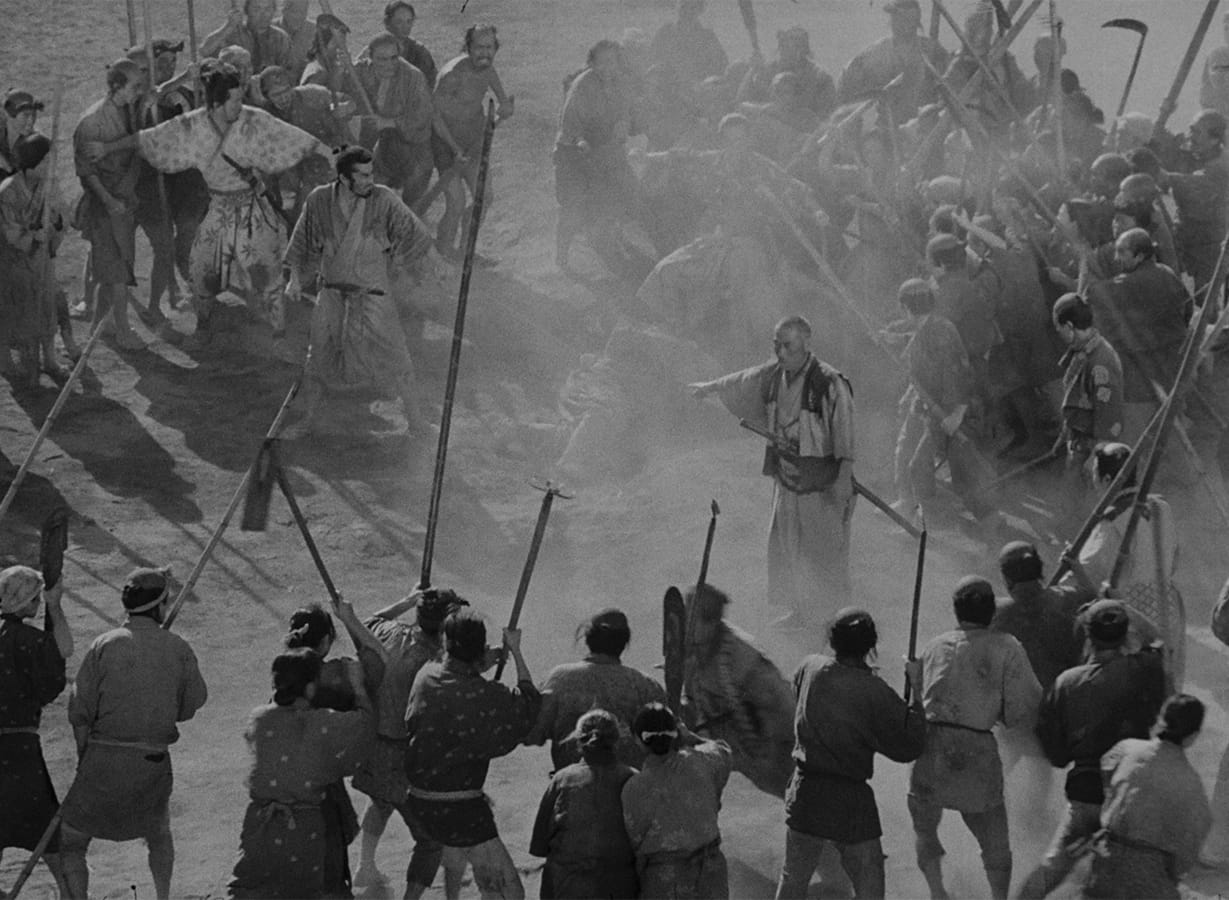
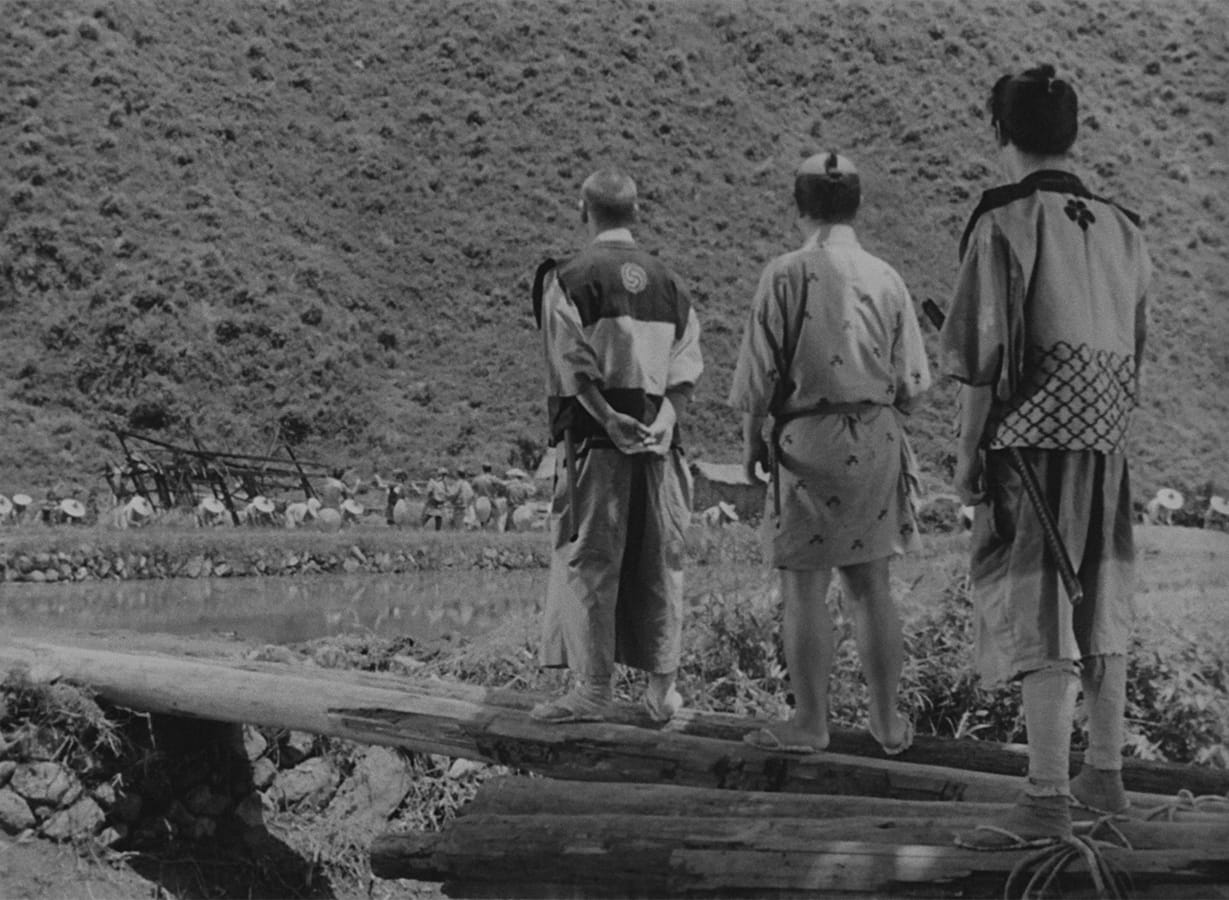
Verified context: A threatened village hires samurai to defend it from bandits. The bandits are defeated, but only three of the seven survive. At the end, the survivors watch the farmers planting rice and singing; Kambei says the victory belongs to the farmers rather than the samurai.
Our interpretation: It would be easy to make the returning work look like an insult. The fighters have suffered, yet the people they defended resume a rhythm that does not center them. But a village kept permanently in the posture of gratitude would still be organized around its emergency. It would have survived without recovering the freedom to decide what matters next.
We therefore hear more than bitterness in Kambei’s assessment. The result he helped produce cannot offer him everything he might want from it. Safety for the villagers and fulfillment for the warriors are different outcomes. The first can be real even when the second remains out of reach.
Kikuchiyo interrupts the rescue story
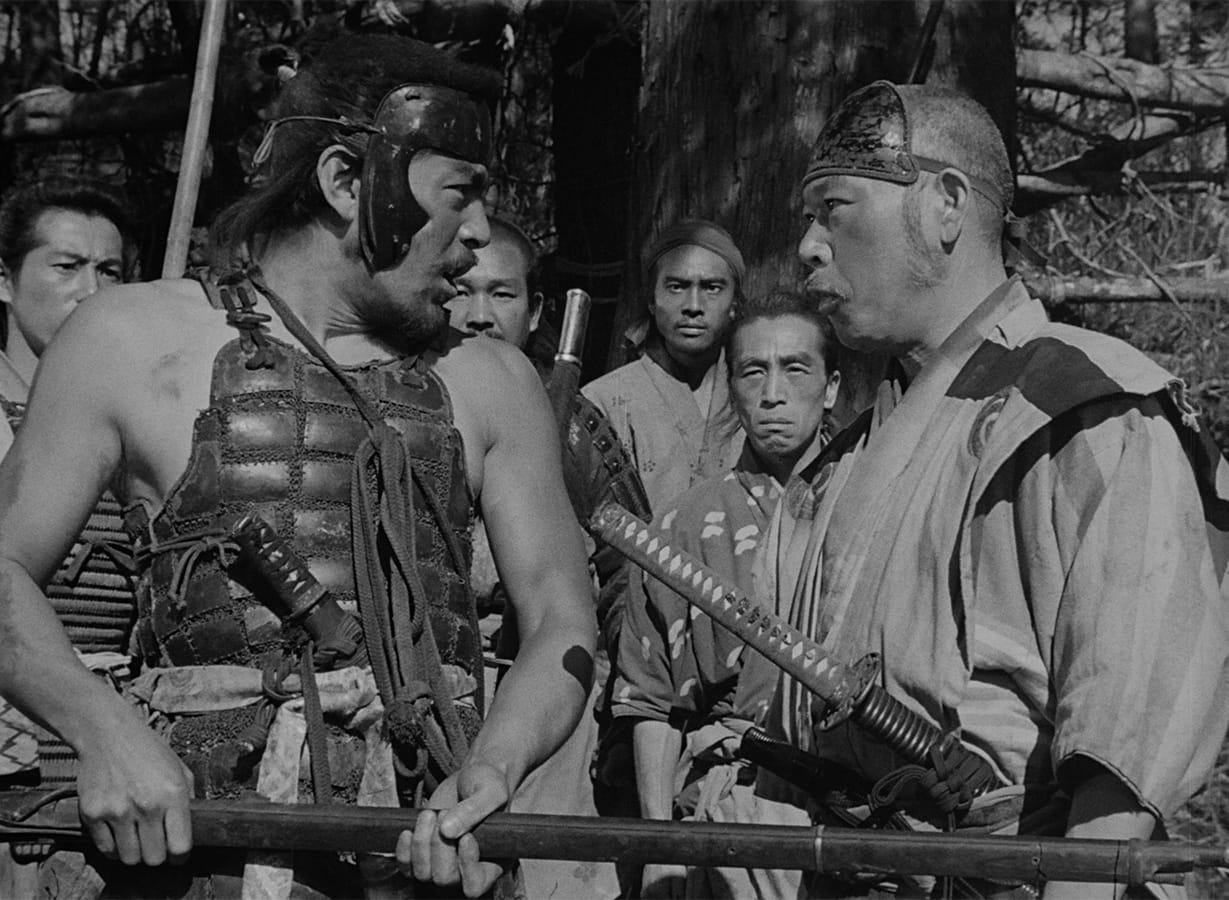
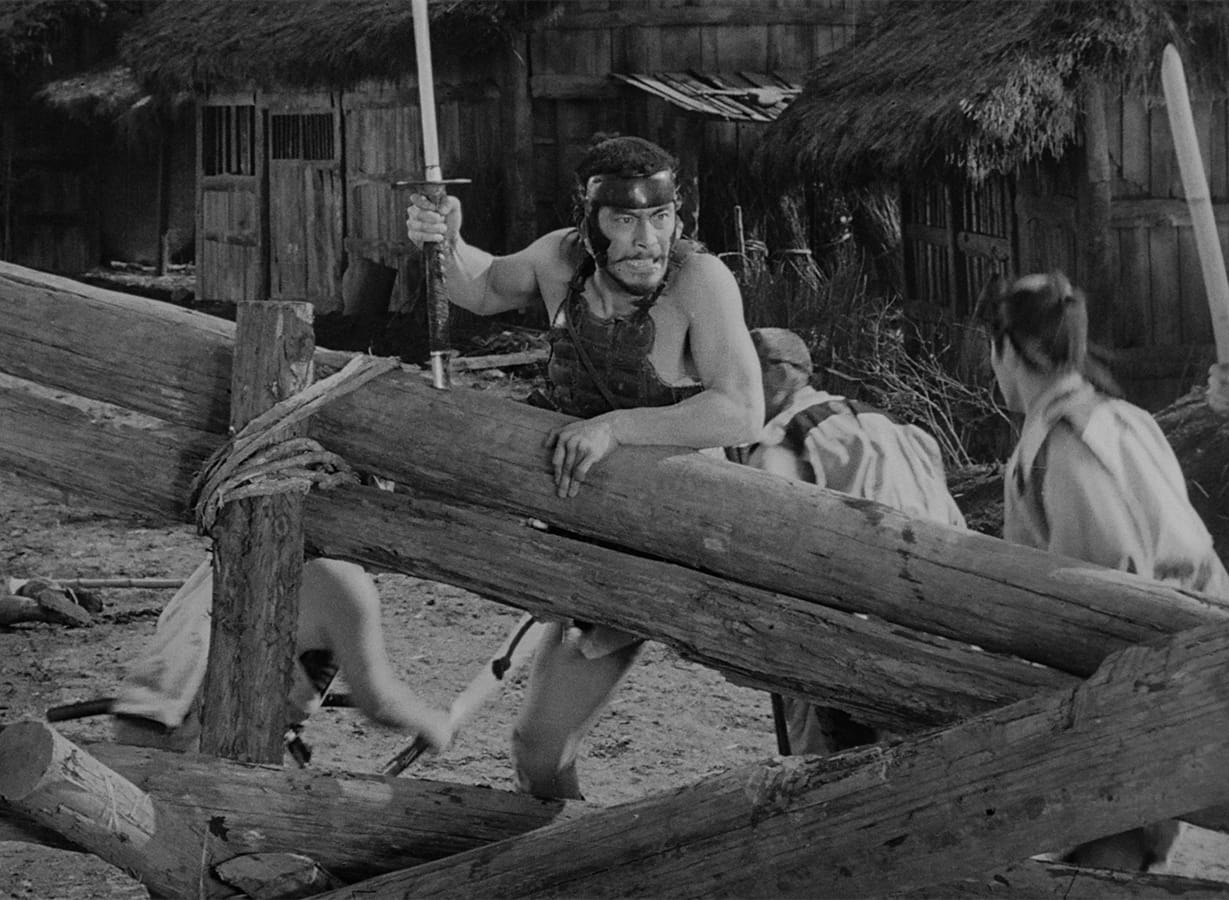
Kikuchiyo complicates any comforting division between innocent villagers and inherently honorable warriors. He comes from a farming family and angrily connects the villagers’ mistrust and misconduct to violence inflicted by samurai. His accusation prevents the rescuers from treating the community’s fear as a simple failure to appreciate them.
More from RecapRush
 Spa Weekend (2026) Movie Recap & Ending Explained
 Once Upon a Time in the West (1968) Recap & Ending Explained: Why Harmonica Leaves Jill
 Zip Wire (2026) Recap & Ending Explained: Why Amy Makes the Cure Impossible to Own
For us, his importance lies in what this requires of the group. Helping people does not require believing that they are always admirable. Nor does someone’s need erase their reasons to distrust a helper’s power. Kikuchiyo makes the defense harder to sentimentalize: the men must cooperate with people whose behavior they cannot excuse completely, while recognizing that their own social role carries a threatening history inside the story.
That is a demanding kind of solidarity. It does not promise that a shared danger will make all differences disappear. It asks whether people can still act together after the flattering explanations have been challenged.
Ending explained: the field keeps moving
Cast and Characters
The final movement toward planting changes what counts as significant action. Agricultural work is repetitive and communal; it does not need a single commanding hero to give every gesture meaning. In our reading, the farmers’ activity makes survival concrete. The point of defending a village is that it contains lives and tasks beyond the defense itself.
This does not cancel the loss of four samurai. The survivors’ presence prevents the restored routine from becoming an uncomplicated happy ending. Their grief and the farmers’ renewal occupy the same aftermath. Neither is adequate evidence that the other is false.
What we find difficult—and valuable—is the absence of a solution that satisfies everyone. The men have made a decisive difference without securing a permanent place at the center of the future they protected. We do not need to call that future unworthy to acknowledge their exclusion. And we do not need to dismiss their sorrow to recognize the value of people working safely again.
Final thoughts
For RecapRush, Seven Samurai asks how to value an action after the need for it has passed. The village’s recovery cannot return the dead or resolve the survivors’ loneliness. Yet making the fighters indispensable forever would undermine what their defense achieved. The ending leaves us with a harder measure of service: a worthwhile result may continue in a form its makers cannot share or direct.
Join the conversation
What did you think of the ending? Share your interpretation. Spoilers may appear below.
This product uses the TMDB API but is not endorsed or certified by TMDB.
No comments yet. Start the conversation.